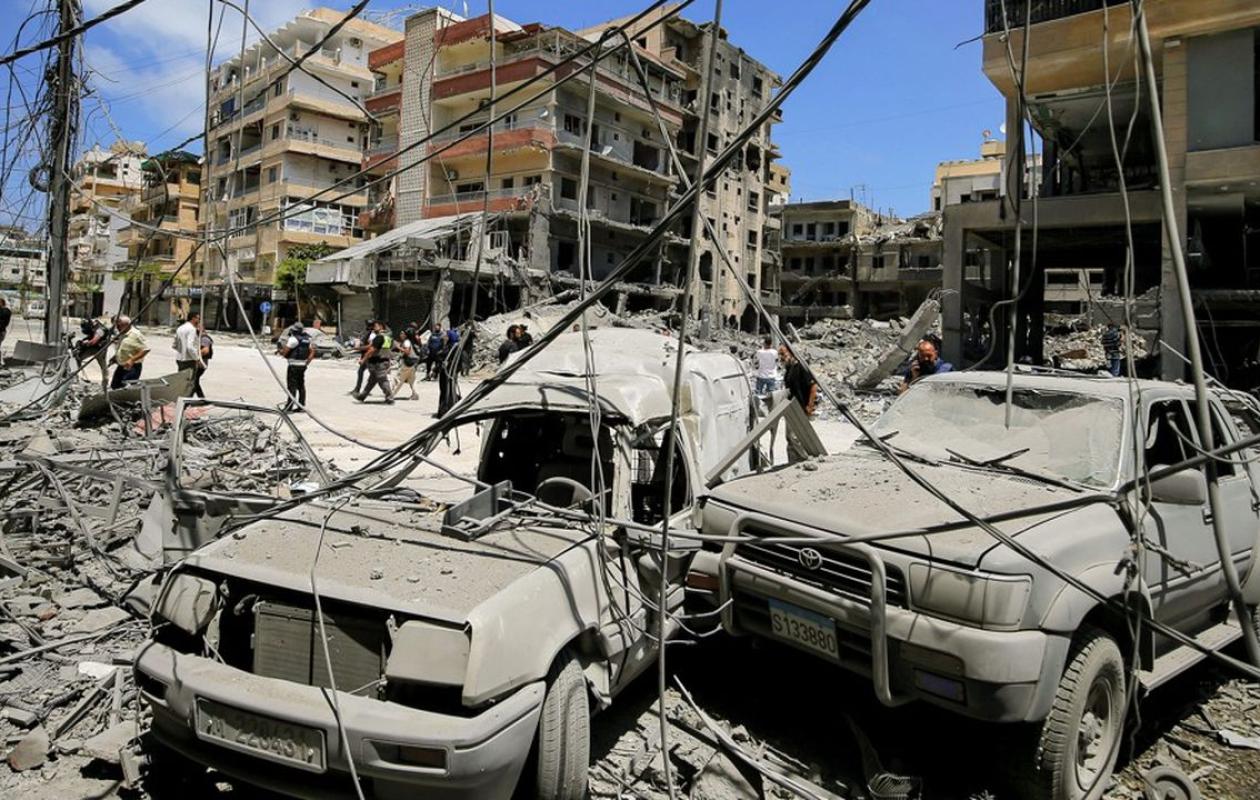
Israël et l'Iran s'attaquent mutuellement pour la première fois depuis la trêve
Israel and Iran resumed their direct attacks for the first time since the truce reached two months ago, dashing Donald Trump's hopes on Monday of quickly reaching an agreement to end the war in the Middle East.
After 100 days of conflict and the entry into force on April 8 of an already very fragile ceasefire, the region is ablaze again, despite calls for restraint from the American president addressed to Israel.
Since Sunday evening, Iran has fired six salvos of missiles at Israel, in response to an Israeli strike on the southern suburbs of Beirut, a stronghold of the pro-Iranian Hezbollah, which left two dead and 20 wounded.
And these shots are a "warning", Tehran warned, threatening a "broader response", while the Islamic Republic considers the two fronts of the conflict inseparable.
On Monday, Jerusalem awoke to the sounds of explosions and air raid sirens, AFP journalists reported. Schools will remain closed nationwide, and the Israeli army said it "remains on high alert and fully prepared to continue operations on all fronts against those who pose a threat."
In Tehran, a powerful explosion was heard in the morning by an AFP journalist, shaking the premises of the Ministry of Foreign Affairs, where he was attending a press conference.
A few hours earlier, Iranian state television had reported explosions in Tehran and the cities of Tabriz (northwest) and Isfahan (central), at the same time as the Israeli army announced that its air force had bombed "military targets belonging to the Iranian terrorist regime in western and central Iran".
A petrochemical plant in Mahshahr (southwest) was damaged and its staff evacuated, according to Iranian media.
Israel, for its part, indicated that it had struck and destroyed defense systems in Iran. "No self-respecting country would tolerate such an attack," commented Israeli Ambassador to the United States Yechiel Leiter on X.
While skirmishes have taken place in recent days around the Strait of Hormuz between the United States and Iran, this is the first time Tehran has targeted Israeli territory since the ceasefire of April 8 and that Israel has bombed Iranian soil.
This resumption of hostilities will "affect" talks with the United States even if diplomatic negotiations via the Pakistani mediator continue, according to Iranian Foreign Ministry spokesman Esmail Baghai.
The US president, who has made no secret of his disagreements with Israeli Prime Minister Benjamin Netanyahu in recent days, had nevertheless called on Israel not to retaliate, according to the American website Axios. "I'm the one who decides (...), not him," he asserted in an interview with the Financial Times on Sunday.
They had already had a heated exchange a few days ago, according to Mr. Trump, who was unhappy with the Israeli offensive in Lebanon as he seeks a way out of a conflict that is very unpopular in the United States, with the midterm elections approaching.
In this volatile context, oil prices, which have already soared in recent weeks due to the blockade of the Strait of Hormuz, were rising again: around 07:20 GMT, the barrel of Brent, the European reference, gained 4.95% to $97.80.
And global stock markets were trading in the red in the face of this "fragile and unpredictable situation", according to a financial analyst.
Fueling fears of a further escalation of the conflict, the Houthi rebels in Yemen, allied with Iran, claimed responsibility for an attack against Israel from Yemen and decreed a ban on Israeli navigation in the Red Sea, another strategic maritime route.
And in Saudi Arabia, rescue services issued a brief alert to the population in the province of Al-Kharj where the American base of Prince Sultan is located.
Iraq announced on Sunday evening the temporary closure of its airspace, as did Syria - partially.
Iran also closed its airspace in the western part of the country on Sunday evening until further notice. Flights at both airports in the capital were suspended.
The Middle East "does not need an escalation," lamented the European Union's foreign policy chief Kaja Kallas, while Beijing said it was "deeply concerned."
These attacks further diminish the prospect of a possible agreement to end the war that began on February 28 with Israeli-American airstrikes. Pakistani Interior Minister Mohsin Naqvi, whose country is mediating the conflict, has left Tehran, according to an official Pakistani source.
Especially since there are still many sticking points: control of the Strait of Hormuz (essential for hydrocarbon trade), the Iranian nuclear program and its stockpile of highly enriched uranium, as well as the fate of Iranian assets frozen abroad under the effect of sanctions.
Another difficulty is the question of whether or not to include Lebanon in any potential agreement between Washington and Tehran. The United States is trying to keep the two fronts separate, while Tehran is demanding a comprehensive agreement.
Quoted by the Mehr news agency, Iranian diplomacy advisor Ali Safari stated that the missile launches took place "after more than a month of restraint in the face of repeated ceasefire violations" by Israel, which is conducting incessant strikes in Lebanon.
The official Lebanese news agency ANI reported on Monday morning new bombings in the south, particularly in the region of Tyre, a thousand-year-old city.
Israeli airstrikes on Lebanon have killed 3,613 people since the start of the war on March 2, according to the latest official figures released Sunday. On the Israeli side, 29 soldiers and one civilian contractor have been killed in Lebanon, according to the army.














Commentaires (3)
Participer à la Discussion
Règles de la communauté :
💡 Astuce : Utilisez des emojis depuis votre téléphone ou le module emoji ci-dessous. Cliquez sur GIF pour ajouter un GIF animé. Collez un lien X/Twitter, TikTok ou Instagram pour l'afficher automatiquement.