§
Since Thursday, April 16, offices have been open in Spain for immigrants wishing to apply for regularization. Launched two days earlier by the government of Pedro Sánchez, this vast plan is presented as "a necessity" in the face of an aging population, but also as a lever to support the economy, currently one of the most dynamic in Europe.
“Nearly half a million people” in an irregular situation are affected, announced the Socialist Prime Minister, Pedro Sanchez, in a letter to the Spanish people, published on X. “This regularization is, above all, an act of normalization. It consists of recognizing the reality of nearly half a million people who are already part of our daily lives,” he continued.
To facilitate the implementation of its plan, the Spanish government will adopt a "royal decree," a regulation provided for in the Constitution which must then be published in the Official Journal, without having to go through a vote in Parliament, where the executive does not have a majority.
To be eligible, people must prove that they have been living in Spain for at least five months before January 1, 2026 and have no criminal record.
Associations already under pressure
NGOs and associations accredited by the Ministry of Migration are on the front line to support asylum seekers in their applications. On the ground, these structures are already overwhelmed.
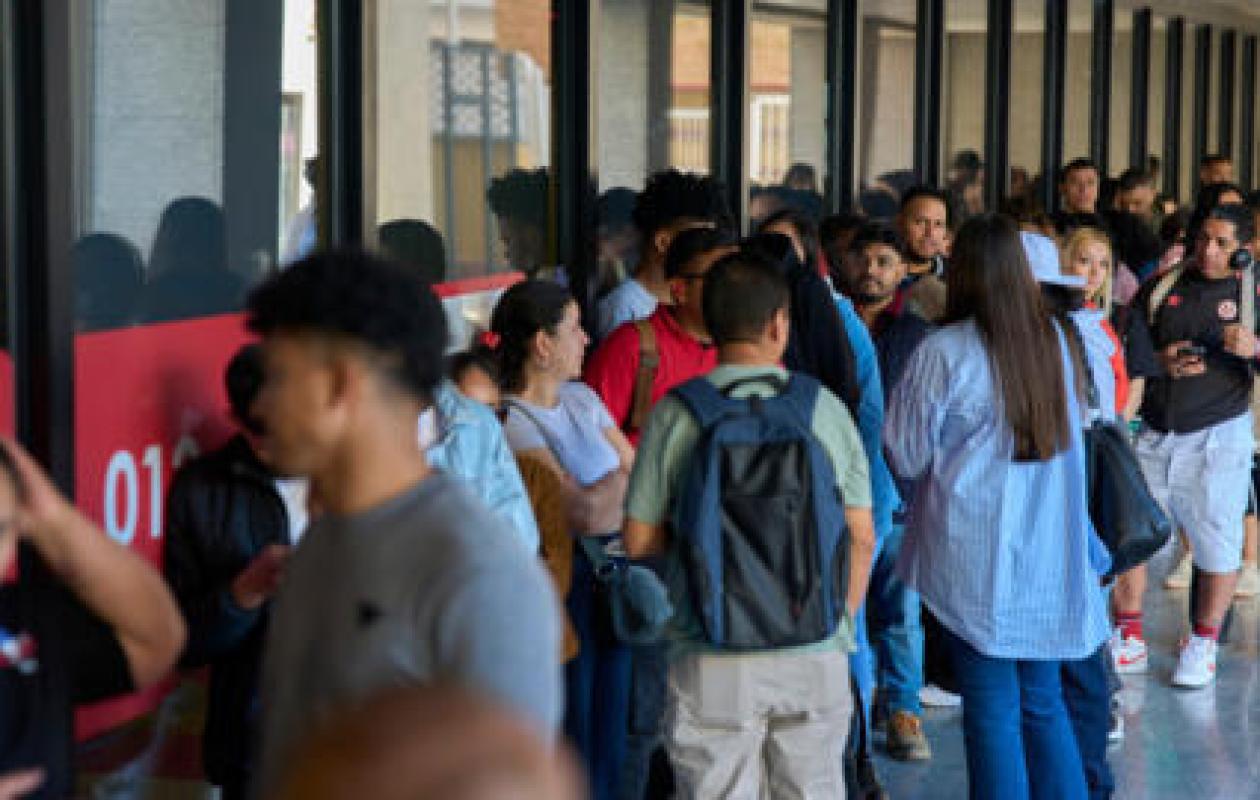
In one of these centers, located in southern Madrid, dozens of people are waiting to be seen by a social worker to prepare their files, reports our correspondent in Madrid, Diane Cambon. "For me, the deadlines are very tight," acknowledges Maria Sanchez, a social coordinator. "They only have two and a half months to submit their criminal record certificate."
A race against time
According to the coordinator, it will take a few more days for the teams to adapt to the system. "We were a bit tentative with the first people who came this morning. We didn't know how the system was going to work," she explains.
"The role of associations recognized by the Ministry of Foreign Affairs will be essential," she adds, "because the majority of applications will be made online. In person, the system will quickly become overwhelmed."
Among the applicants was Nelson, a Peruvian, who arrived with all his documents neatly arranged to register online with the association's help. "This law is a relief, because we come here to work, to help our families," he confided. "I can't stand walking down the street anymore, stressed, thinking the police are going to ask me questions or arrest me. We want to live well," he continued.
Upon submission of their application, immigrants will be able to benefit from social security as well as a renewable one-year residence permit.























Commentaires (8)
Participer à la Discussion
Règles de la communauté :
💡 Astuce : Utilisez des emojis depuis votre téléphone ou le module emoji ci-dessous. Cliquez sur GIF pour ajouter un GIF animé. Collez un lien X/Twitter, TikTok ou Instagram pour l'afficher automatiquement.