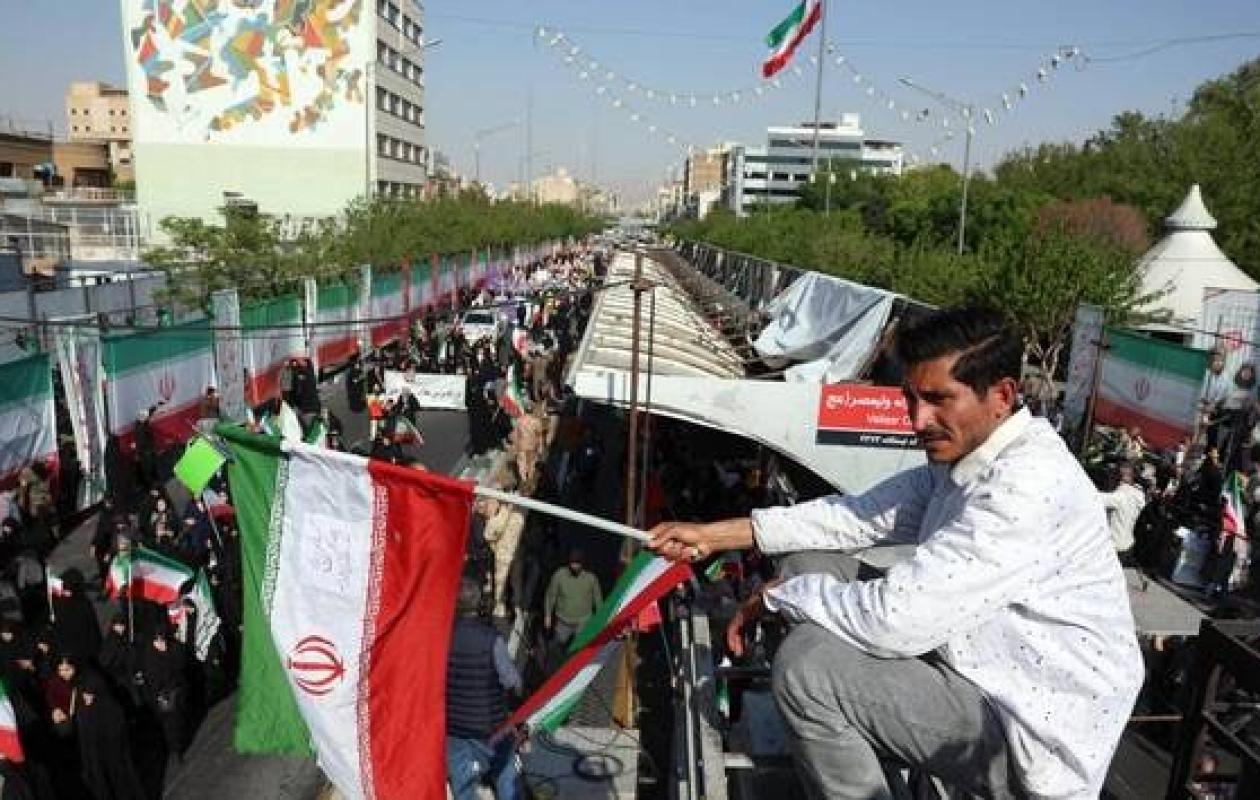
L’Iran dément avoir accepté le transfert de son uranium enrichi, Trump dit qu’il sera «rapporté aux Etats-Unis»
Iran denied on Friday having agreed to the transfer of its enriched uranium stockpile, a day after Donald Trump made statements on the issue, which lies at the heart of the disputes between Washington and Tehran. Donald Trump asserted on Friday that the enriched uranium stored by Iran would be "brought back to the United States."
Iran denied on Friday having agreed to the transfer of its enriched uranium stockpile, a day after Donald Trump made statements on the issue, which lies at the heart of the disputes between Washington and Tehran. "Iran's enriched uranium will not be transferred anywhere. Just as Iranian soil is sacred to us, this matter is of great importance to us," Foreign Ministry spokesman Esmail Baghai told state television.
Iran denied on Friday having agreed to the transfer of its enriched uranium stockpile, a day after Donald Trump made statements on the issue, which lies at the heart of the disputes between Washington and Tehran. "Iran's enriched uranium will not be transferred anywhere. Just as Iranian soil is sacred to us, this matter is of great importance to us," Foreign Ministry spokesman Esmail Baghai told state television.
"They have agreed to give us back the nuclear dust," the US president said on Thursday, referring to Iran's stockpiles of highly enriched uranium, before assuring on Friday that there were no "blocking points" left to reach an agreement.
Damaged
Iran's nuclear program was severely damaged as a result of the 12-day war in June 2025 and the intense US-Israeli strike campaign of recent weeks.
But Tehran still has a significant amount of highly enriched uranium at 60%, a level close to the 90% threshold required for the manufacture of an atomic bomb, not to mention the stockpile of uranium enriched to 20%, a critical threshold allowing it to quickly rise to 60%, then 90%.
The Islamic Republic denies seeking to acquire nuclear weapons. The fate of this stockpile remains uncertain, as Tehran refuses access to inspectors from the International Atomic Energy Agency (IAEA) at the devastated nuclear sites.
But while previous discussions focused on the nuclear issue, the current talks are primarily aimed at "ending the war," according to the Iranian Foreign Ministry spokesman. "And naturally, the range of topics discussed has broadened."
In this context, Iran announced the reopening on Friday of the Strait of Hormuz, a vital maritime route for global hydrocarbon trade.
“Thank you!” the US president immediately responded in a series of messages on his Truth social network, unilaterally asserting that the Islamic Republic had committed to “never closing” the strait again. He also specified that the US blockade of Iranian ports would remain “fully in place” until the end of negotiations.
"The opening and closing of the Strait of Hormuz is not decided on the Internet, it is determined on the ground," retorted Esmail Baghai, warning of a possible Iranian response to the "violation of the ceasefire" that this naval blockade represents.
Iran denied on Friday having agreed to the transfer of its enriched uranium stockpile, a day after Donald Trump made statements on the issue, which lies at the heart of the disputes between Washington and Tehran. "Iran's enriched uranium will not be transferred anywhere. Just as Iranian soil is sacred to us, this matter is of great importance to us," Foreign Ministry spokesman Esmail Baghai told state television.
"They have agreed to give us back the nuclear dust," the US president said on Thursday, referring to Iran's stockpiles of highly enriched uranium, before assuring on Friday that there were no "blocking points" left to reach an agreement.
Damaged
Iran's nuclear program was severely damaged as a result of the 12-day war in June 2025 and the intense US-Israeli strike campaign of recent weeks.
But Tehran still has a significant amount of highly enriched uranium at 60%, a level close to the 90% threshold required for the manufacture of an atomic bomb, not to mention the stockpile of uranium enriched to 20%, a critical threshold allowing it to quickly rise to 60%, then 90%.
The Islamic Republic denies seeking to acquire nuclear weapons. The fate of this stockpile remains uncertain, as Tehran refuses access to inspectors from the International Atomic Energy Agency (IAEA) at the devastated nuclear sites.
Do you think the blockade announced by the United States is a legitimate response to Iran?
But while previous discussions focused on the nuclear issue, the current talks are primarily aimed at "ending the war," according to the Iranian Foreign Ministry spokesman. "And naturally, the range of topics discussed has broadened."
Elsewhere on the web
Canada is looking for experienced Senegalese workers
Canadian Online Immigration
In this context, Iran announced the reopening on Friday of the Strait of Hormuz, a vital maritime route for global hydrocarbon trade.
" THANKS "
“Thank you!” the US president immediately responded in a series of messages on his Truth social network, unilaterally asserting that the Islamic Republic had committed to “never closing” the strait again. He also specified that the US blockade of Iranian ports would remain “fully in place” until the end of negotiations.
"The opening and closing of the Strait of Hormuz is not decided on the Internet, it is determined on the ground," retorted Esmail Baghai, warning of a possible Iranian response to the "violation of the ceasefire" that this naval blockade represents.
He also stressed the "importance" of lifting international sanctions that are stifling the Iranian economy and of compensating for damages suffered during the war.
Trump says Iranian uranium will be "brought back to the United States"
Donald Trump asserted on Friday that enriched uranium stored by Iran would be "brought back to the United States," shortly after claiming that an agreement with Tehran was very close to ending the war.
"We're going to go together with Iran" to recover the enriched uranium, he asserted at an event for the conservative organization Turning Point in Arizona, before adding: "We're going to get it, we're going to bring it back to the United States shortly."
The US president's statements come after those of the Iranian Foreign Ministry spokesman, who had earlier asserted that Iran's stockpiles of enriched uranium were "going nowhere." But for Donald Trump, the United States will collect "the nuclear dust" using "a lot of bulldozers."
"We're going to need the biggest bulldozers you can imagine," the American president told a crowd of supporters.
Donald Trump uses the term "nuclear dust" to refer both to Iran's stockpiles of enriched uranium and sometimes to nuclear material buried during US strikes on Iran in June 2025.
The US president appeared increasingly optimistic on Friday about the chances of an agreement with Tehran, declaring during a call with AFP that there were no "sticking points" left and that such an agreement was "very close".










Commentaires (1)
Participer à la Discussion
Règles de la communauté :
💡 Astuce : Utilisez des emojis depuis votre téléphone ou le module emoji ci-dessous. Cliquez sur GIF pour ajouter un GIF animé. Collez un lien X/Twitter, TikTok ou Instagram pour l'afficher automatiquement.