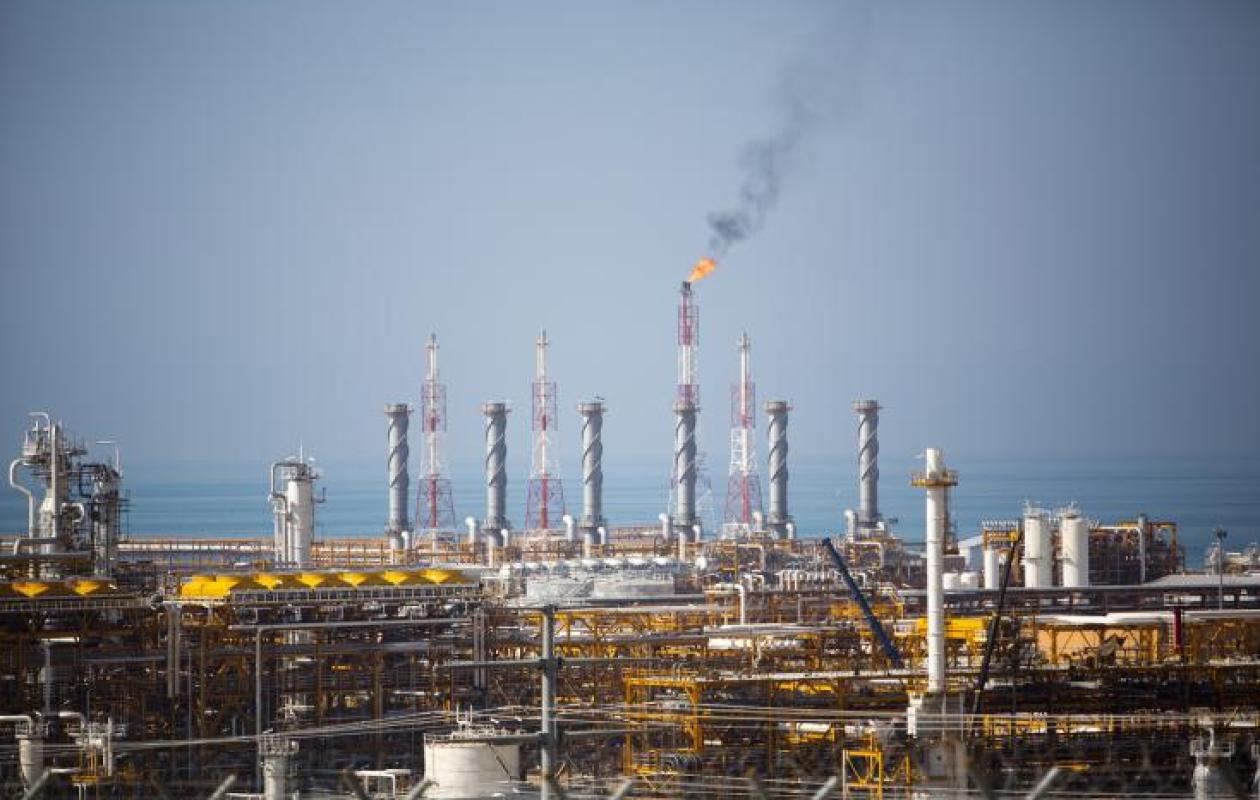
L'Iran frappe des installations énergétiques dans le Golfe et menace d'intensifier ses représailles
Iran launched a series of attacks on energy facilities in Gulf countries on Wednesday evening after suffering another blow with the death of its intelligence minister, killed in a strike claimed by Israel.
After the powerful security chief Ali Larijani, the intelligence minister Esmail Khati: the list of Iranian officials killed by the United States and Israel has been growing since the death of the supreme leader, Ayatollah Ali Khamenei, on the first day of the war on February 28.
This "series of eliminations" will "not cease," assured Israel, which promised the same fate to Mojtaba Khamenei, designated on March 8 as his father's successor, but who has not appeared publicly since.
The conflict, which has claimed more than 2,200 lives in nearly three weeks, mostly in Iran and Lebanon, according to authorities, is engulfing the Middle East and worrying the entire world, particularly for its consequences on the economy and the supply of hydrocarbons.
The Islamic Revolutionary Guard Corps, the ideological army of the Islamic Republic, threatened on Wednesday evening to intensify their strikes if the Iranian energy sector was targeted again, after an attack on a major Iranian gas facility in the Gulf.
"If this happens again, attacks on your energy infrastructure and that of your allies will not stop until it is completely destroyed, and our response will be far more severe than the attacks of tonight," they said in a statement.
- "Law of retaliation" -
In retaliation, Iran had previously launched a series of strikes on Wednesday evening targeting energy facilities in the Gulf.
They notably affected Qatar, which reported "considerable damage" to its main gas facility, denouncing "a direct threat to its national security" and ordering the expulsion of two Iranian diplomats.
Saudi authorities announced that five drones approaching an energy facility had been intercepted in the east of the country, and reported that a missile fragment had fallen near a refinery south of the capital Riyadh.
Iran has thus carried out its threats after the fire in "parts of the gas facilities" of South Pars/North Dome, the world's largest natural gas field, caused according to Tehran by "strikes by the American-Zionist enemy".
"A logic of retaliation is now in effect and a new level of confrontation has begun," warned the Speaker of the Iranian Parliament, Mohammad Bagher Ghalibaf.
The Israeli army has remained silent about this attack, of which the United States was informed, but in which it did not participate, according to official American sources.
- New rise in oil prices -
In a written message, the new supreme leader paid tribute on Wednesday to Ali Larijani, whose funeral is scheduled for Thursday in the holy city of Qom, and promised to avenge him.
The text was not accompanied by any photos or videos and does not dispel speculation about his condition: American and Israeli officials say Mojtaba Khamenei is "disfigured", others say he has a leg injury.
Although "severely weakened by attacks on its leaders and military capabilities", the Islamic Republic is still in place, acknowledged the head of US intelligence, Tulsi Gabbard, before the US Congress.
An immediate consequence of the strikes targeting energy facilities: oil prices have started to rise again, with the price of Brent crude climbing by nearly 5% on Wednesday.
In an attempt to contain this surge in prices, the Trump administration suspended some restrictions on fuel transportation.
The American president once again denounced the refusal of US allies to help them secure the Strait of Hormuz, through which normally one-fifth of the world's hydrocarbon trade passes.
This major energy shock has very concrete consequences around the world: the airline SAS said it would cancel at least a thousand flights in April, a few days after already raising its prices, and Italy adopted a decree to reduce fuel prices.
In Lebanon, the second main front of the war, Israel is continuing its offensive against the pro-Iranian Shiite movement Hezbollah.
The heart of Beirut, the capital, was hit by Israeli strikes that killed 12 people, including an official from Hezbollah's television channel.
The European Union, for its part, called on Israel to cease its operations in Lebanon, expressing concern about an already "catastrophic" humanitarian situation with more than one million displaced people.
French Foreign Minister Jean-Noël Barrot announced he will travel to Lebanon on Thursday to demonstrate "France's support and solidarity with the Lebanese people, caught up in a war they did not choose."
The Israeli army also announced that it had struck Hezbollah in the region of Tyre, a city listed as a UNESCO World Heritage Site.
"We are very resilient, we are used to bombings," Moustapha Khairallah, a refugee in Saïda, told AFP. But "they are increasingly targeting civilians. I was forced to leave," concluded the old man, leaning on two canes.












Commentaires (2)
Participer à la Discussion
Règles de la communauté :
💡 Astuce : Utilisez des emojis depuis votre téléphone ou le module emoji ci-dessous. Cliquez sur GIF pour ajouter un GIF animé. Collez un lien X/Twitter, TikTok ou Instagram pour l'afficher automatiquement.