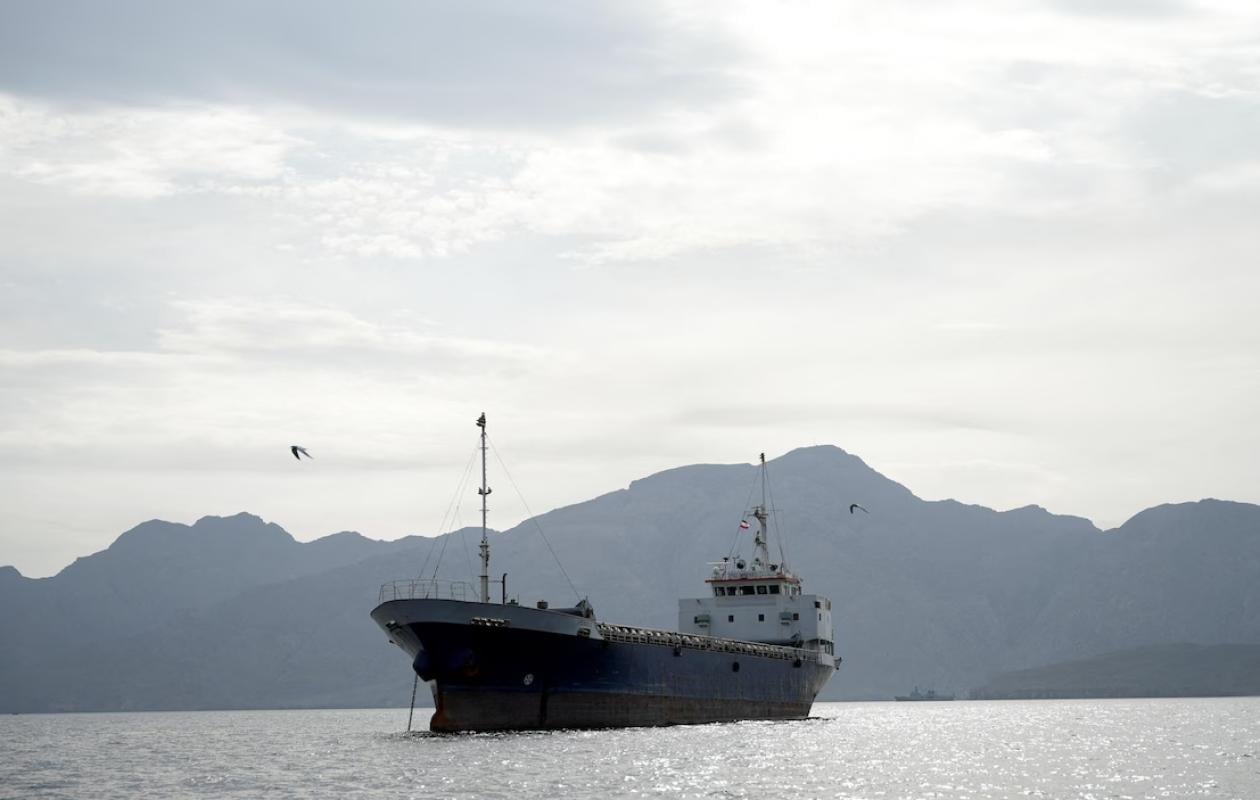
L'Iran verrouille de nouveau le détroit d'Ormuz face au blocus américain
Iran announced on Saturday that it was regaining "strict control" of the Strait of Hormuz in response to the continued US blockade of Iranian ports, reversing its decision of the previous day to reopen this strategic maritime route.
Tehran had "agreed in good faith to allow the passage of a limited number of oil tankers and commercial vessels" but the Americans, violating their commitment, "continue to engage in acts of piracy under the cover of the so-called blockade", denounced the Iranian armed forces command.
"For this reason," the situation has returned "to its previous state, and this strategic passage is now under the strict control" of Iran, he added.
This announcement comes amid a flurry of diplomatic efforts to try to end the war in the Middle East, beyond the two-week ceasefire that came into effect on April 8 between Iran and the United States.
Earlier on Saturday morning, the MarineTraffic website showed a tentative resumption of commercial traffic in the strait: more than a dozen vessels were transiting it, including several oil tankers, but at least two appeared to be turning back around 09:00 GMT.
A cruise ship, the Celestyal Discovery, crossed the sea route without passengers to connect Dubai to Muscat, a first since the start of hostilities on February 28, according to the same source.
Before the war, some 120 ships passed through this bottleneck daily, according to the trade journal Lloyd's List.
21 ships blocked
After Tehran announced the reopening of the strait on Friday, Donald Trump stated that the American blockade of Iranian ports would remain "fully in effect" until the end of negotiations, and that it would "continue" if no agreement was reached at the end of the negotiations.
"Since the start of the blockade, 21 ships have complied with directives from US forces ordering them to turn around and return to Iran," the US Central Command said Saturday on X.
In Iran, the conservative newspaper Kayhan expressed its hostility to the détente process, judging that "opening the vital artery of Hormuz before receiving compensation, the total lifting of sanctions (...) gives the perfidious enemy the opportunity to regain strength in the middle of the battle."
The resumption of traffic in the strait had given a boost to financial markets and caused a sharp fall in oil prices, as a fifth of the world's crude oil and liquefied natural gas usually transit through this sea route.
Pakistani diplomacy
On Friday, Mr. Trump told AFP that a peace agreement was "very close" and claimed that Iran had agreed to hand over its enriched uranium, a key point in the negotiations as the United States and Israel accuse the Islamic Republic of wanting to acquire the atomic bomb - which it denies.
But Tehran denied having accepted the transfer of these stocks of fissile material.
The Pakistani army chief and prime minister announced on Saturday that they had completed separate diplomatic visits as part of peace efforts, to Iran on the one hand and to Saudi Arabia, Qatar and Turkey on the other.
"I am leaving Antalya (Turkey) (...) with renewed determination (...) to continue our close cooperation aimed at promoting dialogue and diplomacy for lasting peace and stability in the region," tweeted Prime Minister Shehbaz Sharif.
Direct talks between Iran and the United States, the first in-person meetings at this level since the 1979 Islamic Revolution, were held on April 11 in Islamabad but failed. Further discussions could take place in Pakistan in the coming days.
Among the signs of a return to normalcy, Iran announced the partial reopening on Saturday of its airspace, which had been closed since the Israeli-American offensive against its territory on February 28, as well as several airports, including the two most important in Tehran.
Lebanon hopes for a "permanent agreement".
In Lebanon, the other front of the war, many displaced people have taken to the road to return to their homes, in the south of the country or the southern suburbs of Beirut, a Hezbollah stronghold.
The cessation of hostilities between Israel and the pro-Iranian movement began at midnight on Friday (9:00 PM GMT Thursday), after a month and a half of conflict that has left nearly 2,300 dead on the Lebanese side and displaced more than a million people.
Prime Minister Benjamin Netanyahu warned that Israel had "not yet finished" the work to secure Hezbollah's disarmament. The Israeli army maintains a presence in Lebanon within a ten-kilometer-deep strip of land along the border.
But Donald Trump, who brokered this ten-day truce, raised his voice towards his ally: "Israel will no longer bomb Lebanon. They are FORBIDDEN from doing so by the United States. That's enough!!!" he insisted.
Lebanon is now working towards "a permanent agreement" with Israel, according to its president Joseph Aoun, who promised to "safeguard the rights" of the people and not "cede an iota of national territory" in the discussions.
Hezbollah, which attacked Israel in early March in retaliation for the Israeli-American attack on Iran, warned that its fighters kept their "finger on the trigger" and were wary of "the enemy's treachery."


![[EXCLUSIF] Actes contre nature : L'homme politique Ndiaga Seck arrêté par la DIC](https://image.seneweb.com/content/news/2026-20-15//thumb_1260x800_6a0726d812df9_nxDd5CNBzl.jpg)







Commentaires (6)
Participer à la Discussion
Règles de la communauté :
💡 Astuce : Utilisez des emojis depuis votre téléphone ou le module emoji ci-dessous. Cliquez sur GIF pour ajouter un GIF animé. Collez un lien X/Twitter, TikTok ou Instagram pour l'afficher automatiquement.