Missiles iraniens: 14 blessés près de Tel-Aviv, une fillette dans un "état grave"
Fourteen people were injured in Bnei Brak, near Tel Aviv, including an eleven-year-old girl evacuated to a hospital "in serious condition", Israeli rescue services announced Wednesday after further Iranian missile strikes.
Elsewhere, in Kiryat Shmona in northern Israel, a 61-year-old man was slightly injured by the blast of an explosion, according to Magen David Adom (MDA), the Israeli equivalent of the Red Cross.
The incident occurred following shots fired from Lebanon, where Israel and the Iranian-backed Islamist movement Hezbollah have been at open war again for almost a month.
Early in the evening, the MDA reported four more injuries, without providing further details.
As the country prepared for Passover, which began at sunset, air raid sirens warning of approaching missiles fired from Iran sounded repeatedly in the Tel Aviv area, in the morning and again in the late afternoon.
In Bnei Brak, a city predominantly populated by ultra-Orthodox Jews, the MDA indicated that it had evacuated "14 injured people to hospitals, including an 11-year-old girl in serious condition with shrapnel injuries to her limbs, a 36-year-old woman and a 13-year-old boy (...) with shrapnel injuries, and 11 slightly injured people."
Sheba Hospital in Ramat Gan, a city near Bnei Brak, reported that the girl arrived "in very critical condition".
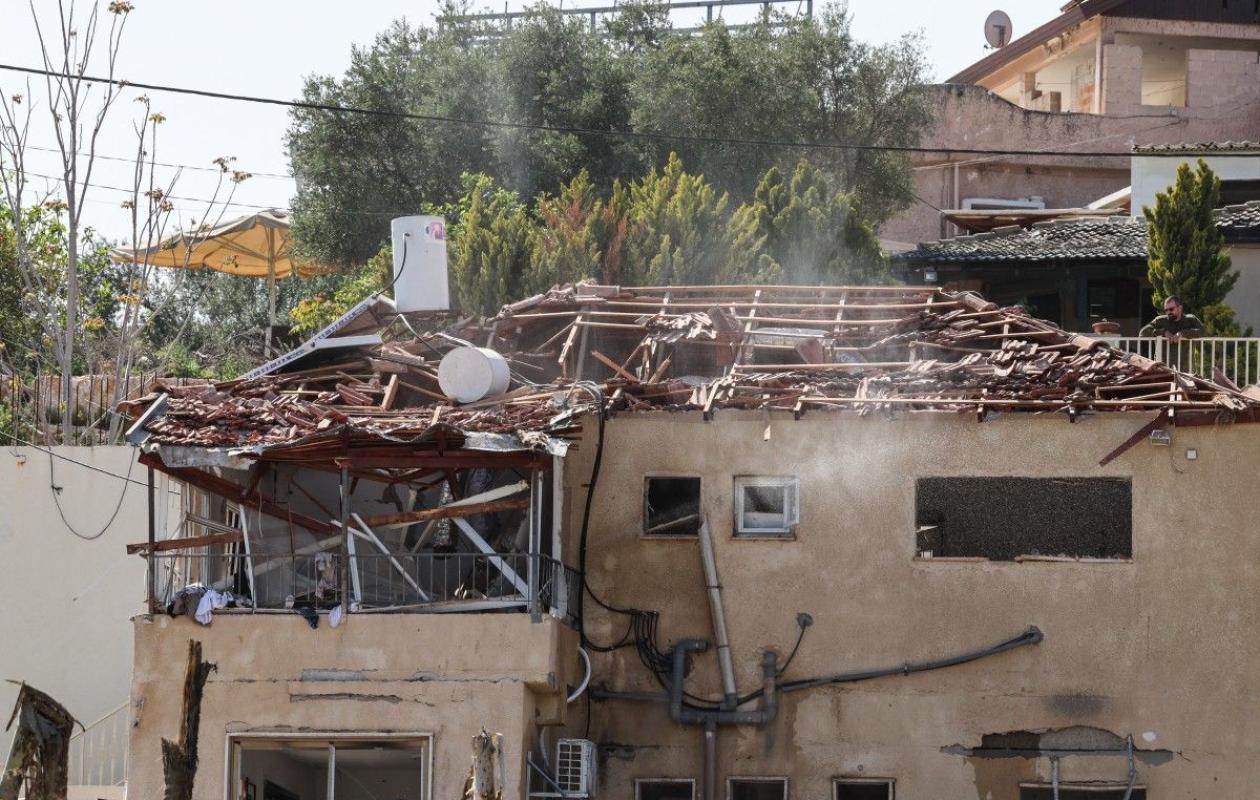
In Bnei Brak, an AFP photographer saw rescuers taking care of several children near a building whose roof was damaged following an impact.
In Kiryat Shmona, the top of a house was damaged by a projectile fired from Lebanon, another AFP photographer observed.
Israel and the United States triggered a regional war on March 28 by attacking Iran.
The Islamic Republic is responding to the bombings by firing missiles and drones, mainly at the Arab monarchies of the Gulf and Israel.
- "Disappointed" -
Around twenty missiles were fired from Iran towards Israel on Wednesday, according to Israeli media military correspondents.
The late afternoon alerts sounded as Israeli television broadcast images of giant tables set up in underground shelters in preparation for the "seder," the traditional dinner marking the beginning of Passover.
In the center of Tel Aviv, about fifty people gathered in an underground parking lot to celebrate this iconic holiday of family reunions.
"We were supposed to be in a hotel in Rome tonight, as part of an organized family trip with the children," Jeffrey, a stand-up comedian and comic book author, told AFP, saying he was "quite annoyed" that his stay had been cancelled due to a lack of flights.
Hadas Ragolsky is optimistic: "The people in this shelter have created their own families."
"There are also people who have not been able to join their loved ones in other cities or elsewhere because of the missiles," this city councilor continued.
Iranian forces claim to be targeting military objectives in Israel. On Wednesday, the Israeli Foreign Ministry accused Iran of "war crimes," including targeting "children."
Israeli military censorship prohibits the media from reporting on possible damage to or near military or strategic sites, but the army allows the publication of images and information on damage in residential areas.
According to Israel, over 90% of Iranian missiles are intercepted by the country's air defense system, one of the most advanced in the world. However, debris from these interceptions regularly causes damage and casualties.
Since the start of the war, 19 civilians have been killed in Israel by shrapnel or explosions following missile fire from Iran.








![[Édition Spéciale] Tout Sur la Composition du Nouveau Gouvernement](https://image.seneweb.com/content/news/2026-23-01//thumb_1260x800_6a1ddca812d4e_URisx1rdt4.jpg)











Commentaires (9)
Participer à la Discussion
Règles de la communauté :
💡 Astuce : Utilisez des emojis depuis votre téléphone ou le module emoji ci-dessous. Cliquez sur GIF pour ajouter un GIF animé. Collez un lien X/Twitter, TikTok ou Instagram pour l'afficher automatiquement.