New York veut légaliser les chats dans ses épiceries
Thousands of cats inhabit these stores, even though animals are prohibited. Local officials want to change the law.
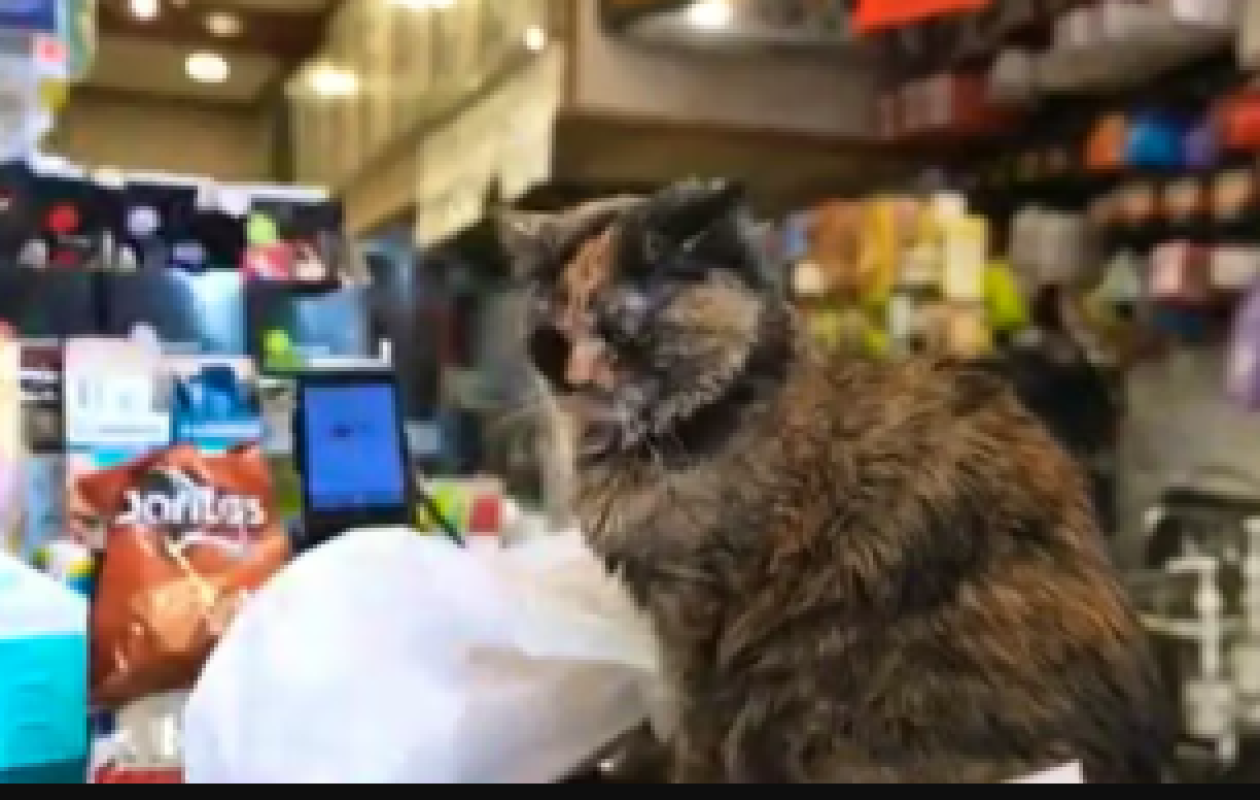
Like Simba, the large ginger and white cat with thick fur, thousands of felines populate New York City grocery stores, even though animals are prohibited. Local elected officials are proposing to legalize their presence, with the goal of guaranteeing them better living conditions.
"Simba is very important to us because he keeps rodents out of the store," Austin Moreno, at the checkout of a grocery store in Manhattan, told AFP.
The animal also attracts customers. "People often come in to ask what its name is. Recently, some little girls saw it for the first time. Now they come every day," adds Mr. Moreno.
The presence of animals in New York City food stores is punishable by a fine of 200 to 350 euros. Dan Rimada estimates that approximately one-third of the roughly 10,000 "bodegas" (the name given to neighborhood grocery stores) still have a cat in their home.
During the Covid pandemic, the thirty-year-old began photographing these felines, posting the pictures on the Instagram account "Bodega Cats of New York". "They are an integral part of the urban fabric and it's an important story to tell," he says.
Last year, Dan Rimada launched a petition in favor of legalizing "bodega cats", collecting nearly 14,000 signatures.
Free vaccines and sterilizations
Inspired by this petition, New York City Councilman Keith Powers proposed a bill protecting owners of "bodega cats" from penalties.
"He also ensures that these cats receive the care they deserve by offering free vaccinations and sterilizations," the elected official explains, in order to avoid adding to the large population of stray cats, estimated at half a million in New York.
His initiative, however, failed to convince the associations.
Becky Wisdom, who rescues cats in Brooklyn, says she is "stunned" that public funds are being considered for business owners rather than low-income families wanting to have their cats spayed or neutered.
She also regrets that this initiative does not take into account mistreatment. Many cats are kept locked in cellars, deprived of food, water, litter and veterinary care, forced to reproduce in order to sell their kittens or abandoned when they get old and sick.
She is also concerned that such a measure deprives her of a "means of pressure" on the bodegas: the associations remind people that the presence of cats is illegal, so that owners let them take care of them.
Moreover, whatever the city decides, it is the State of New York that has the final say on the rules applying to businesses, adds Allie Taylor, president of the animal rights advocacy group Voters for Animal Rights.
The latter therefore calls for the adoption of another, more binding initiative brought before the State Assembly by a Manhattan representative, Linda Rosenthal.
Already behind laws banning the declawing of cats by amputation or the sale in pet shops in order to promote adoption, Ms. Rosenthal proposes to allow the presence of felines in bodegas under certain conditions, from mandatory veterinary visits to "a safe place to sleep".

























Commentaires (1)
Participer à la Discussion
Règles de la communauté
💡 Astuce : Utilisez des emojis depuis votre téléphone ou le module emoji ci-dessous. Cliquez sur GIF pour ajouter un GIF animé. Collez un lien X/Twitter, TikTok ou Instagram pour l'afficher automatiquement.
Se connecter
Commentez avec votre profil, votre photo, et soyez averti des réponses.