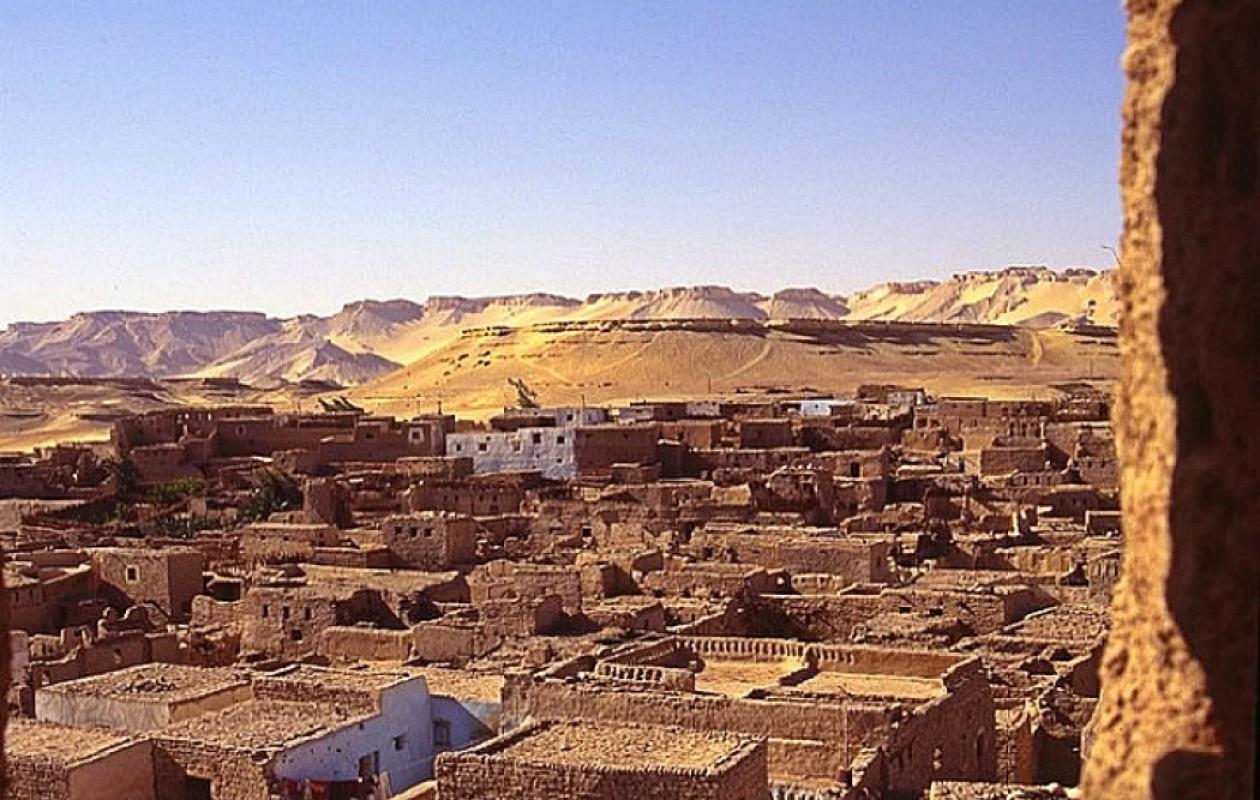
Une oasis saoudienne s'adapte à la vie sous le feu iranien
Long prized by Riyadh residents seeking peace and coolness, the Al-Kharj oasis has been caught up in the upheavals of the Middle East and now lives to the rhythm of Iranian missiles and drones.
Renowned for its dates and palm-lined avenues, this city, located nearly 100 kilometers southeast of the Saudi capital, is home to the imposing Prince Sultan air base on its outskirts, where American soldiers are stationed.
A dozen of them were wounded in an Iranian attack on the base, US media reported in March, also mentioning damage to several refueling aircraft. Tehran, for its part, claimed to have hit an advanced surveillance aircraft worth several hundred million dollars.
For more than a month, the Islamic Republic has been increasing its strikes against its Gulf neighbors, whom it accuses of serving as a launching base for American operations in the war launched on February 28 by the United States and Israel against Iran.
"Unusual"
The residents of Al-Kharj, however, display a certain stoicism in the face of the regular volleys that fly over their homes.
"We hear the loud noises of the interceptions, but we rarely see anything in the sky," Abdoullah, a resident in his sixties who requested anonymity, told AFP.
The city has nevertheless paid a direct price in the conflict: on March 8, two migrant workers were killed when a projectile hit a residential area, marking the first recorded civilian deaths in the kingdom.
Last week, two people were injured by falling debris from intercepted drones that damaged several homes, according to authorities.
"This is unusual in Al-Kharj," Abdoullah acknowledged as he left a mosque after the afternoon prayer.
But, he reports, "life is normal and continues as usual, without change or panic."
Iran's Revolutionary Guards, its ideological army, accuse Riyadh of hosting advanced American fighter jets, including "F-35 and F-16 fighters", as well as refueling infrastructure.
US forces returned to Saudi Arabia in 2019, several years after their withdrawal, thanks to an agreement between Washington and Riyadh, with US media reporting at the time that several hundred soldiers were being hosted at Prince Sultan Air Base.
The base had previously served as a command center during the first Gulf War, then briefly during the US invasion of Iraq in 2003, before troops left the oil monarchy later that year.
"Routine unchanged"
The presence of American troops in Saudi Arabia, a long-standing sensitive issue, remains controversial in conservative circles, who deem it incompatible with the country's role as guardian of Islam's two holiest sites, Mecca and Medina. It was invoked by Osama bin Laden to justify the attacks of September 11, 2001.
But at first glance, the peaceful setting of Al-Kharj gives little indication of its military past.
The region has long been a center of agricultural production, its verdant fields and bountiful orchards offering a striking contrast to the vast desert expanses that cover most of the kingdom.
In a local restaurant, customers check the latest news on their phones about the conflict between bites of rice and grilled meat.
"Al-Kharj is now making headlines, and friends are calling us to check on us," Turki, a civil servant, says ironically.
And despite regular strikes targeting the base, no visible security reinforcements were observed by AFP.
"I would be lying if I said I wasn't scared when I heard the explosions or when I learned of the deaths of foreign workers," admits Batoul, a 21-year-old student in a full black veil, while sipping a coffee.
But she says she refuses to give in to fear.
"As you can see, I'm studying outside," she says. "My routine hasn't changed at all because of the war."
![[Exclusif] Révision de la Constitution : Le Conseil constitutionnel invalide le vote des députés](https://image.seneweb.com/content/news/2026-28-09//thumb_1260x800_6a4fdec36aa84_Tpa745ZYpD.jpg)















Commentaires (1)
Participer à la Discussion
Règles de la communauté
💡 Astuce : Utilisez des emojis depuis votre téléphone ou le module emoji ci-dessous. Cliquez sur GIF pour ajouter un GIF animé. Collez un lien X/Twitter, TikTok ou Instagram pour l'afficher automatiquement.
Se connecter
Commentez avec votre profil, votre photo, et soyez averti des réponses.