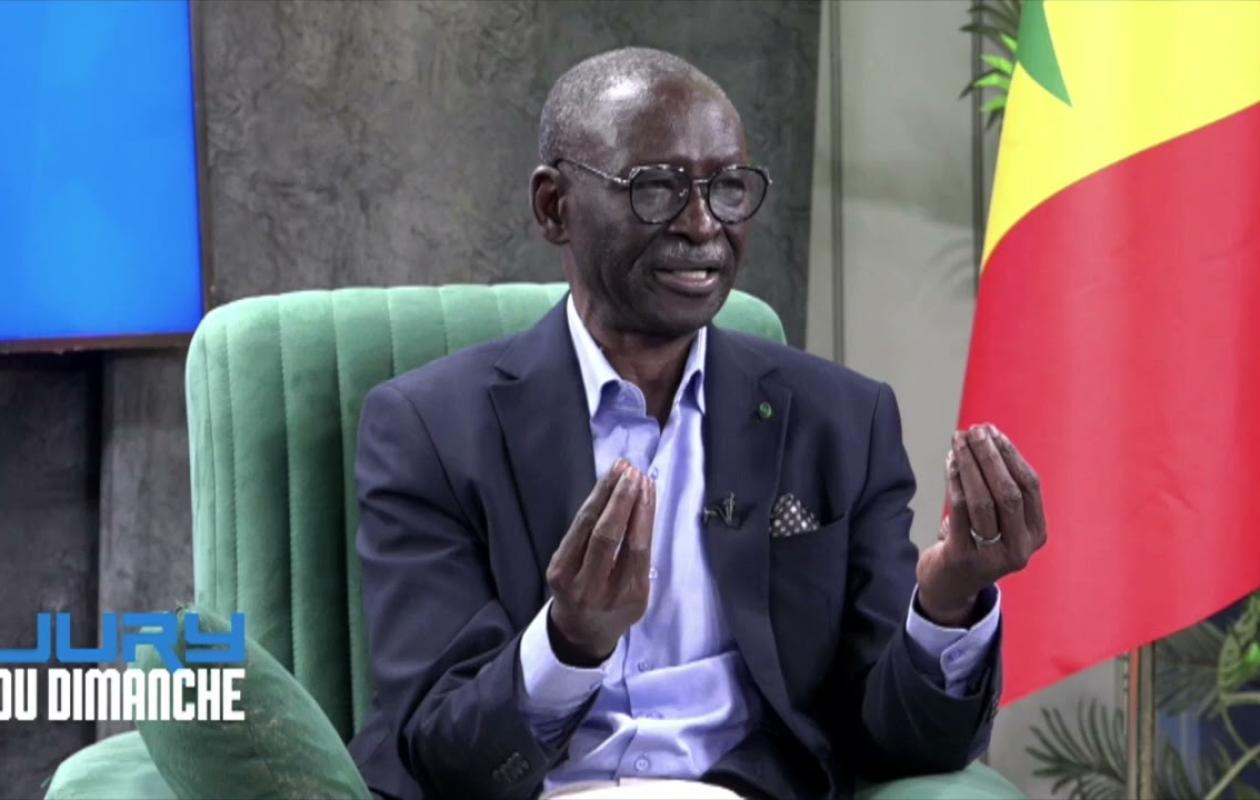
Armée-Nation: « On ne peut pas servir deux maîtres », les vérités crues d'un ancien haut gradé
Invited to the "Sunday Jury" program, retired Colonel Babacar Diouf discussed the role of the army, the fragility of international balances, and the challenges of a changing world. Blending military history, philosophy, and geopolitics, his argument painted a clear picture: without strong institutions and a deep connection to the people, no nation can endure.
For Colonel Babacar Diouf, the military parade is neither folklore nor a simple show of force. It represents a moment of truth, almost a symbolic pact between the army and the citizens. "Those you rely on, here they are." In this display, he sees a form of mutual recognition: "The army shows itself, the people are reassured." In his view, this relationship is comparable to the popular enthusiasm generated by major national sporting victories. But unlike sports, it concerns the security and survival of the nation. "When this bond is lost, a nation is lost. Once a soldier, always a soldier," he adds.
The colonel emphasizes the specific socialization fostered by the army: discipline, a sense of sacrifice, and the primacy of the collective interest. Even after leaving the ranks, this framework remains. And while some positions may occasionally be jarring, they are, according to him, based on one constant: the national interest as the absolute compass. "One cannot serve two masters."
The former officer then broadened his remarks to a reflection on human nature. Drawing on Socrates, he evoked the idea that humankind carries within it a memory of goodness, an aspiration for beauty and justice. But this dimension coexists with another, darker reality. He invoked the image of Dr. Jekyll and Mr. Hyde to illustrate this duality: "Human beings are capable of the best as well as the worst, depending on the context." Hence the importance of institutions. "I don't know of any country that collapses when the justice system and security forces hold firm." Conversely, their weakening paves the way for chaos.
On the international stage, Colonel Babacar Diouf offers a clear-eyed, almost anxious, interpretation of the current era. He echoes Antonio Gramsci's famous phrase: "The old world is dying, the new one struggles to be born… and in this in-between, monsters emerge." For him, this period of transition is historically dangerous. Previous cycles show that such moments often lead to major conflicts. The former colonel thus highlights a fundamental contradiction within the international system.






















Commentaires (6)
Participer à la Discussion
Règles de la communauté :
💡 Astuce : Utilisez des emojis depuis votre téléphone ou le module emoji ci-dessous. Cliquez sur GIF pour ajouter un GIF animé. Collez un lien X/Twitter, TikTok ou Instagram pour l'afficher automatiquement.