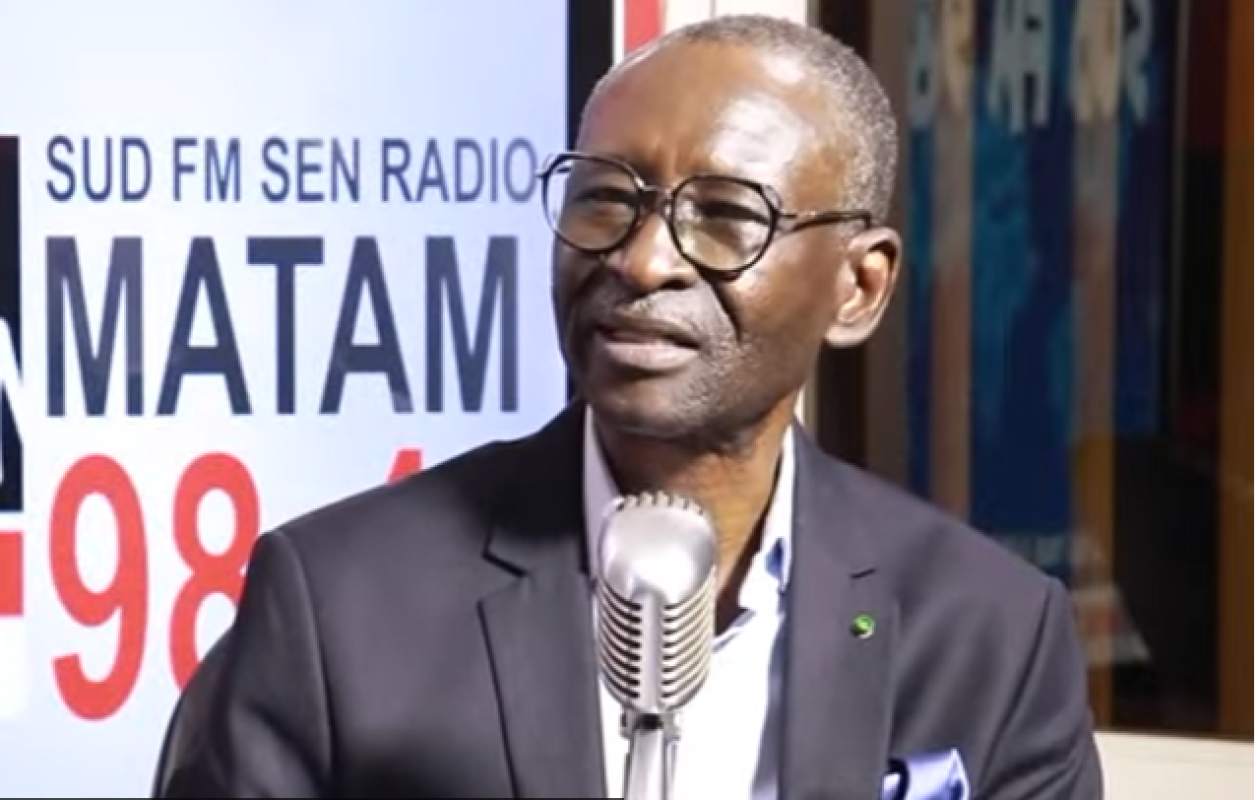
"Les monstres surgissent" : l'analyse du colonel Babacar Diouf sur l'avenir du monde
Invited to the "Sunday Jury" program, retired Colonel Babacar Diouf discussed the conflict in the Middle East. Between regional rivalries and indirect clashes between major powers, he warned of a crisis with potentially global consequences. For Colonel Babacar Diouf, the Middle East cannot be reduced to a mere theater of local conflicts. It is a central space in the global balance of power. "In geopolitics, the first thing we look at is the map. And the map often explains why a crisis is here and not elsewhere," he said. The region concentrates vital resources, particularly energy, and is home to strategic chokepoints such as the Strait of Hormuz. "Nearly 20% of the world's oil transits through there. As soon as there is tension, the entire global economy is impacted," the guest emphasized.
Iran-Israel: A defining rivalry
At the heart of current tensions lies the rivalry between Iran and Israel. The colonel highlights a strategic reality often overlooked: “Israel has a unique characteristic: it lacks strategic depth. This means that any threat is immediately existential for it.” Faced with this, Iran is deploying a strategy of regional influence, fueling a climate of indirect confrontation. Colonel Babacar Diouf also qualifies the idea of a homogeneous Arab bloc. According to him, alliances are fluid: “States have no eternal friends nor permanent enemies. They only have interests.” This logic explains the repositioning of actors like Saudi Arabia and the United Arab Emirates, despite past convergences.
Beyond the region, the colonel situates the conflict within a broader transformation of the international system. Drawing on Antonio Gramsci, he describes a dangerous period of transition: “We are in a phase where one world is no more and another has not yet been born. And in such moments, monsters emerge.” An instability which, according to him, has historically led to major conflicts.
The colonel also addressed the role of major powers, particularly the United States, in the face of the rise of China and Russia. "Behind the local actors, there are always the major powers. Each seeks to defend its strategic interests." He emphasized a key shift: domination now relies on controlling flows. "Today, the dominant strategy is controlling flows: energy flows, financial flows, raw materials."
The Middle East, a hub for energy routes
In this context, certain areas become crucial. The Strait of Hormuz is one of the most sensitive points. "Energy is at the heart of everything. As soon as there's a price increase, it reverberates throughout the entire economy." Prolonged instability in this area could trigger major economic shocks worldwide. Colonel Babacar Diouf also warns of the consequences for African countries: "We're going to have problems with harvests, food, and energy."
For economies dependent on imports, the risk is real. It takes the form of inflation, food insecurity, and social fragility. Thus, Colonel Babacar Diouf warns against a simplistic interpretation of the conflict in the Middle East. "There are no longer purely local conflicts. Everything is now interconnected," he says. Before concluding: "In a world undergoing transformation, this crisis reveals new power dynamics. And behind the visible clashes, a reality is undeniable: the control of resources and flows has become the true battleground of the 21st century."














Commentaires (3)
Participer à la Discussion
Règles de la communauté :
💡 Astuce : Utilisez des emojis depuis votre téléphone ou le module emoji ci-dessous. Cliquez sur GIF pour ajouter un GIF animé. Collez un lien X/Twitter, TikTok ou Instagram pour l'afficher automatiquement.