Jeudi, Vendredi et Samedi Saints : Le guide spirituel pour vivre intensément les trois jours sacrés
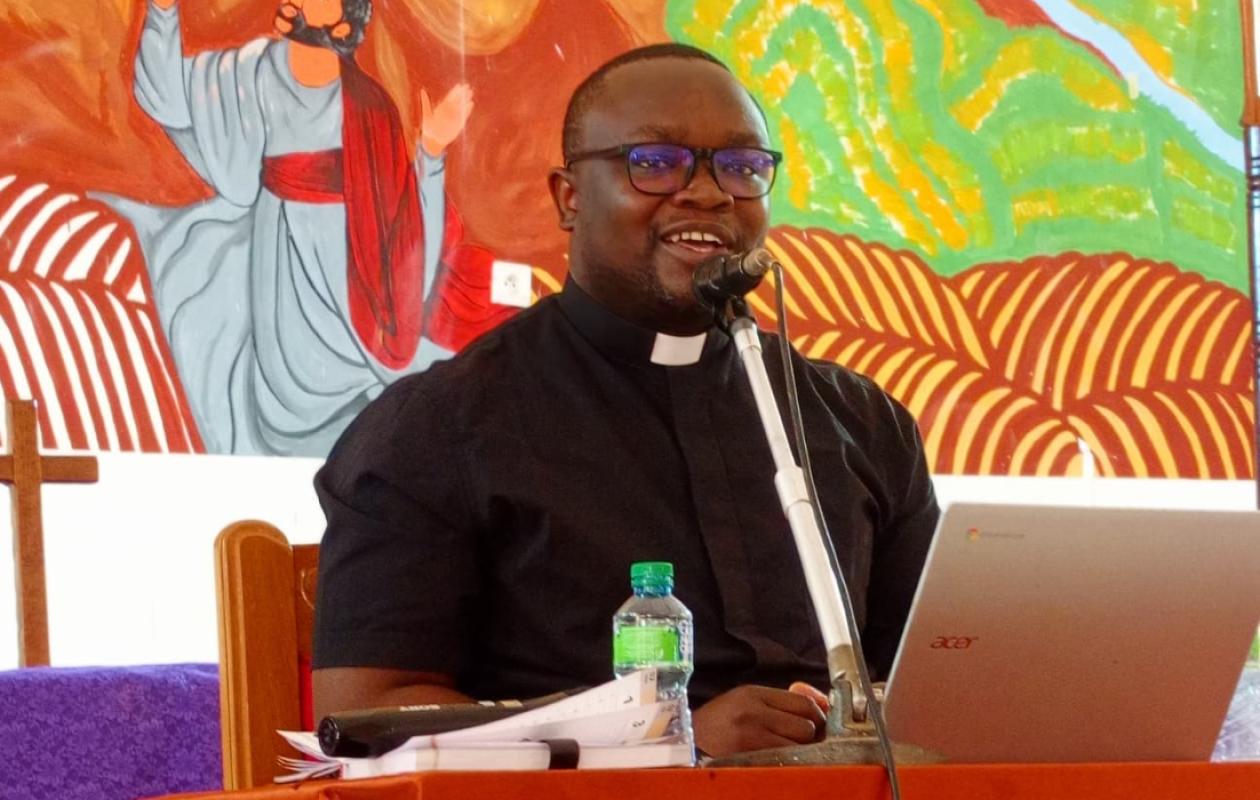
The Easter Triduum is a three-day period during which the Church celebrates the Passion, Death, and Resurrection of Jesus Christ. This period, which begins on Thursday evening with the Lord's Supper (Jesus' last meal with his disciples), ends on Saturday evening with the Easter Vigil, which celebrates the Resurrection of Jesus. In this interview, Father Louis Samba Diouf, a theologian specializing in liturgy and sacraments and vicar at Saint Francis of Assisi Parish in Keur Massar, explains the importance of this period in the Christian faith.
What is the Easter Triduum and why is it important?
The Paschal Triduum, from the Latin triduum, is a three-day period encompassing the three sacred days that constitute the absolute high point of the Christian liturgical year. It extends from the evening of Holy Thursday until Vespers on Easter Sunday, thus including Good Friday and the Easter Vigil on Holy Saturday. Its importance is unparalleled in the Christian faith, for it is not simply a historical commemoration. Indeed, the liturgy serves as a living memory—what the Greeks call anamnesis—of the Passion, Death, and Resurrection of Christ. The Triduum is, in this sense, the beating heart of the entire Christian faith.
What are the key events commemorated during the Easter Triduum ?
The Triduum comprises three inseparable moments that form a single mystery in three acts:
Holy Thursday, the Lord's Supper: This is the evening of the institution of the Eucharist and the ministerial priesthood. Jesus washes the feet of his disciples, a moving gesture of God kneeling before humanity, and institutes the new commandment of brotherly love. The liturgy concludes in silence: the altar is stripped bare, the bells fall silent, the tabernacle is empty. The Church enters into the night.
Good Friday, the Passion of the Lord: A day of adoration and hope. The liturgy has three parts: the Liturgy of the Word with the solemn reading of the Passion according to Saint John, the Universal Prayer for all humanity, and the Adoration of the Cross. No Eucharist (Mass) is celebrated: the Cross itself is the sacrifice.
Holy Saturday, the Easter Vigil : The night of all nights. The Easter Vigil is structured in four main parts: the Liturgy of Light (the new fire, the proclamation of the Exsultet), the Liturgy of the Word (seven readings from the Old Testament recounting the history of salvation), the Liturgy of Baptism (initiation of catechumens), and finally the Eucharistic Liturgy. It is on this night that the Alleluia resounds, after being absent for forty days.
How can Christians fully participate in the Easter Triduum?
Full, conscious, and active participation, in the words of the Second Vatican Council in the constitution on the sacred liturgy, is a spiritual requirement, not an optional ideal. Here's how to live it out concretely:
-Attend the three liturgical celebrations in their continuity, understanding that they form an indivisible whole.
-Prepare yourself through fasting and prayer: the fast of Good Friday and, according to tradition, that of Holy Saturday are acts of asceticism which prepare the soul.
-Read and meditate on the liturgical texts in advance (the seven readings of the Easter Vigil, the Passion according to John), so as not to be simply a spectator, but an actor in the mystery.
-To participate in the procession and the adoration of the Cross with a recollected heart, bringing to it one's own sufferings and those of the world.
-Renewing one's baptismal promises during the Easter Vigil with a renewed awareness of what it means to be baptized.
-Observing the silence of Holy Saturday as a spiritual practice: it is the day of God's great silence in the tomb, an invitation to inner contemplation.
What message does the Church want to convey to the faithful during this period?
The central message is profoundly deep: God's love is stronger than death. The Church wants to communicate to the faithful that suffering, failure, and death are not the final chapter of human history. More specifically, the Church conveys several fundamental truths:
God's solidarity with the human condition : by dying on the Cross, Christ did not remain distant from our suffering, he went through it from within.
The absolute gratuity of divine love : salvation is not earned, it is given. Good Friday reminds us that God loves first, unconditionally.
Hope as a concrete theological virtue : Easter is the certainty, based on fact, that life prevails.
The communal and baptismal dimension : the Triduum is a celebration of the whole Church, the Body of Christ gathered together.
How can we integrate the teachings of the Easter Triduum into daily life?
The Triduum is a life program. Here's how to make it a permanent source of inspiration:
Holy Thursday, service and the Eucharist : Integrate into your daily life concrete acts of humble service towards others, like the washing of feet. Also, nurture a regular Eucharistic life.
Good Friday is the offering of suffering : learning to unite one's own crosses (illnesses, trials, injustices) to the Cross of Christ. The spirituality of Good Friday transforms endured suffering into offered suffering, thus giving it meaning and dignity.
Holy Saturday, hope in the darkness : To experience periods of God's silence, doubt, or spiritual trial not as abandonment, but as a passage. Holy Saturday teaches the art of persevering in the night while awaiting the dawn.
From the Easter Vigil, joy as the foundation : Let the Easter Alleluia resonate as the background tone of all Christian existence: a joy that does not ignore suffering, but transcends it.
What are the traditions and customs associated with the Easter Triduum in the Church?
The liturgical and popular traditions of the Triduum are extraordinarily rich, inherited from twenty centuries of lived faith:
Universal liturgical traditions
The silence of the bells from Holy Thursday evening until the Easter Vigil.
The stripping of the altars after the Mass of Holy Thursday, a powerful gesture that bares the sacred space as a sign of mourning.
The procession to the altar of repose, where the Blessed Sacrament is solemnly transferred after the Mass of the Lord’s Supper.
The Stations of the Cross on Good Friday, a devotional practice that originated in the Middle Ages to allow the faithful to spiritually relive Jesus' journey to Calvary.
The Exsultet, this magnificent Easter proclamation sung by the deacon at the flame of the Paschal candle, is one of the oldest texts of the Christian liturgy.
The new fire lit at the entrance of the church on Easter night, a symbol of Christ the light driving out the darkness.






















Commentaires (4)
Participer à la Discussion
Règles de la communauté :
💡 Astuce : Utilisez des emojis depuis votre téléphone ou le module emoji ci-dessous. Cliquez sur GIF pour ajouter un GIF animé. Collez un lien X/Twitter, TikTok ou Instagram pour l'afficher automatiquement.