Le Pharaon de Moïse enfin démasqué : quand la Salāt éclaire l’égyptologie
In the book "13.7 – The Code of the Universe Encrypted in Muslim Prayer: Salat," we have, by the grace of Allah (SWT), explored a unique interpretation of Muslim prayer by deciphering what appears to be its "DNA," inscribed in its movements—bows and prostrations. This deciphering, as surprising as it is fascinating, opens new access to profound messages about the universe and the odyssey of humanity. Among the most significant episodes of this story is that of Moses facing Pharaoh. While the figure of Moses (PBUH) is widely known, one question remains: who was the Pharaoh of Moses? It is to this investigation that we invite you.
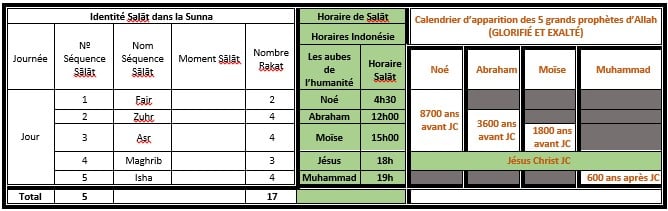
Using the Salat as a framework for understanding the religious practice, we place this confrontation around 1800 BCE, which allows us to identify the Pharaoh who likely reigned at that time. We will compare archaeological, Egyptological, and Quranic knowledge to demonstrate that the Pharaoh in question, as well as his era, corresponds to the accounts and data relating to the Exodus of the Children of Israel under the leadership of Moses. This focus on Egyptology also allows us to contextualize the calendar derived from the "Salat tablets" and reveal its transcendent significance, inscribed within the intricacies of the Islamic religion, namely the Quran and the Salat.
The significance of the story of Moses confronting Pharaoh, as a sign left by Allah (SWT) for humanity, powerfully illustrates the clash between divine light and darkness. And to Pharaoh, Allah addresses this striking warning: “Today We will preserve your body so that you may be a sign for those who come after you. But indeed, many among the people are heedless of Our signs” (Surah 10, verse 92).
I. Sources for archaeologists and Egyptologists
Today, the place that Egyptology holds in global cultural fascination echoes the place that Allah (SWT) chose to give it in the Quran 1460 years ago: “None believed in the message of Moses except a group of young men from his people, for fear of retribution from Pharaoh and their chiefs. Indeed, Pharaoh was arrogant in the land and was among the transgressors. ” (Quran 10:83)
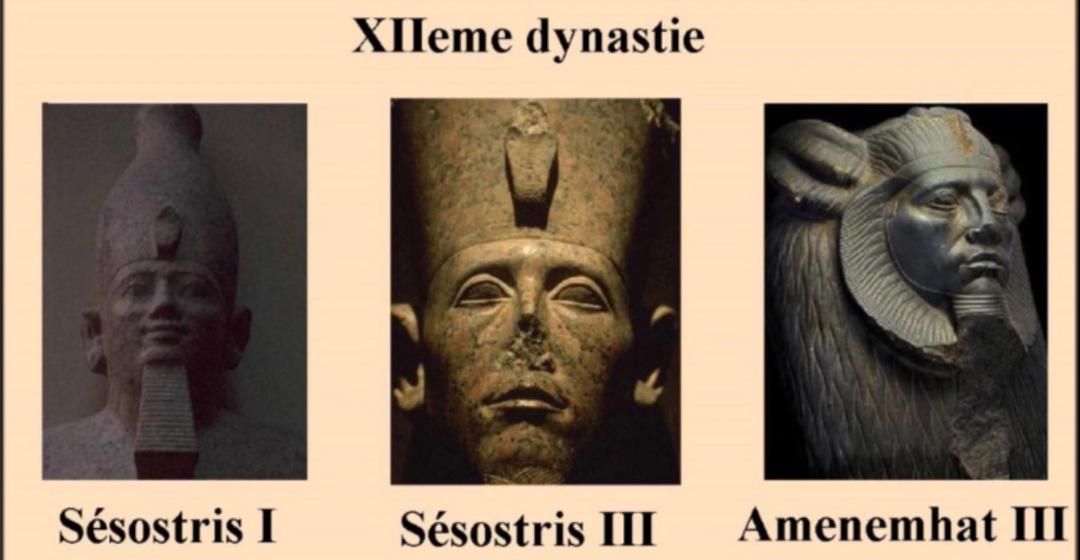
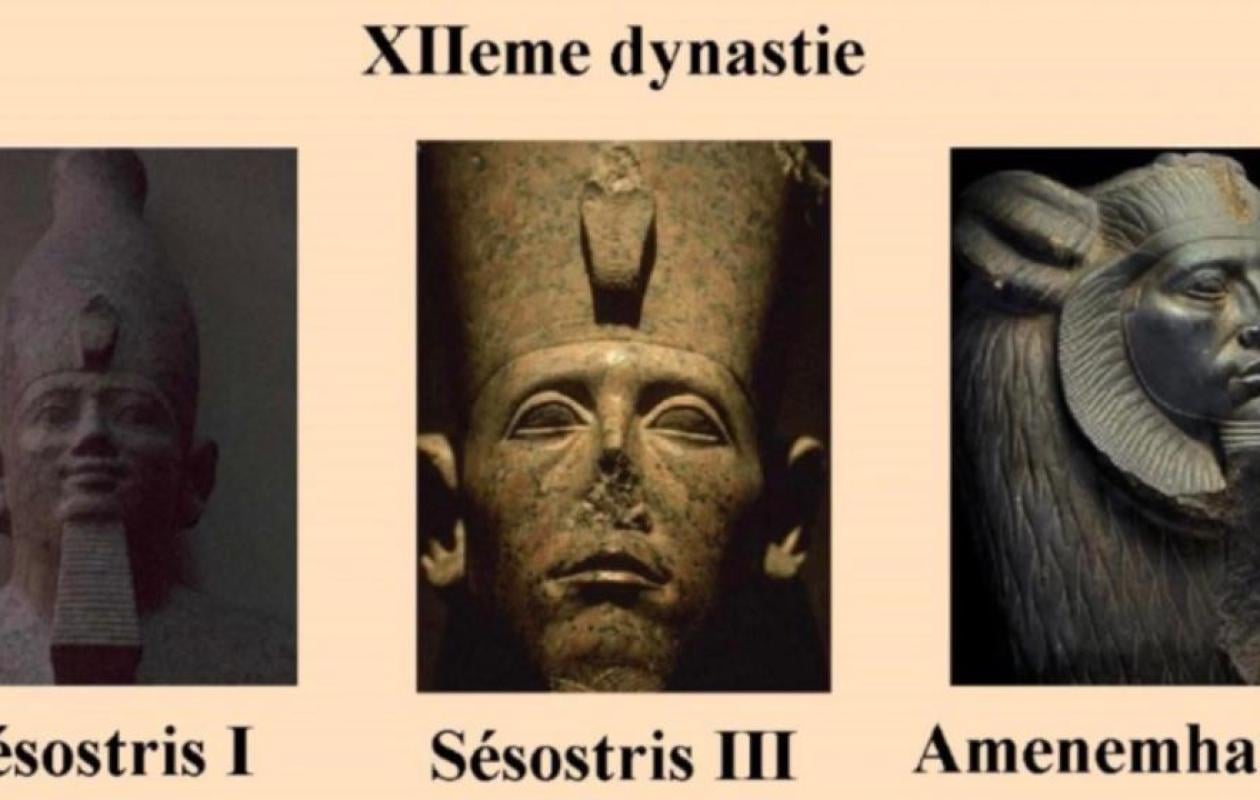
In 1800 BC, the Pharaoh was Amenemhat III
Amenemhat III was the son and successor of Sesostris III. He reigned for approximately 50 years, from around 1860-1840 BC, and brought the 12th Dynasty of Egypt to its zenith. Pharaoh Amenemhat III was the sixth pharaoh of the 12th Dynasty . This dynasty was at the origin of the Egyptian renaissance within the framework of the Middle Kingdom. Pharaonic Egypt experienced a golden age during the reign of the 12th Dynasty , with Thebes (modern-day Luxor) as its capital. However, here too, the Greeks misled the world by misrepresenting the name of the capital of the 12th Dynasty. In reality, the true name of the capital is Waset.
-ET: the crossroads
-OUAS: means a scepter, a stick , which resembles a cane with the pommel in the shape of an antelope's head and the end of the scepter is in the shape of a fork.
Indeed, in prehistoric times, a clan chief was the one who killed snakes, which in shamanic culture symbolized evil forces. Therefore, the one holding the scepter pins the snake to the ground with the pitchfork (spiritually pinning down the evil forces) and thus symbolizes authority and is recognized as the chief.
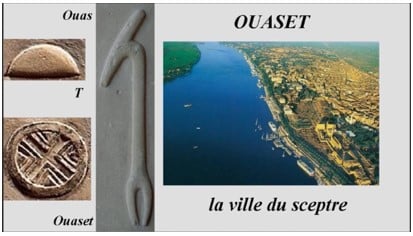
Waset, whose name means "city of the scepter," became the political capital of Egypt around 2060 BC and remained so for nearly a millennium. This name is not insignificant: it underscores the central role of the scepter—a staff of authority and protection—in the symbolism of pharaonic power. Associated with the control of evil forces, often represented by the serpent, this scepter became one of the major emblems of the legitimacy and power of Egypt's rulers.
However, the residence of the Pharaohs of the 12th Dynasty was the Fayoum oasis . With its Lake Fayoum (modern-day Lake Karun), a veritable inland sea 30 km in diameter (approximately 2000 km² at the time), the oasis allowed the Pharaohs of the 12th Dynasty to develop intensive agriculture without fearing the devastating floods of the Nile. This enabled them to present themselves as providers of sustenance to the people, consolidate their power, and even, in the case of Amenemhat III, deify themselves.
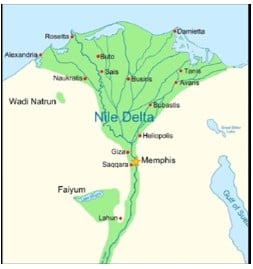
Moreover, Amenemhat III had locks built on the canal at the city's entrance, and the lock keys were placed at the base of two colossal statues representing him as the holder of the power to regulate the Nile's floods. We have a very explicit reference to this in the Quran: "And Pharaoh proclaimed to his people, saying, 'O my people, does not the kingdom of Misr [Egypt] belong to me, and these canals flowing beneath me? Then will you not see?'" (Quran 43:51 )
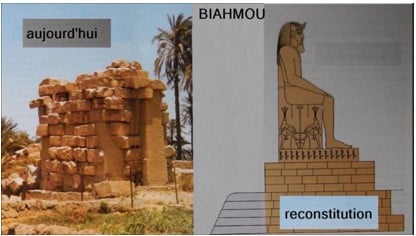
Amenemhat's investiture name was Ni-Maat-Re , meaning "He Who Rules by the Sun." He is also associated with the cult of Renenutet, a goddess often depicted with a cobra's head. This illustrates the omnipresence of the serpent symbol in the religious thought and power of the pharaohs of the 12th Dynasty.
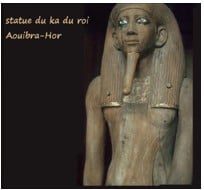
Shortly after his sudden disappearance, a child ascended the throne: King Hor. The statues that have come down to us freeze for eternity the image of a youthful king, with a lost gaze, as if suspended in a moment of fragility.
During his brief reign—approximately two years—and likely under the influence of a regency, Egypt entered a period of instability. Power gradually shifted to populations from the Near East, known as the Hyksos, marking a major turning point in the country's political history. How can we explain the abrupt end of the Twelfth Dynasty, which had reached its zenith under Amenemhat III, both militarily and administratively? And why did this transition not result in an internal succession, but rather benefit peoples who had previously been dominated?
One hypothesis strongly stands out: that of the disappearance of the pharaoh and his army during a catastrophic event — which I identify with drowning at the time of the Exodus.
We can therefore see that the Pharaoh's power rests on a doctrine whose pillars are:
II. The miraculous information in the Quran about Moses and Pharaoh.
Allah (SWT) gives us subtle details in the Quran that provide precise indications about Pharaoh, as we will see with the verses that relate the story of Moses. First, the miraculous signs that Allah (SWT) chose to send to Pharaoh:
1. The Staff, the Serpent that eats serpents. Surah 20 Ta-Ha :
“And what is that in your right hand, O Moses?” (20:17 ) He said, “It is my staff on which I lean, with which I strip leaves from the trees for my sheep, and I use it for other purposes.” (20:18 ) Allah said to him, “Throw it down, O Moses.” (20:19 ) So he threw it down, and behold, it was a snake crawling. (20:20 ) Allah said, “Seize it and do not fear; We will surely return it to its former state. ” (20:21 )
2. The White Hand, therefore the light: Surah 20 Ta-Ha
-And clasp your hand under your armpit: It will come out completely white without any harm, and that will be another wonder, S20V22
So that We may show you some of Our greatest signs. (20:23)
3. The mission to Pharaoh
Go to Pharaoh, for he has transgressed all bounds. (20:24 ) Go, you and your brother, with My wonders, and do not neglect to invoke Me. (20:42 ) Go to Pharaoh, for he has truly rebelled. (20:43 ) Then speak to him kindly. Perhaps he will remember or fear Me. (20:44)
It then becomes clear that, through the miracles granted to Moses, Allah (SWT) directly attacks the very foundation of the power of Pharaoh and his elite, a power they claim is of divine origin. This power rests in particular on the symbolism of the scepter—the embodiment of authority—and on an ideology of solar rule through the spiritual mastery of light.
Faced with this, Moses—a Hebrew, adopted and then a fugitive—appeared with unprecedented audacity before Pharaoh's court. He came not with symbols, but with tangible signs: a staff that transformed into a serpent and devoured those of the magicians, and a hand that radiated light. In other words, he concretely demonstrated what Pharaoh had only superficially claimed: mastery over the forces of evil and light, two pillars of Egyptian power.
But Moses' message goes beyond these signs. It calls to the essential: submission to Allah (SWT), the One and True God. In this sense, these miracles are not merely wonders; they are a proclamation: "There is no god but Allah." A veritable thunderbolt in an empire that Pharaoh and his false gods had plunged into the darkness of illusion and ignorance.
We can therefore understand Pharaoh's immediate reaction, accusing Moses and his brother Aaron of wanting to overthrow the established order, seize power — symbolized by the staff — and turn the people away from the dominant doctrine based on the association of deities.
Let's go further: The Fayoum oasis also symbolized the material power of the Pharaohs, a source of prosperity thanks to the lake and a 200km canal (the Joseph Canal) diverted from the Nile, which irrigated the valley of the Fayoum province. Moreover, Amenemhat III had locks built on the canal at the entrance to the city, and the lock keys were placed at the base of two colossal statues representing him as the holder of power over the opening and closing of the Nile floods. This is what the Quran miraculously recounts: a true sign and a reminder. Let's take a closer look at what Fayoum is:
-The province of Fayoum was called, at the time, Ta-She, the land of water.
-And Fayoum (or Fayum) is a Western pronunciation distortion of the true term, which is:
Payom (in the late Egyptian period) or Payum (in the Coptic period)
However, its script and hierographic name have remained exactly the same and mean "the sea"!
The Fayoum—today associated with Lake Birket Qarun, identified with the ancient Lake Moeris—once covered a much larger area, possibly reaching approximately 2,000 km². For the ancient Egyptians, this body of water was considered a true sea and referred to as such. Therefore, it was precisely in this "sea," whose waters Pharaoh claimed to control, that Allah is said to have chosen to engulf them: him, Amenemhat III, his nobles, and his army.
Thus, because they refused to believe and continued the enslavement and mass murder of the children of Israel, Allah (SWT) undermined all the foundations of their civilizations, dismantling them one after another, and finally drowned them in the place that served as their pretext for passing themselves off as gods.
“The Most Merciful has established Himself upon the Throne.” (20:5 ) “To Him belongs whatever is in the heavens and whatever is on the earth and whatever is between them and whatever is beneath the moist soil.” (20:6 ) “And if you raise your voice, indeed He knows the unseen, even the hidden.” (20:7 )
The remains of Pharaoh and his army are probably to be found under the damp soil of Lake Fayoum and its surroundings.
III. How archaeology is going astray in its research on the Exodus
Modern archaeology developed from the Enlightenment onward, in a context marked by a profound questioning of religious facts. It is therefore difficult to ignore the existence of a certain skepticism toward scriptural narratives. Furthermore, the narratives of the Torah and the Bible have themselves been subject to numerous rewritings over time, often influenced by historical contexts and particular interests.
Within this context, a trend has gradually emerged: to consider Abrahamic monotheism as a late construction, or even a human creation, in opposition to so-called "natural" practices such as forms of idolatry. This interpretation is part of an evolutionary view of the history of religions, according to which humanity progressively "constructed" the idea of gods. It thus leads to situating religious narratives in relatively recent periods, often linked to the emergence of the great ancient civilizations now well-documented by archaeology. Subtly, this chronological repositioning allows for the valorization of similar pagan narratives, but ones possessing a historical precedence supported by material evidence (stelae, inscriptions, objects). This reinforces the idea that religious narratives are merely reworkings or adaptations of older myths. Consequently, we find ourselves in a biased situation:
Pagan narratives have material evidence,
...whereas religious narratives seem to lack them, simply because the right period is not being sought.
This is how the story of Moses and the Exodus is generally placed, around 1270 BC , during the reign of Ramses II. However, this dating presents serious difficulties, particularly geographical ones. Indeed, placing the narrative of the Exodus within the context of the crossing of the "Red Sea" raises a major inconsistency. In the time of Ramses II, the capital Pi-Ramses was not separated from Sinai by a stretch of sea corresponding to this description. Moreover, in other periods when capitals were located further south, such as Luxor (Waset), the distance to the Red Sea exceeded 200 km. Such a journey would have required several days, or even weeks, of walking. Under these conditions, it is difficult to conceive that a group (including elderly people and children) on the run could reach such a distance before being caught by Pharaoh and his troops, renowned for their speed and military organization.
Conversely, an alternative reading of the geographical context sheds new light on the narrative. The Fayoum region, with its large lake likened to an "inland sea" and thus named, corresponds to a much more realistic distance: approximately 30 km, or a 10- to 15-hour trek. This setting aligns much more coherently with the Quranic and popular narrative: the Israelites set out at night and are overtaken by Pharaoh at dawn. The timescale and distance then become compatible with an immediate pursuit. From this perspective, the waters in which Pharaoh and his army perish correspond to the Fayoum's expanses of water, which were also a major source of wealth and power for Egypt at the time.
Furthermore, this dating error leads to the search for a population of slaves who arrived en masse, as in more recent (European or Arab) slave systems. However, nothing of the sort has been demonstrated. If we consider an earlier chronology, the Israelites would have been settled in Egypt for several centuries, perhaps even more than a millennium. By the time of Amenemhat III, they could therefore have been largely integrated into the Egyptian population, distinguished only by their monotheistic religious practices derived from the Abrahamic tradition.
In this context, their archaeological identification becomes much more difficult. It is even likely that their marginalization took a gradual form: social weakening, limitation of alliances, and assignment to subordinate roles. The Quran clearly evokes this dynamic: “Pharaoh was arrogant in the land; he divided his people into factions, in order to exploit the weakness of one group among them: he slaughtered their sons and spared their women. Indeed, he was among the corrupters.” (Surah 28, verse 4) . Thus, rather than an identifiable mass of slaves, we are faced with a form of apartheid. It may be necessary to look for traces of the Children of Israel among more or less forced laborers: primarily domestic servants, forced laborers, and marginalized groups.
Furthermore, Moses occupies a central place in the Torah, the Gospel, and the Quran . The absence of direct archaeological evidence of his existence and of the Exodus therefore constitutes a major argument for skeptical readings of the three holy books of Allah (SWT).
Finally, the discovery in 1905 of Proto-Sinaitic script at Serabit el-Khadim in the Sinai by Flinders Petrie provides an interesting element. This script, the ancestor of Paleo-Hebrew (used for the earliest texts of the Torah), is dated to around 1800 BCE , specifically during the reign of Amenemhat III. Even better,
Other discoveries of Proto-Sinaitic inscriptions, dating from around 1900 BC, were unearthed near Luxor (Waset) by John and Deborah Darnell. They support our chronology and suggest that this script may date back to the scrolls of Abraham, and that it was preserved among the children of Israel as a liturgical heritage of Israel (Jacob) and his descendants.
This writing suggests, from this period onwards, the existence of Semitic populations capable of producing a form of alphabetic writing, which reinforces the hypothesis of a presence much older than that generally accepted.
Bilal At-Tawbah
Bakary Boloba COLY
Find us at www.at-tawbah.org























Commentaires (11)
Participer à la Discussion
Règles de la communauté :
💡 Astuce : Utilisez des emojis depuis votre téléphone ou le module emoji ci-dessous. Cliquez sur GIF pour ajouter un GIF animé. Collez un lien X/Twitter, TikTok ou Instagram pour l'afficher automatiquement.