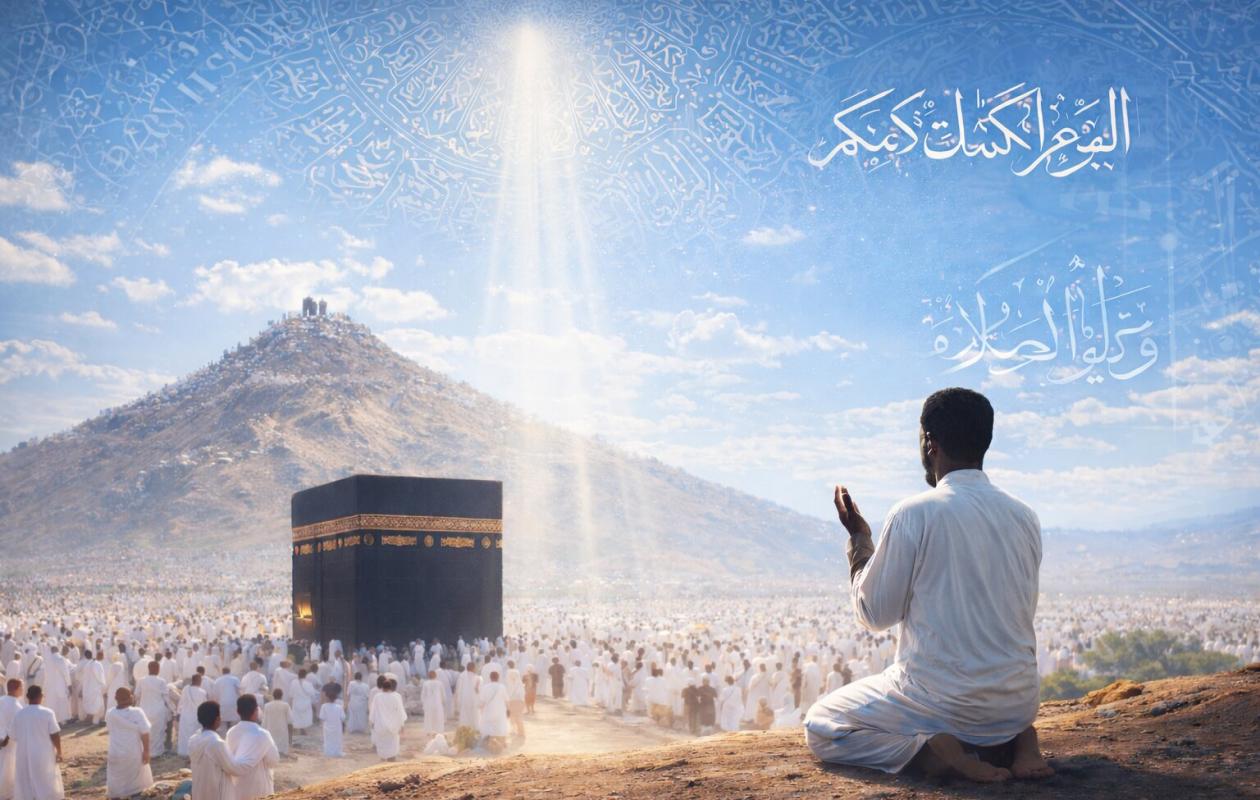
L’empreinte du Sermon d’Adieu du Prophète (PSL) cryptée dans la Salāt
Dear readers, we have now reached the end of our series of articles dedicated to the miracle that is Salat , the Muslim prayer. By the grace of Allah, we have discovered the umbilical cord that connects its intricacies, including its postures (genuflections), its only explicit identification in the Quran, and the illuminating surahs that explain it. We have thus compiled the Tablet of Salat.
Salat reveals a profound spiritual dimension: it appears as a divine gift sent down to nourish and illuminate the souls of believers, strengthening their faith. This symbolism echoes the miracle of the Table Spread mentioned in the Quran, through which Allah nourishes the bodies of Christ and his apostles to fortify their belief.
This correspondence is suggested by the totals of the daily prayers: 17 rak'ahs and 111 postures (genuflections). These numbers refer to Surah 17, Al-Isra, which has 111 verses, including verse 111, which discusses the glorification of Allah in prayer. They also establish a link with Surah 5, Al-Ma'idah, particularly its verse 111 recounting the miracle of the Table Spread, as well as with Surah 111, Al-Masad, composed of five verses announcing the defeat of the enemies of Islam.
The study of the "Message of Salat"—a set of verses obtained by associating the numbers of "Pair 1" with the surah numbers and those of "Pair 2" with the verse numbers—reveals that these passages all refer to prayer. They thus reveal what can be perceived as the very essence of the Quranic message: the worship of Allah.
To conclude this series, we examine the correspondences between the structure of Salat according to the Sunna—prayer sequences and number of rak'ahs—and its "Quranic DNA," represented by its postures. The combinations established between the surah numbers (derived from the Salat sequences and the number of rak'ahs) and the verse numbers in the "Pair 1" and "Pair 2" columns thus highlight the structural links between ritual practice and the Quranic text. The method used to create the deciphering tables is presented in Appendix 2 at the end of the book "13.7 – The Code of the Universe Encrypted in Muslim Prayer: Salat," available at www.at-tawbah.org .
We observe that the combinations of each Salat sequence yield verses, at least one of which explicitly mentions prayer. This allows us to decipher the group of verses below, whose structure also recalls the complementary symmetry characteristic of several surahs in the Quran. Symmetrical verses are indicated by a symbol of the same color:
(-) In the Name of Allah, the Most Gracious, the Most Merciful. S1V1 Praise be to Allah, Lord of the worlds. S1V2 The Most Gracious, the Most Merciful [Master of the Day of Judgment. S1V4 ] S1V3 It is You alone we worship, and You alone we ask for help. S1V5 Alif, Lam, Mim. S2V1 [This is the Book about which there is no doubt, a guidance for the righteous, S2V2 ] who believe in the unseen and establish prayer and spend (in obedience to Allah) from what We have provided for them, S2V3 Those who believe in what has been revealed to you and what was revealed before you and are certain of the Hereafter. S2V4
[Among the people are those who say, "We believe in Allah and the Last Day," while in fact they do not believe. 2:8 ] They seek to deceive Allah and the believers, but they deceive only themselves, and they perceive not. [ 2:9 ] In their hearts is a disease (of doubt and hypocrisy), and Allah has increased their disease. For them is a painful punishment because of what they used to lie. [ 2:10 ] And when it is said to them, "Do not cause corruption on the earth," they say, "We are only reformers." [2:11] Indeed, it is they who are the corrupters, but they perceive not. [2:12 ] And when it is said to them, "Believe as the people have believed," they say, "Shall we believe as the foolish have believed?" Indeed, they are the truly weak-minded ones, but they don't know it. S2V13
He has sent down to you the Book in truth, confirming the Scriptures that came before it. And He sent down the Torah and the Gospel, [3:3] before, as guidance for mankind. And He sent down the Criterion (the Criterion). Indeed, those who disbelieve in the revelations of Allah will have a severe punishment. And Allah is Exalted in Might, Possessor of the power to punish. [3:4 ]
It is He who has sent down to you the Book. In it are verses that are entirely clear, they are the foundation of the Book, and others that are open to interpretation. So those in whose hearts is deviation follow that which is open to interpretation, seeking discord by trying to find an interpretation for it, while none knows its interpretation except Allah. But those firmly grounded in knowledge say, "We believe in it; all of it is from our Lord." And none will be reminded except those of understanding. (3:7)
(-) There was already a sign for you in the two groups that clashed: one fought in the cause of Allah, and the other disbelieved. The latter saw with their own eyes that the believers were twice their number. But Allah gives aid to whom He wills. Indeed, in that is a model for those of understanding. (3:13)
O mankind! Be mindful of your Lord, Who created you from a single soul and created from it its mate and dispersed from both of them many men and women. And be mindful of Allah, in Whose name you ask of one another, and [be mindful of] kinship ties. Indeed, Allah is ever, over you, an Observer. And if you fear that you will not be just over the orphans, then marry those that please you of [other] women, two or three or four. But if you fear that you will not be just, then only one, or those whom your right hand possesses. That is more suitable to prevent you from doing injustice (or increasing your burden). For men is a share of what parents and close relatives leave, and for women is a share of what parents and close relatives leave, whether little or much - an obligatory share. S4V7
These are the commands of Allah. And whoever obeys Allah and His Messenger, He will admit him to gardens beneath which rivers flow, wherein they will abide eternally. And that is the great attainment. ( 4:13 )
O you who believe! Fulfill your covenants. Lawful to you are grazing animals, except what will be explicitly stated [as forbidden]. Do not hunt while you are in a state of Ihram. Indeed, Allah decides what He wills. Forbidden to you are carrion, blood, the flesh of swine, and that which has been dedicated to other than Allah, and [those animals] killed by strangling or by a violent blow or by a fall or by being gored to death, and that which has been [partly] eaten by a wild animal—except for what you [are able to] slaughter [before its death]. Also forbidden are those sacrificed on stone altars and [also] dividing meat by casting lots with arrows. That is [increasing] disobedience. This day those who disbelieve have despaired of turning you away from your religion, so do not fear them but fear Me. Today I have perfected for you your religion and completed My favor upon you and have approved for you Islam as religion. But whoever is forced by hunger, without inclining to sin...then indeed, Allah is Forgiving and Merciful. 5:3 They ask you, [O Muhammad], what is lawful for them. Say, "Lawful to you are good foods and what you have trained to hunt predators - by teaching them what Allah has taught you. So eat of what they catch for you and mention over it the name of Allah. And fear Allah; indeed, Allah is swift in account. " 5:4
(-) [And Allah certainly took a covenant from the Children of Israel. We appointed twelve leaders from among them. And Allah said, "I am with you, provided you establish prayer, pay zakat, believe in My messengers, support them, and lend to Allah a good loan. I will surely remove from you your misdeeds and admit you to gardens beneath which rivers flow. And whoever of you disbelieves after that has certainly strayed from the right path."] [5:12] Then, because of their breach of the covenant, We cursed them and hardened their hearts. They distort words from their [proper] places and have forgotten a portion of that of which they were reminded. You will not cease to discover their treachery, except for a few of them. So pardon them and overlook their misdeeds. Indeed, Allah loves the doers of good. [5:13]
(-) [These are the verses of the Book full of wisdom] S31V2 , it is a guidance and a mercy for the righteous, S31V3 , who establish prayer, pay zakat, and are certain of the Hereafter. S31V4
We can therefore see that, schematically, the timeless message is as follows:
THE QURAN, SALAT AND ZAKAT
In the end, Allah will come to the aid of the Muslims who will be victorious over the disbelievers.
HALAL AND HARAM IN SOCIAL RELATIONS
These are the commands of Allah. And whoever obeys Allah and His Messenger, He will admit him to gardens beneath which rivers flow, wherein they will abide eternally. And that is the great attainment. (4:13)
HALAL AND HARAM IN FOOD
And of all the unjust disbelievers, the Children of Israel (except for a very few) are the worst. Their fate is in the hands of Allah.
THE QURAN, SALAT AND ZAKAT
This group of verses, by recalling the state of ihram (5:1) and highlighting the central verse for Islam— "…This day I have perfected for you your religion and completed My favor upon you and have approved for you Islam as religion…" (5:3) —immerses us in the context of the Prophet Muhammad's (peace and blessings be upon him) Hajj. This verse was revealed on the Day of Arafat, during the Farewell Pilgrimage ( Hajjat al-Wada' ). Moreover, these verses remarkably echo the Prophet's (peace and blessings be upon him) Farewell Sermon, also delivered at Arafat at the same time. This concordance underscores the timeless nature of the Quranic message and the authentic words of the Prophet, which appear symmetrical and complementary, together forming the foundations and intricacies of the Islamic faith. Let us now look at the Farewell Sermon of our beloved Prophet Muhammad (peace and blessings be upon him). We will highlight, using symbols of the same color, the themes of the Farewell Sermon that are common to the Sermon of Salat.
Arafat's Sermon, on the 9th of Dhul Hijja, the 10th year of the Hijra
(-) "Oh people, listen to me because I don't know if I will be with you next year.
(-) Your blood and your money are forbidden between you, sacred like this day, like this month, like this place. Truly, the entire civilization of the Jahiliyya (past barbarity) is crushed beneath my feet. All the blood debts of the Jahiliyya period are crushed beneath my feet. And the first blood debt I cancel is that of my own family, the son of Rabia ibn Hariss ibn Abd al-Muttalib. Truly, the Riba (usury) of the Jahiliyya period is abolished and must not be paid. And the first usurious interest I cancel is that of my uncle Al-Abbas ibn Abd al-Muttalib. And fear Allah concerning women and their rights. You married them under the protection of Allah and made them lawful for you in the Name of Allah. Your right with regard to them is that they must not allow anyone else into your bed, which you would abhor. If necessary, you have the right to discipline them in a non-painful way. They have a right over you: that you provide for their expenses and sustenance according to your means.
“ And I have left among you something which, as long as you adhere to it, you will never go astray; and that is the Book of Allah (the Quran).”
(-) The Prophet (peace and blessings be upon him) said: “You will soon be questioned about me. What will you say?” The crowd said: “We will bear witness before Allah that you conveyed the Message, fulfilled your duty, and were truthful.” The Prophet (peace and blessings be upon him) raised his hands to the sky and repeated three times: “O Allah, bear witness!”
The Sermon of Mina, on the 10th of Dhul Hijja, the 10th year of the Hijra
(-) “Truly, time has returned to its proper place as it was on the Day Allah created the heavens and the earth. A year consists of 12 months, 4 of which are sacred: Dhul Qada, Dhul Hijja, Muharram, and Rajab. Maintain the calendar.”
(-) He said, "What month is this?" The crowd replied, "No answer." He said, "Are we not in Dhul Hijjah?" The crowd replied, "Yes." He said, "What day is this?" The crowd replied, "No answer." He said, "Are we not on the Day of Sacrifice?" The crowd replied, "Yes." He said, "What is this place where we are?" The crowd replied, "No answer." He said, "Are we in Minna, a sacred place?" The crowd replied, "Yes." He said, "Truly, your lives, your wealth, and your honor are as sacred and forbidden among you as this month is for you, this day is for you, and this place is for you. Woe to you! Do not return to disbelief after me. (Do not commit murder...)." The person who is present should inform the absent person; perhaps the latter might understand better than the former.
(-) Satan is desperate to be worshipped again on this Arabian Peninsula. But he hopes to lead you into sin and lust, and above all, to turn you against one another.
The true Muslim is the one from whose hand and tongue other Muslims are safe! The believer is the one in whose wealth and property other Muslims trust. The Muhajir is the one who has abandoned sins. The Mujahir is the one who strives in the Path of Allah. And fear Allah, and perform your five daily prayers, fast the month of Ramadan, give your Zakat, and obey the leaders of the Ummah, and you will enter the Paradise of Allah. You are all descended from one Man, and your Father is the same. It makes no difference whether you are Arab or Ajami, or whether you are white or black. All of that is irrelevant except for Taqwa (the conscious fear of Allah).


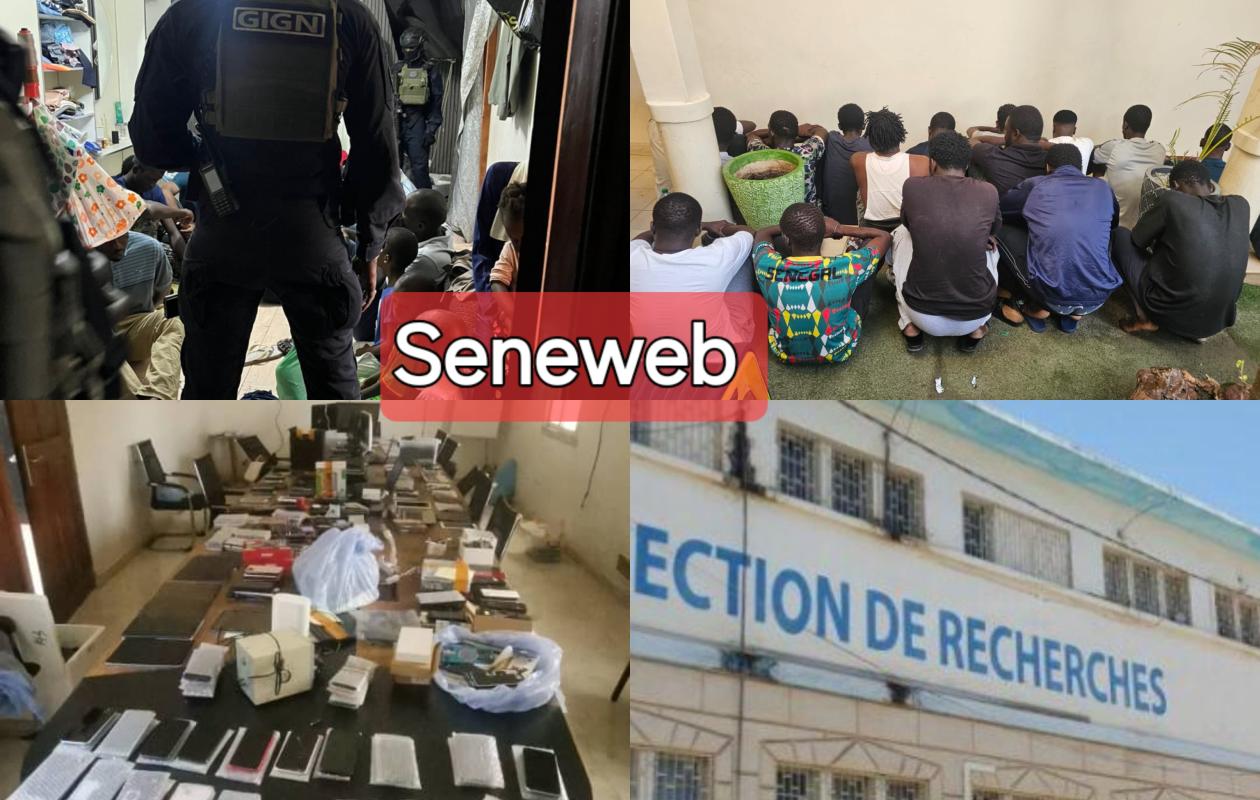





![[EXCLUSIF] Réseau de voleurs démantelé à Colobane : 500 téléphones, 33 tablettes et des ordinateurs saisis par la SR et le GIGN, 23 arrestations](https://image.seneweb.com/content/news/2026-22-30//thumb_1260x800_6a1b6ac9bcdc7_zf1U3G3p2i.jpg)









Commentaires (7)
Participer à la Discussion
Règles de la communauté :
💡 Astuce : Utilisez des emojis depuis votre téléphone ou le module emoji ci-dessous. Cliquez sur GIF pour ajouter un GIF animé. Collez un lien X/Twitter, TikTok ou Instagram pour l'afficher automatiquement.