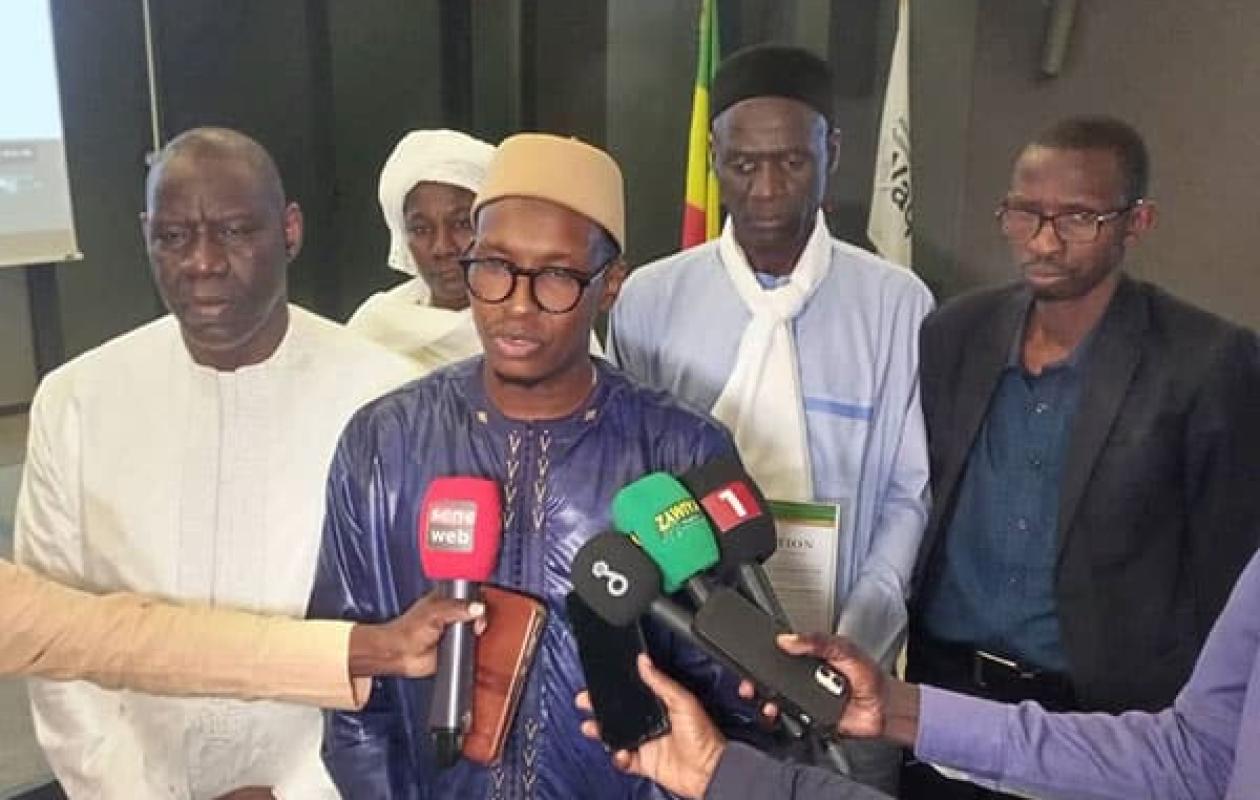
Patrimoine et Droit Musulman : Comment la HAW compte transformer l'économie sociale du pays
Lawyers, academics and legal practitioners met on May 12, 2026 to discuss the limitations of Law No. 2015-11 of May 6, 2015 relating to Waqf in Senegal, the difficulties of application and the avenues for reform considered after more than a decade of implementation.
During the webinar, the Director General of the High Authority of Waqf, Dr. Ahmed Lamine Athie, recalled that the adoption of this law constituted "a historic step," allowing the integration of Waqf into Senegalese positive law. According to him, this text created "a bridge between Islamic law, civil law, and business law." However, ten years later, several shortcomings have emerged. "There are questions that concern us on several points," acknowledged the Director General, announcing a project to revise this law.
While Mballo Thiam praised the "boldness" of the 2015 text, particularly its hybrid approach blending Islamic law, Senegalese law, and OHADA community standards, the director of the Faculty of Arts and Humanities at Alioune Diop University in Bambey believes that several technical inconsistencies remain in the drafting of the law. He specifically noted difficulties in the very definition of Waqf, the structuring of the provisions, and certain contradictions regarding the legal form of the founding document. "The text goes beyond the traditional concept of heritage to move towards dedicated heritage. This is one of the major innovations of this law," he explained. However, according to him, the legal mechanisms intended to implement this evolution sometimes remain insufficiently clarified.
Other limitations mentioned include potential conflicts with OHADA law, the lack of a clear hierarchy among Waqf categories, and ambiguities regarding transactions involving the allocated assets. Cheikh Tidiane Seck, a doctoral candidate in real estate law, emphasized the obstacles related to land ownership: current law requires the settlor to hold a land title, whereas in Senegal, only 5% of landowners possess one. This situation excludes many holders of occupancy permits or customary rights.
To overcome these obstacles, Mr. Seck proposes accelerating the conversion of precarious land titles, creating a specialized land office within the HAW (High Authority for the Development of the Niger), and undertaking a thorough reform to explicitly integrate the Waqf (Islamic endowment) into the law on national land. For his part, a visiting expert from Niger criticized the concept of "bare ownership of immobilized property," deeming it too restrictive in the face of movable and monetary assets, while also highlighting the lack of a clear legal personality for the HAW as a major weakness.
The aim of these reforms is to transform the Waqf into a genuine driver of social and economic development while securing its legal framework. These discussions took place within the framework of the High Authority of Waqf's 2026 scientific program.


![[EXCLUSIF] Affaire PCD : Le cap des 100 arrestations franchi, le téléphone d'Ass Dione accable le fils d'un grand marabout](https://image.seneweb.com/content/news/2026-20-13//thumb_1260x800_6a04a22c82a84_ACA7PLyDxC.jpg)









Commentaires (2)
Participer à la Discussion
Règles de la communauté :
💡 Astuce : Utilisez des emojis depuis votre téléphone ou le module emoji ci-dessous. Cliquez sur GIF pour ajouter un GIF animé. Collez un lien X/Twitter, TikTok ou Instagram pour l'afficher automatiquement.