Comment le manque d'eau est en train de tuer l'espoir d'un renouveau vert à Koungheul
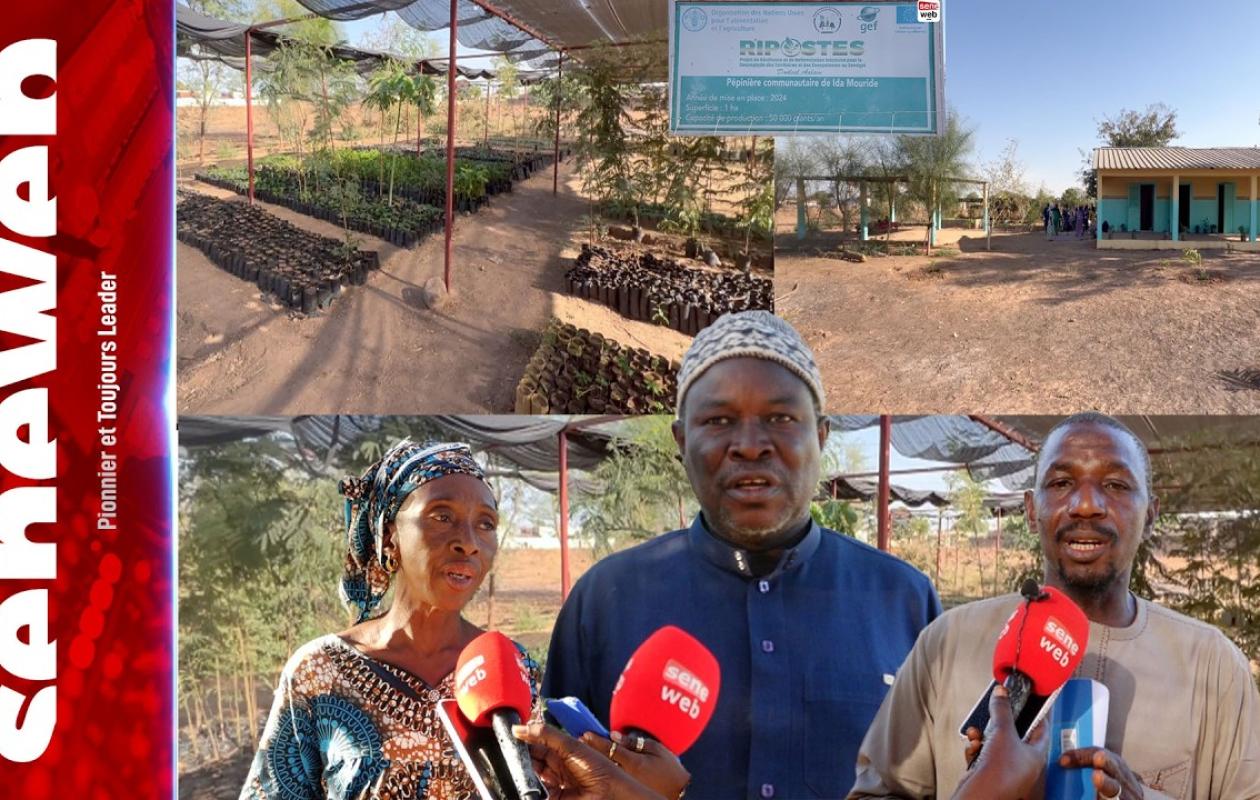
In Ida-Mouride, a commune in the Koungheul department (Kaffrine region), the promise of ecological and agricultural renewal is hampered by a critical constraint: access to water. In this locality, local initiatives and ambitions are genuine, but their sustainability hinges on an uncertain resource. More than a simple necessity, water has become the very condition of hope for all those who aspire to cultivate crops outside the rainy season.
A plant nursery, a symbol of hope… that has been weakened
On the edge of the road leading to Kaffrine, the Bara Biteye nursery catches the eye. Spanning one hectare of fenced land, this site embodies a structuring project: producing seedlings for reforestation and supporting local agriculture. With three nurserymen, the objective is ambitious: to reach 50,000 seedlings per year, a challenge reinforced by the support of the Ripostes project.
However, the reality on the ground is harsher. The best yield recorded to date is 11,000 seedlings, some of which were distributed free of charge to the town hall and local residents. “We can reach this goal, but in addition to the lack of water, we are facing a shortage of seeds,” explains Bara Biteye. While the area now has a sturdy fence and a multi-purpose building, these investments are struggling to compensate for the lack of water self-sufficiency.
Water, a major blocking factor
The site is entirely dependent on the village well, managed by Flex Eau. This dependence exposes the nursery owners to frequent water cuts, often due to unpaid bills. The result is striking: withered seedlings litter the ground. "Last year, they cut off the water just as the plants were starting to grow. We lost everything," laments the nursery owner. To secure production, installing a solar-powered mini-well with storage tanks appears to be the only viable solution.
Women face a triple challenge: water, land and protection
Women's market gardening, once flourishing, is now in decline. Khady Sow nostalgically recalls 2002, when tomato fields were the pride of the community. Now, women face a host of challenges: water scarcity, stray livestock, and, above all, difficulty accessing land. "We need seeds, water, but most importantly, land. Without it, we can neither produce, nor pay for water, nor make a profit," she insists.
An urgent appeal from local authorities
Mayor El Hadji Mor Seck acknowledges the progress made possible by the Ripostes project but warns of the urgency of the situation. "We are reforesting because the seedlings are available thanks to the nursery," he emphasizes, while also advocating for the drilling of a borehole or well. Regarding women's access to land, the mayor mentions persistent socio-cultural constraints that still hinder the true empowerment of women producers in the municipality.




![[Édition Spéciale] Tout Sur la Composition du Nouveau Gouvernement](https://image.seneweb.com/content/news/2026-23-01//thumb_1260x800_6a1ddca812d4e_URisx1rdt4.jpg)








Commentaires (6)
Participer à la Discussion
Règles de la communauté :
💡 Astuce : Utilisez des emojis depuis votre téléphone ou le module emoji ci-dessous. Cliquez sur GIF pour ajouter un GIF animé. Collez un lien X/Twitter, TikTok ou Instagram pour l'afficher automatiquement.