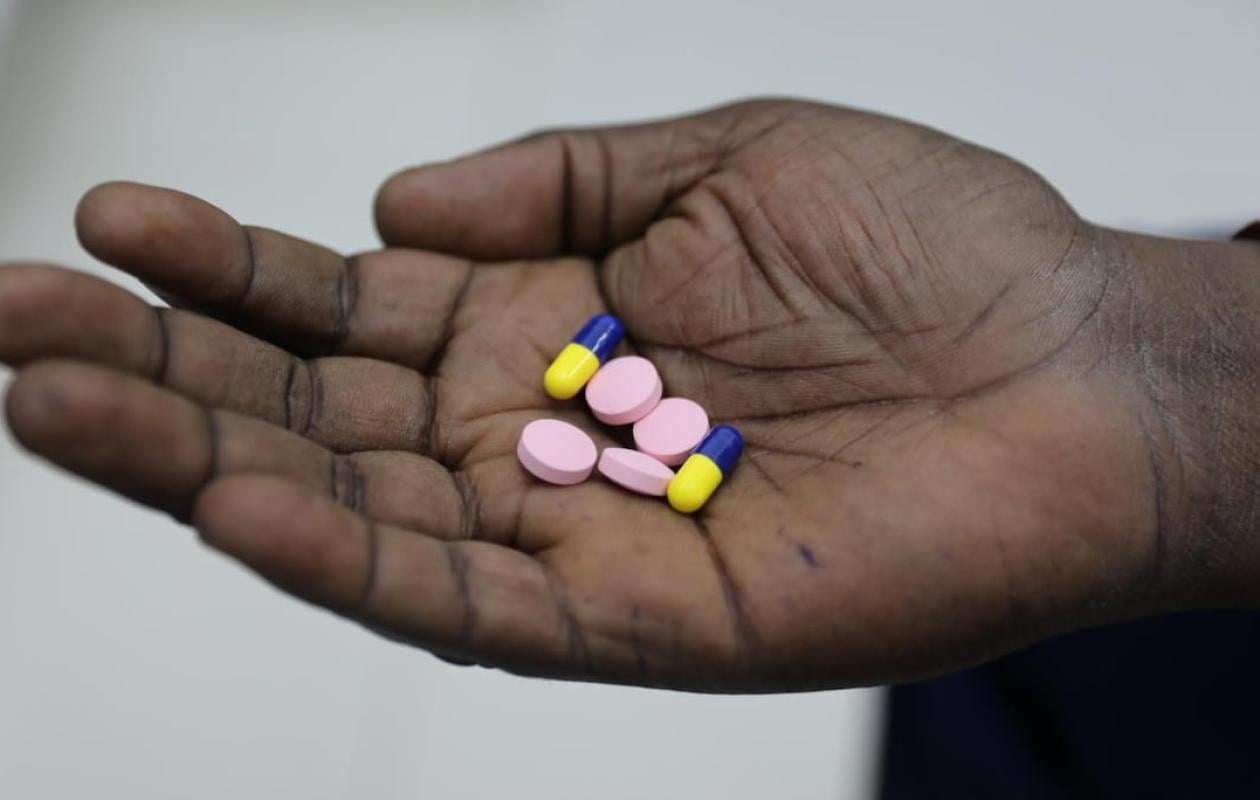
Afrique: la guerre au Moyen-Orient menace l'approvisionnement humanitaire en médicaments
The operations director of this medical NGO, which operates in 13 countries in Africa, is raising the alarm about the seriousness of the situation: "If this lasts a month and a half, two months, these warnings will turn into direct impacts on the continuity of our activities."
Rising fuel costs, logistical transport through the Strait of Hormuz: the conflict in the Middle East is affecting the delivery of medicines to crisis or conflict zones on the African continent in a context already critical since the American financial cuts to international aid.
While Africa imports more than 70% of its medicines and more than 90% of its pharmaceutical assets, Mr. Alitanou is concerned about the increase in import costs due to the explosion in fuel prices: "$2,000 in additional costs means 200 fewer children receiving care for malnutrition."
"We can already see it in Sudan, we can already see it in the DRC (Democratic Republic of Congo), we are starting to see it in most countries," worries Mr. Alitanou.
At the crossroads of Asia, the main producer of medicines, and Africa, the Middle East constitutes the preferred gateway to supply the continent.
Several humanitarian supply hubs in Dubai's free zone have seen their operations disrupted, affecting logistical transport to Africa.
In Dubai, the World Health Organization's (WHO) emergency logistics platform, which supplies medicines to more than 150 countries worldwide, had to cancel shipments at the start of the conflict due to the closure of airspace and had to revise its routes for the delivery of supplies.
"Supply times are lengthened because we do not go through Hormuz and have to go through the Cape of Good Hope, especially with cargo ships, so it is more expensive and it lengthens the supply by 15 days to a month," emphasizes Damien Dubois, supply coordinator at MSF Supply, one of the purchasing centers of Doctors Without Borders (MSF).
A spokesperson for the Global Fund to Fight AIDS, Tuberculosis and Malaria, contacted by AFP, "is already seeing delays and increased costs" even though the organization has not yet observed a shortage.
"To date, we are not talking about a shortage of medicines because of the conflict, we are talking about an additional constraint on an already intrinsic fragility, with risks of tending towards shortages in certain fragile regions," emphasizes Anne Sénéquier, co-director of the Global Health Observatory at the Institute for International and Strategic Relations (IRIS).
Those interviewed by AFP remain cautious about the ceasefire agreed Tuesday evening between the United States and Iran, as strikes continued Wednesday in the Gulf and maritime traffic in the Strait of Hormuz remains heavily disrupted.
For Rodrigue Alitanou, "this ceasefire is a first step, but it is not sufficient. Conflicts continue in the Gulf countries and continue to weaken our operations."
"I think it will remain very unstable," says Agathe Lamouret, shipping coordinator at MSF Supply, "especially since we don't know what will happen" after the two-week truce.
For his part, Christian Lindmeier, a spokesperson for the WHO, believes that "it will take several weeks to overcome the disruptions caused by the closure of the Strait of Hormuz".
Africa, which is heavily dependent on imports, is particularly vulnerable to geopolitical upheavals, recalls Ines Alaoui, head of international health policy at Coalition Plus, an organization bringing together the main associations fighting against HIV.
"On the African continent, we operate on a just-in-time basis. We do not produce more and we do not store more than what is necessary," she explains.
Coalition Plus associations were already suffering the full impact of cuts in American aid, already noting shortages of preventive or antiretroviral drugs on the ground.
This new crisis is "further eroding the health supply," Ms. Alaoui points out: "There are fears of treatment interruptions for people living with HIV."
"The risk is that some populations affected by these vulnerabilities will turn to counterfeit medicines, which will endanger their health," worries Anne Sénéquier.














Commentaires (0)
Participer à la Discussion
Règles de la communauté :
💡 Astuce : Utilisez des emojis depuis votre téléphone ou le module emoji ci-dessous. Cliquez sur GIF pour ajouter un GIF animé. Collez un lien X/Twitter, TikTok ou Instagram pour l'afficher automatiquement.