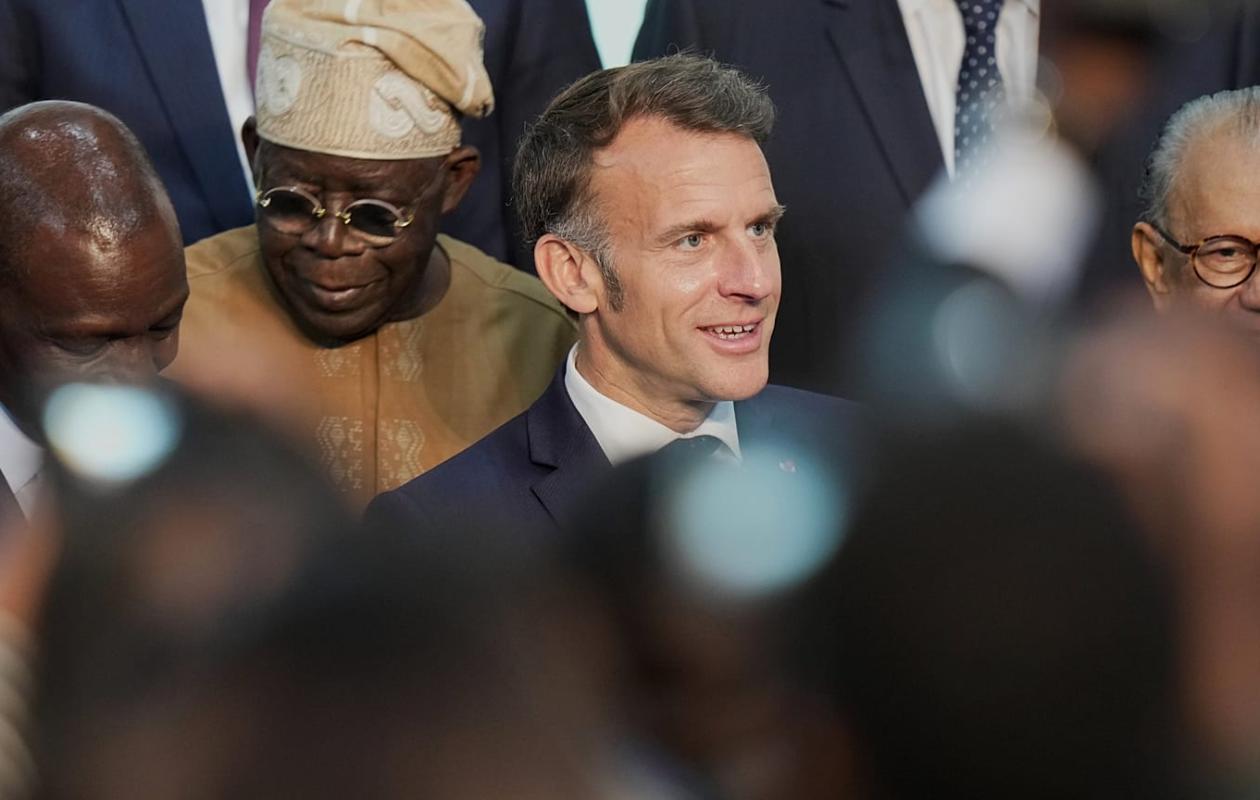
Hantavirus : Macron plaide pour "une vraie coordination européenne"
He was keen to reassure from the African continent: Emmanuel Macron stated during a press conference in Nairobi that the situation related to the hantavirus was "under control", while the only French woman infected is still in intensive care "in serious condition" and about twenty contact cases have been identified in France.
The President of the Republic assured that the government had "made the right decisions" and that the crisis was "under control", "thanks to our healthcare workers".
According to the head of state, Paris had put in place "one of the most demanding protocols", along with Madrid in particular, based on the recommendations of experts, "which is a good thing, because we have the experience of the past".
Emmanuel Macron called for strong coordination at EU level and with the World Health Organization.
No "diffuse circulation" in France
"I wanted the French to have the same information presented at the highest level of the State in complete transparency": it was with these words that the Minister of Health, Stéphanie Rist, opened a press conference earlier in the day on the hantavirus crisis.
Accompanied by several specialists, she specified that there is no "widespread circulation (...) on the national territory" of the Andean strain of hantavirus, which is transmissible between humans and against which there is neither a vaccine nor a treatment.
"At this stage, the positive cases identified are exclusively cruise passengers," added Stéphanie Rist.
The minister specified that the French patient, who tested positive for the virus a few days ago, "today has the most severe form of the cardiopulmonary presentation and she has extracorporeal circulation to have artificial oxygenation, and an artificial lung".
"We hope that she will get through this phase while the lung, which was attacked by this virus, and the damage to the vascular wall can recover," added Xavier Lescure, an infectious disease specialist at Bichat Hospital.
Twenty-two contact cases have been identified in France: they have all been contacted, tested, hospitalized, or are currently hospitalized, according to the government. The Minister of Health also indicated that these patients are of all ages, including children, and that all are doing very well.
The patients were hospitalized mainly at the Pitié-Salpêtrière hospital, but also at the University Hospital of Rennes and the University Hospital of Marseille.
A seriously ill patient
Caroline Semaille, Director General of Public Health France, for her part detailed the characteristics of the Andean hantavirus, discovered in Argentina in 1995. According to her, the incubation period is long, from 9 to 40 days, with high lethality and transmission that can occur up to 48 hours before the onset of symptoms, through close contact between individuals.
The expert specified that after the alert given by the Netherlands on May 2, the first case was confirmed on May 4, and that "11 cases are confirmed to date".
Infection with the Andean hantavirus "most often occurs through zoonotic transmission, from animal to human," Xavier Lescure emphasized. "We don't know the modalities and modes of human-to-human transmission," which is "infrequent and inefficient," he said, but it probably occurs "through the respiratory route or by direct contact."
"Between 35 and 40% fatality rate"
Once symptoms appear, the clinical signs are "fairly mild," such as "extreme fatigue, slight depression, aches and pains, and headaches," explained infectious disease specialist Xavier Lescure. After "two or three days," infected individuals experience "a high, almost constant fever" and then develop "pulmonary involvement" with the Andean hantavirus. "While the incubation period is long, the onset of the disease can be very rapid," he added.
"We don't currently know the risk factors for the disease," explained the senior medical official at COREB, noting that its forms are often severe. "It is among the hantaviruses with the highest fatality rate, between 35 and 40%," he added, while there is no effective treatment or vaccine, and specified that "wearing a mask, especially an FFP2 mask, and washing hands are sufficient to create a barrier" against the Andean hantavirus.
His colleague, virologist Olivier Schwartz, clarified that there was no vaccine available, although RNA injections were in the testing phase.
"A neglected tropical disease"
"The situation is quite exceptional and unprecedented," stated epidemiologist Antoine Flahault. "That's why the health authorities are taking very strong decisions" in the face of the uncertainty surrounding this virus, he added.
In the past, some viruses have originated in very remote areas with limited public health surveillance infrastructure, rather than on a "ship with 147 people," where it's possible to identify all positive cases and trace contacts. The epidemiologist described the Andean hantavirus as a "neglected tropical disease."











Commentaires (3)
Participer à la Discussion
Règles de la communauté :
💡 Astuce : Utilisez des emojis depuis votre téléphone ou le module emoji ci-dessous. Cliquez sur GIF pour ajouter un GIF animé. Collez un lien X/Twitter, TikTok ou Instagram pour l'afficher automatiquement.