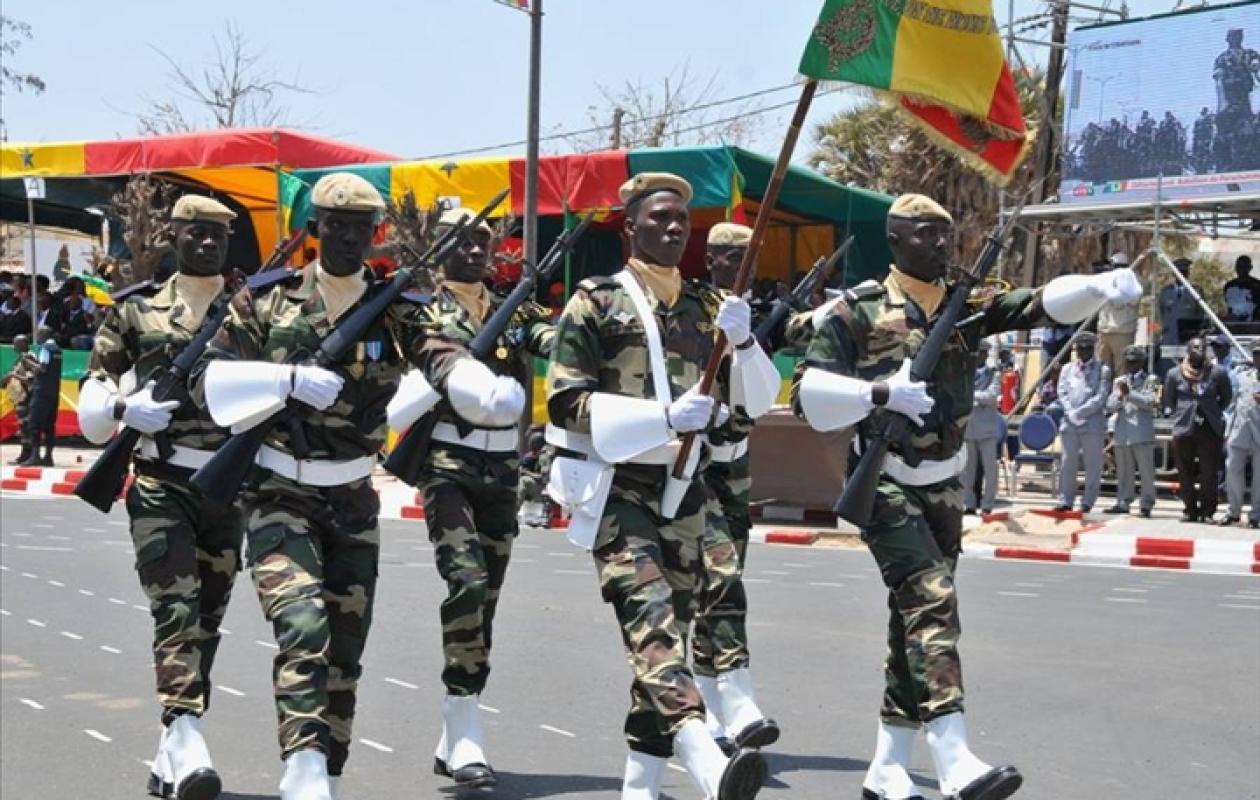
4 Avril - Thiès, ville garnison par excellence : La 2e zone de la base de l’armée de l’air concentre l’essentiel des forces de réserve générale
Thiès, a working-class city for some, a rebellious city for others, formerly known as "Dianxène," is not only the railway capital. It is also a garrison town. Home to one of the largest military bases in Senegal, Thiès remains the second largest city for the air force base and also concentrates the bulk of the general reserve forces. A look back at the militarization of the railway city.
The city of Thiès is not only the Kadior crossroads distinguished by its railway line. It is also a military city par excellence. Somewhere along winding roads that bypass, right from the city's entrance, unexpected sections that diverge from the main Northern Bypass (VCN), lies the garrison part of the city.
On the edge of the Diakhao district and bordering the University of Thiès, in an unremarkable space, stands the tactical training center. We are at the heart of the base for the forces of military zone number 7. Nothing, not even a sign, indicates to the visitor that they are on military land.
Under the watchful eyes of the sentries, what is commonly called "the Base," undoubtedly a reference to the colonial air force detachment that was stationed there, is revealed to the visitor. The barracks is a complex encompassing the Infantry Application School (EAI), the National School for Active Duty Officers (ENOA), the commando and armored battalions, and the tactical training center. This center plays a vital role in preparing troops for combat. Thiès also houses a training center located in the commune of MontoRolland.
The beginnings of this military presence in Thiès date back to the mid-19th century. At that time, a single road, marked by checkpoints, connected Baol to the trading posts of Rufisque. This road was heavily used by travelers and other caravaneers who, unfortunately, were regularly victims of pillaging and attacks by fearsome highwaymen, some of whom, rightly or wrongly, claim to belong to the Serer-None tribes.
Thus, the village of Thiès, located at the junction of two regions—Diender and Diobass—served as a haven for thieves and the spoils of their robberies, and consequently posed a threat to the local population and caravan traders. The Gorée command ordered it burned down in 1862. To ensure the region's security, a military post was established at Pout. This post, located halfway between Rufisque and Thiès, at the western end of the site known as "Ravine of Thieves," commonly called "Alou Kagne" after the notorious highwayman Kagne, was decommissioned in 1885.
But Serer tribesmen and people from Diobass stormed the post two months later. Eight of the thirteen men in the garrison perished in the massacre. The post was soon reoccupied.
In May 1864, Lieutenant-Colonel Pinet Laprade of the engineering corps, then commander of Gorée and its dependencies, launched a major offensive in retaliation against all the villages that had participated in the attack. The inhabitants of Pout, suspected of espionage, were executed. Under his authority, the Thiès pass, a prime location for ambushes, was cleared of trees, and a 20-meter-wide road was built between Pout and Thiès.
At the same time, thanks to a workforce made up of officers, soldiers, and volunteers, a temporary fort, designed for a garrison of men, was erected on the ruins of the village of Thiès, which had been burned down two years earlier. This structure is located at the entrance to the only easy access point, crossing the edge of the Thiès plateau at the eastern end of the "Ravine of Thieves."
Built in 1864, the garrison's living conditions quickly became problematic. By 1867, the entire garrison, except for five men, was housed in huts outside the fort, as the barracks intended for their accommodation had been moved elsewhere.
In 1868, there was talk of erecting two masonry barracks, but the project was slow to materialize. At the end of 1869, repairs were carried out, later supplemented by the construction of a building to house the commandant and the doctor, and a powder magazine.
In 1877, Joseph Gallieni, the future Marshal of France, commanded the fort which, in 1879, would undergo the necessary redevelopments to become the durable structure we see today, the original palisade having been replaced by a crenellated wall with solid foundations.
The military construction was unique in that the new perimeter wall featured only two bastions instead of four, placed diagonally. Before the end of the century, particularly because the railway allowed for the rapid transport of forces to threatened areas, a plan to abandon the fort was proposed but ultimately rejected.
Other military constructions (a cavalry barracks and its outbuildings near the railway, barracks buildings, housing for military families) appeared from 1894 onwards. The number of men stationed at the post increased. In November 1896, a detachment of Spahis and an infantry detachment were even present simultaneously.
The 10th African and Overseas Infantry Regiment, based at the fort, gave its name to the neighborhood that now adjoins the "10th RIAOM" museum. This post, initially conceived as a temporary structure and part of a larger network of military constructions (Pout, Khaoulou, Talen Mbijem, etc.), endured both because of its strategic location and because insecurity in the region did not disappear as quickly as anticipated. Intended for policing and justice, it also served as a vantage point for observing the movements of Lat Dior, who opposed European penetration, as did the Cayorians and the Serer-None populations.
So, the French controlled all these people who, in groups, caravans, or other forms of transport, were moving towards Dakar, the capital. This is what motivated the construction of the fort at the entrance to the ravine to secure Dakar, because the colonial administration was based in Gorée.
Pinet-La Rade also encouraged the village's expansion under the protection of the post. Through his instructions, he urged his officers to accustom the local population to colonial administration and to demonstrate to the Serer chiefs that this administration was not hostile to them and was committed to peace in the region. The fort housed district commanders, white troops belonging to the marine infantry corps (sometimes numbering up to 50 men), artillerymen, and doctors.
The natives, who were attached in the 19th century, filled the roles of muleteer, interpreter, shepherd, baker, nurse and courier.
The city of Thiès eventually became a large complex encompassing, in addition to the fort, a site center, a training center for a paratrooper regiment, and an airbase covering 180 hectares located northwest of the city. Following the withdrawal of French troops in 1964, this complex was made available to various civilian organizations and the Mobile Intervention Group (GMI). The fort was classified as a historical monument in 1975, after having served, among other things, as a community center and a school.
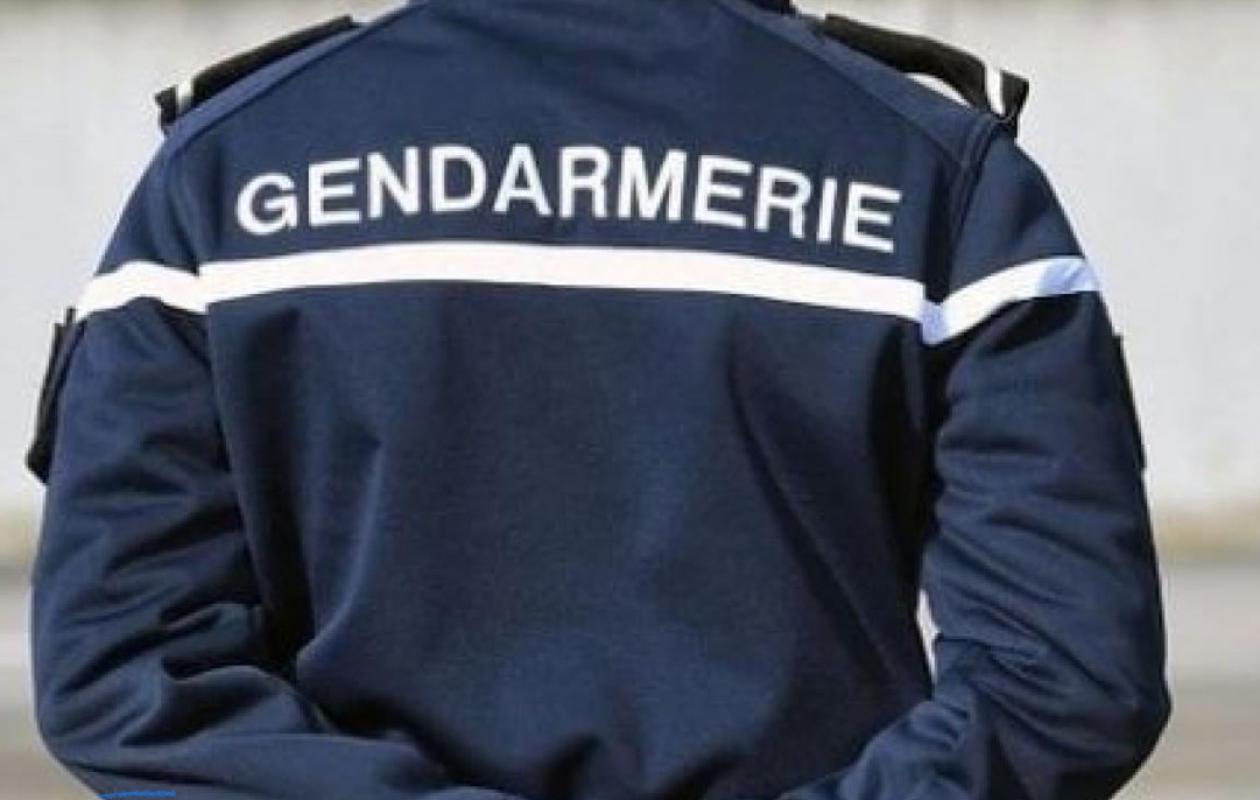
In February of the same year, Senegal's first president, Léopold Sédar Senghor, inaugurated the museum there. The militarization of the city, which began during the colonial era, continues today with the presence of the gendarmerie. The advantage is that not only does Zone 7 have troops based in Thiès, including general reserve units such as the commando battalion and the armored battalion, but its geographical location, situated in a central area far from the borders, ensures a certain stability, making it a secure zone conducive to the preparation and training of other military personnel.






![[Billet d’humour] Diomaye Président : Mbour, le test qui interroge](https://image.seneweb.com/content/news/2026-19-10//thumb_1260x800_6a008342c328b_0bscHsJLlN.jpeg)








Commentaires (1)
Participer à la Discussion
Règles de la communauté :
💡 Astuce : Utilisez des emojis depuis votre téléphone ou le module emoji ci-dessous. Cliquez sur GIF pour ajouter un GIF animé. Collez un lien X/Twitter, TikTok ou Instagram pour l'afficher automatiquement.