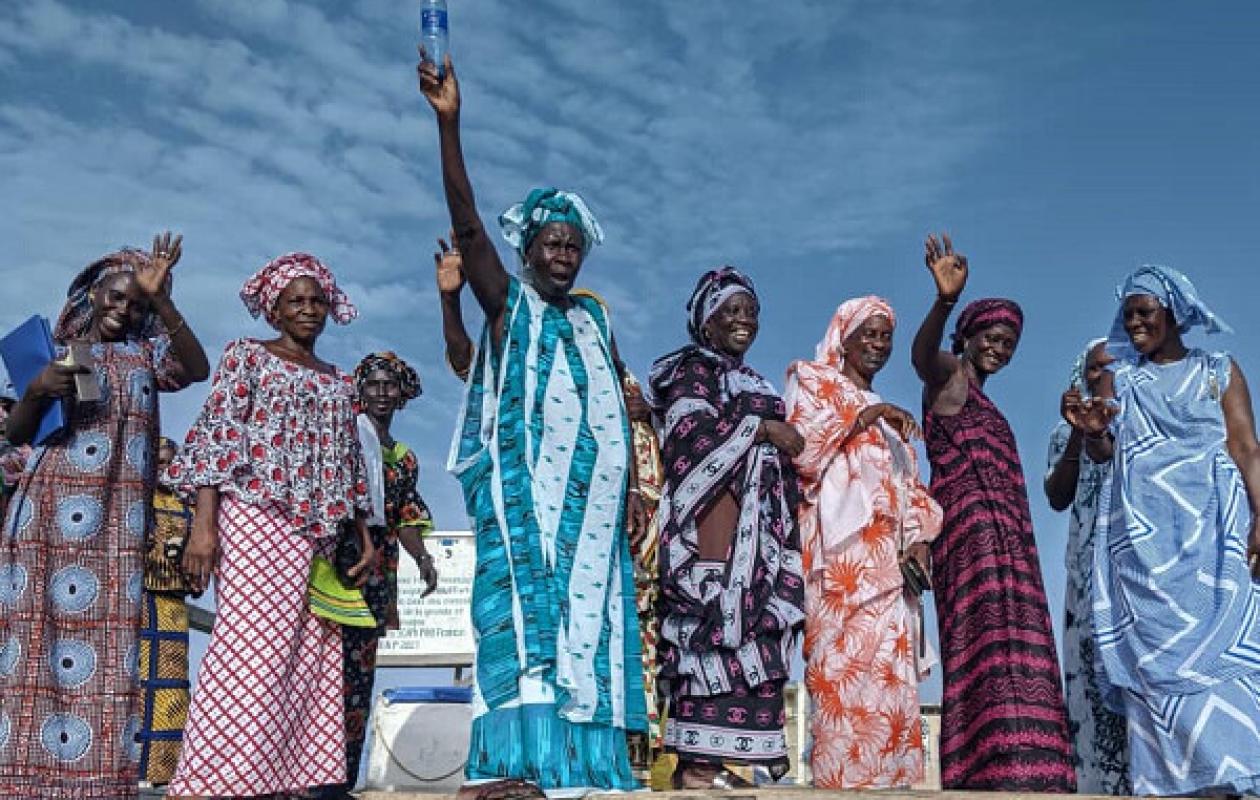
Égalité entre les sexes, équité et égalité de genre : Où en est la région de Thiès dans la production et l’utilisation des données statistiques sur le genre ?
A regional dialogue forum brought together some sixty stakeholders in Thiès on Tuesday, February 3, 2026, to discuss the production and use of gender-sensitive statistics, which are essential for the development, monitoring, and evaluation of equitable and inclusive public policies. This is in line with the international commitments made by the State of Senegal, notably the adoption of the 2030 Agenda, particularly SDG 5 on gender equality, as well as other priorities.
national policies on equity and gender equality, which our country has undertaken structural actions to strengthen gender statistics, inform producers and users of gender-sensitive statistics.
It is within this framework that UN Women, through the "Women Count" project, has supported the availability, accessibility, and use of quality statistics on key aspects related to gender equality and women's empowerment. Senegal has benefited from this program since 2021, with its implementation jointly managed by the National Agency for Statistics and Demography and the National Directorate for Equity and Gender Equality.
Together, they work to improve the production, dissemination, and use of gender statistics to support the formulation,
Monitoring and evaluation of inclusive and evidence-based public policies. Following the third edition of this forum, held from September 29 to October 1, 2025, the DEEG initiated, for the first time, regional forums to bring statistical production closer to territorial realities and promote local ownership of data.
For this first edition, the pilot phase was selected for Thiès, Saint Louis, and Ziguinchor. The Thiès region, in particular, stands out due to its strategic importance in the national economy, evidenced by the presence of significant mining activities (phosphates, extractive industries, and related sectors) and infrastructure linked to the energy sector, as well as its proximity to industrial and port hubs. Despite this dynamism, stakeholders lament that women's representation, both in employment and in decision-making bodies, remains low.
Furthermore, this region faces specific social, economic and environmental challenges related to the exploitation of natural resources, which affect men and women differently, particularly in terms of access to employment, working conditions, health, livelihoods and participation in local governance mechanisms.
Based on this observation, the forum provided an opportunity to discuss these issues in order to better document existing inequalities, inform public decision-making at the local and national levels, and strengthen the monitoring of women's participation and empowerment in these strategic sectors for the sustainable and inclusive development of the Thiès region. The meeting's objective was to strengthen the regional ecosystem for the production and use of gender-sensitive evidence for better integration of gender into local public policies and evidence-based decision-making.




















Commentaires (3)
Participer à la Discussion
Règles de la communauté :
💡 Astuce : Utilisez des emojis depuis votre téléphone ou le module emoji ci-dessous. Cliquez sur GIF pour ajouter un GIF animé. Collez un lien X/Twitter ou TikTok pour l'afficher automatiquement.