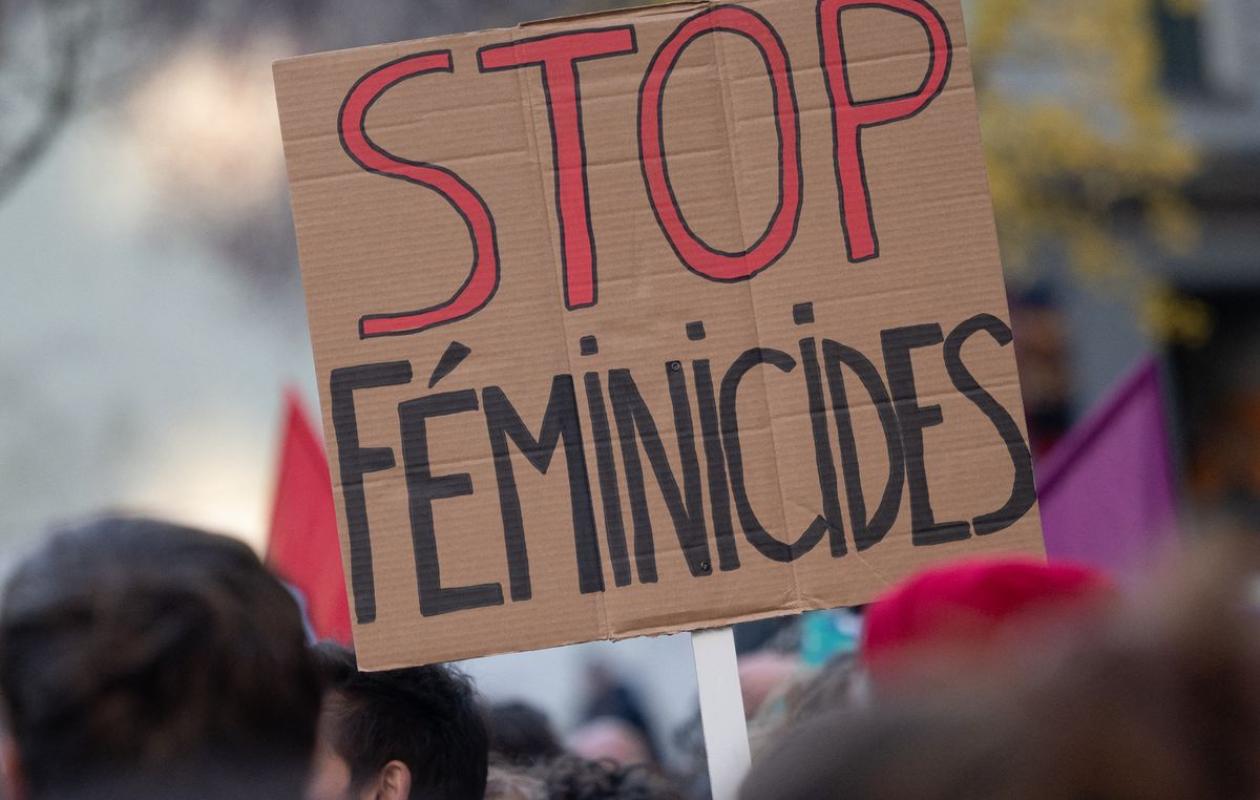
Féminicides : « Luy Jot Jot Na », le cri d’alarme après 18 femmes tuées en 2025
The final straw. A woman named Bintou Guèye was fatally shot on the night of Saturday, December 20th, in Keur Mbaye Fall, at her husband's home. The victim, a resident of Yeumbeul Nord (Darou Rahmane 3 neighborhood), was reportedly killed following a domestic dispute, the circumstances of which remain unknown. Since the beginning of 2025, more than 18 women have reportedly been killed in this context, according to the "Luy Jot Jot Na" collective.
It was in this climate that he held a press conference in Dakar on Monday, December 29. The coalition is demanding a reform of the Family Code and the recognition of femicide as a specific crime within the Senegalese legal framework.
The platform brings together some twenty civil society organizations, including several feminist groups. Its creation, according to its members, is a response to a growing number of cases of women killed within the family. “This coalition was created following the increase in femicides that we have all witnessed recently here in Senegal. To date, we have 18 cases of femicide that have been reported in the media. And as you know, only the cases that are reported are counted,” stated Aminata Libain Mbengue, a feminist activist, clinical psychologist, and member of the Senegalese feminist collective.
According to her, many situations remain outside the media spotlight. “In private spheres, in homes, perhaps there are other femicides that go unreported. As an organization, we said to ourselves, ‘Luy Jot Jot na’ (This is unacceptable),” she explained. The expression, from Wolof, refers to a feeling of urgency and that a threshold has been crossed.
The group advocates for the recognition of femicide as a distinct offense. “It is important that femicide be recognized in Senegal as a specific crime. Why is femicide not simply a marital dispute, not a simple marital conflict? Femicide is eminently political. Because it is our laws, in fact, our societal codes, that allow men to authorize themselves to kill their wives,” argued Aminata Libain Mbengue.
The activist emphasized the structural nature of the phenomenon. “Femicide isn’t murder because there’s an argument. It’s murder because it’s specifically a woman; it’s a partner or ex-partner who takes it upon themselves to take his wife’s life,” she stated, before adding that this legal classification would pave the way for a different social understanding of these crimes. “This legal recognition will allow for greater awareness among everyone, in society in general, so that we no longer see the trivialization of these crimes in the media.”
The coalition also criticized the lack of institutional response to the reported cases. “When there were 18 femicides this year, not once did we see a statement from the Ministry of Family and Solidarity. Not once did we see a word of support or solidarity from the Presidency of the Republic or the Prime Minister’s office,” denounced Aminata Libain Mbengue. She added: “These women must not be forgotten, and these women must not be killed in indifference. The very least that should happen when a woman is killed is that we receive at least a word of support and solidarity, that measures be taken.”
Beyond simply stating the facts, the group is directly challenging the executive branch on its commitments. "We would like to remind President Bassirou Diomaye Faye of the commitments he made when he was a candidate. His platform stated that he would take the necessary steps to reform the Family Code, and also to implement reforms to all articles that discriminate against women and girls," the activist recalled. She emphasized the priority of the issue: "The issue of women and girls is an urgent one. It is just as urgent as any other issue."
The Family Code, in force since 1972, is the focus of most of the coalition's criticisms. The movement wants these laws updated to reflect current social issues and realities. "It's an obsolete code, but it's also a patriarchal one. It's a code that enshrines the subordination of women and girls," stated Aminata Libain Mbengue. She cited several provisions deemed discriminatory, including the legal age of marriage for girls. "It's inconceivable that in 2025, 15-year-old girls will be allowed to marry," she declared, before addressing parental authority. "It's also inconceivable that women don't have rights over the children they bear. Therefore, shared parental authority must be a reality."
Articles 152, 153, 181, and 196 of the Family Code are among those the group wants revised. They deal specifically with marital authority, the determination of the family residence, proof of assets, and the prohibition of paternity suits. "These are outdated articles that, in our view, deserve a thorough reform," the activist stated.
Lawyer Abibatou Samb indicated that this demand falls within a broader legal perspective. "Our society is evolving. We must accept evolving with it. Today, in the provisions we have, whether in Senegal or elsewhere, we have the principle of equality," she reminded, referring to the Universal Declaration of Human Rights. "All human beings are born free and equal in dignity and rights."
According to her, recognizing femicide does not constitute a break with existing law. "In our legal system, you have the term 'parricide.' And nobody seems to mind that the term 'parricide' is recognized. You already have the term 'homicide.' Why is it that today, when we talk about femicide, it's a problem?" she asked. She clarified that the figures cited are based on documented facts. "The term 'femicide' today refers to recorded cases. You've all seen it: 17 women killed within the family environment, in the private sphere."
The lawyer addressed the legal consequences of such recognition. "If we manage to have the term 'femicide' recognized in our penal code today, it will require reform. And through this reform, we will be able to rely on what is called a law of aggravating circumstances," she explained. She added: "Taking a woman's life simply because she is a woman is a crime."
Lawyer Abibatou Samb also emphasized the collective dimension of the struggle. “The fight being waged by these women, these various organizations, is not just a women’s fight. It’s a society’s fight,” she declared. She added, “It’s not a question of feminists or anti-feminists. It’s a societal issue.” The lawyer also highlighted the transgenerational scope of this struggle: “It’s not for us. It’s for our children, for the future of humanity.”
Regarding the reform of the Family Code, the lawyer drew a direct link to violence. "All forms of violence in our beloved country have their origin, their core, in the Family Code," she asserted. She recalled the age of the text and the context in which it was drafted, before questioning certain provisions. "Do you think it's normal for a child to be born and not be able to take legal action to determine if the child is truly their father? It's not normal; it's a violation of human rights," she argued.
The issue of parental authority is also central to the demands. "Paternal power—the name says it all. I don't like the term 'power.' Education isn't about power," she stated. She continued, "You don't protect women if you accept parental authority. If Senegal accepts parental authority, it's first and foremost for its children."
Finally, Ms. Abibatou Samb mentioned the expected deterrent effect of strengthened sanctions: "When we have an exemplary sanction, it can deter everyone. Those who want to test their weapons at home will direct them elsewhere than towards their wife's head."
Following the press conference, the "Luy Jot Jot Na" coalition reaffirmed its intention to maintain the mobilization until legislative reforms are initiated. It calls on the authorities to translate their announced commitments into concrete actions, in the name of the women killed and those who remain vulnerable to violence within the family.
























Commentaires (6)
Maux vaut prévenir que guérir.
Vous n'avez pas organiser de marche contre la violence faite aux femmes.
Trop de théorie.
En dehors de ces zones où les pratiques traditionnelle restent de mises pour résoudre les problématiques des couples modernes qui sont multiples dont pour la plupart sont issus d'un déséquilibre de responsabilités financières et matérielles entre les conjoints. C'est pourquoi pour résoudre cela il faut revoir les bases de Fondations matérielles du couple au Sénégal, il faut légiférer pour exiger aux familles qui offrent la main de leurs filles en mariage des responsabilités accrues, c'est à dire augmenter la responsabilité financière de la femme dans la gestion partagée du foyer comme par exemple en Asie du sud est où la femme se retrouve être un partenaire de support des charges et pas une elle même. Au Sénégal la femme amène avec elle ce qu'elle est, et n’apporte rien d'autres avec elle pour contribuer financièrement cela de manière indéfinie dans la gestion et l’entretien du couple. Ce qui au fur du temps devient un poids et une pression permanente chez son conjoint, un état de fait qui finissent par se retourner contre elle en effaçant l’amour et en la réduisant en un fardeau qui frustrée de la nouvelle attitude de son mari ne reste pas silencieuse où des conflits et querelles permanents. Ainsi se crée une situation délictuelle où tout devient imprévisible.
Participer à la Discussion
Règles de la communauté :
💡 Astuce : Utilisez des emojis depuis votre téléphone ou le module emoji ci-dessous. Cliquez sur GIF pour ajouter un GIF animé. Collez un lien X/Twitter, TikTok ou Instagram pour l'afficher automatiquement.