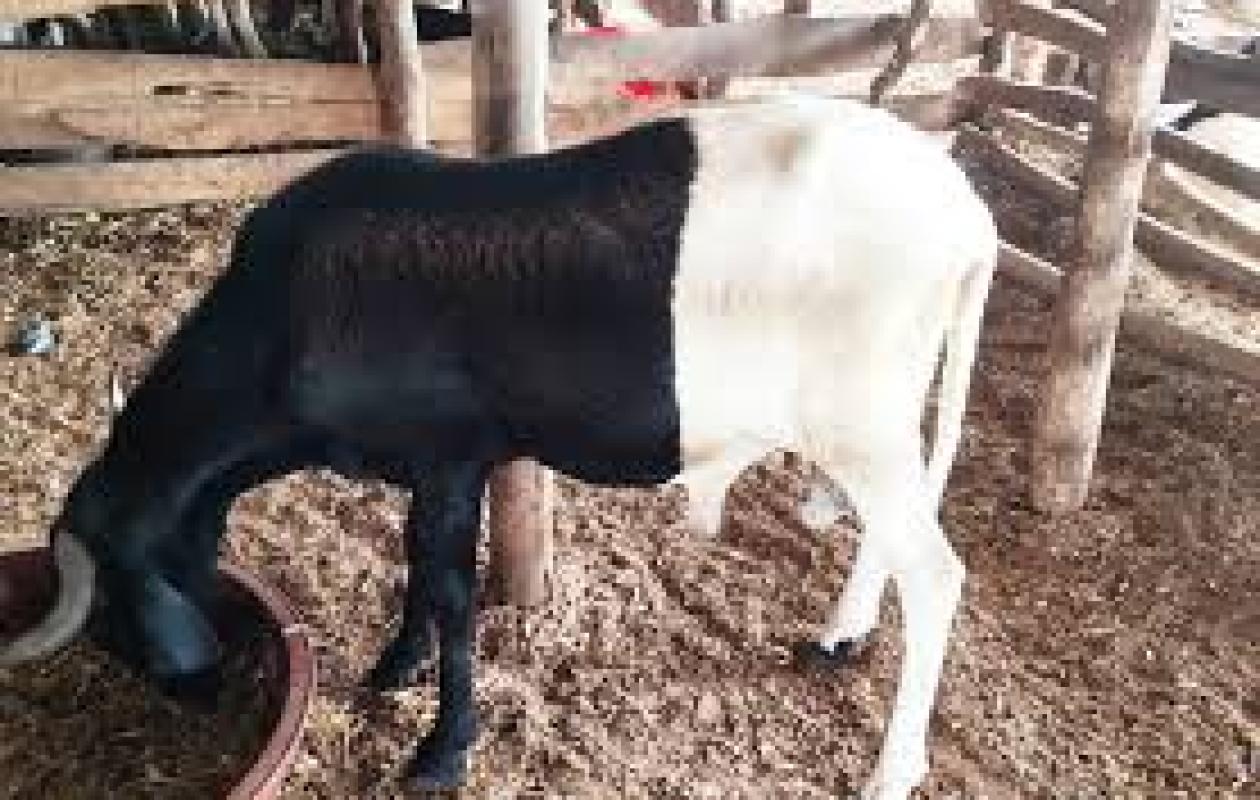
« Malheur à celui qui a le plus petit mouton » : Quand la Tabaski se transforme en "obligation de performance"
As Tabaski approaches, livestock markets fill up, tailor shops overflow with orders, and families increase their spending. In the streets of Dakar, the excitement of Eid al-Adha is already overwhelming. But behind the sheep on display and the festive preparations, the social and financial pressure becomes suffocating for many Senegalese .
Like the fruits of misfortune, every family believes that the stressful moments leading up to Tabaski will disappear with time. But for Modou Fall, a fisherman in Ngor, every year, worries are etched onto his wrinkled face on the eve of the festival. The forty-something has three children, aged 10, 7, and 4, but faces May 28, 2026, with a grim expression. "I don't even see the devil pulling his tail. I don't have a sheep yet, and my children have to get dressed for Tabaski," laments this father, staring blankly ahead with his salt-and-pepper beard.
Between new clothes, shoes, wigs, gifts, meals, and family expenses, many experience this period with anxiety. An unusual news story circulating in recent days speaks volumes about the pressure some Senegalese are under. In Thiès, the case even took a dramatic turn: D. Guèye, a taxi driver and manager of a tontine (a savings and loan association) with nearly 80 drivers, disappeared with approximately 17 million CFA francs intended for Tabaski preparations. Similarly, a young scrap metal dealer was found guilty of stealing a sheep, explaining his actions by citing financial difficulties. These stories highlight the tensions now surrounding a holiday that was once celebrated with greater simplicity.
"I want everything to be perfect."
For Amy Ndiaye, recently married, this first Tabaski with her in-laws is a time of excitement but also considerable pressure. "This year is different; I'm spending it with my in-laws. It's special and stressful at the same time, with a certain amount of pressure. I want everything to be perfect for the first time," she confides. Added to this are the cultural and social expectations. "I have to buy gifts for my mother-in-law and sisters-in-law because that's the tradition in Senegal. It's completely different from when I was single," she explains, admitting that she's experiencing this period "with a lot of stress and pressure."
Like many women, Amy also mentions the weight of others' opinions: "We, as women, always want to add a special touch: wear beautiful, expensive and classy clothes, a beautiful wig, buy new dishes... Because if we don't, we'll be embarrassed."
In both working-class neighborhoods and middle-class homes, families are trying their best to prepare in order to minimize the damage. Ndèye Mbaye says she bought the children's clothes several weeks ago. "All that's left is for the tailor to finish them, because that's the most stressful part," she sighs. But this organization masks a heavy economic reality. "Between the party preparations, the children's needs, the expectations of those around us, and end-of-month expenses like rent and school fees, it becomes a burden," the mother confesses.
"Woe to him who has the smallest sheep."
For Diégane Diouf, Tabaski has become synonymous with enormous expenses. “Like every year in Senegal, as Tabaski approaches, we absolutely have to find nice clothes, and that's expensive. There's also the sheep and the meal… a whole fortune to spend,” he explains. Despite the soaring prices, he believes that parents often have no alternative: “The children won't understand the socio-economic situation.”
Beyond the expenses, he primarily mentions a pervasive social competition. "Woe to the one who has a smaller sheep than his neighbor. The children won't understand. Beyond the religious aspect, you have to display all the wealth you've accumulated through your clothes, your sheep, and the way you celebrate," says Mr. Diouf. According to him, social media exacerbates this pressure even further: "People are competing for 'views' and validation. Today, we're constantly under pressure as Tabaski approaches," he acknowledges. For some households, this quest for appearances sometimes leads to over-indebtedness. "Some will even go so far as to take out loans, even if it means having problems after the holiday. Men face demands from their wives and are sometimes forced to buy things beyond their means," he laments.
The weight of social judgment
For sociologist Halima Dia, Tabaski goes far beyond its religious dimension. It constitutes, she explains, "a total social phenomenon," mobilizing the religious, economic, familial, and symbolic dimensions of Senegalese society. "In the past, Tabaski was experienced with relative simplicity, centered on religious sacrifice, family communion, and sharing. Today, under the influence of urbanization, cultural globalization, and social media, the festival has become partly spectacularized," she analyzes.
According to the sociologist, the sheep, the clothing, the meals, and even the presentation on digital platforms have become visible markers of social success. "The gaze of neighbors, extended family, and the community can transform a religious act into an obligation to perform socially," she emphasizes. This dynamic creates a profound gap between social expectations and the actual economic capabilities of households. "Some families go into debt, take out informal loans, or sacrifice essential expenses to meet social expectations. The celebration, meant to be a source of blessing and joy, then becomes a source of anxiety," she warns.
The sheep, a religious symbol and an economic conundrum
Once again this year, the search for a sheep has become a real headache. In Dakar, some rams are costing over 200,000 CFA francs, while the minimum wage remains below 70,000 CFA francs. The sacrificial sheep, the primary concern for heads of households, has become unaffordable for many Senegalese. For a country that had more than 8 million sheep in 2021, according to a study by the Agricultural and Rural Foresight Initiative (IPAR) published in March 2023, some 584,418 sheep had already been registered nationwide by May 15, 2026, for the Tabaski festival. This is an increase compared to last year, when 547,997 head were registered at the same time. Authorities interpret this progress as a sign of strong mobilization among breeders and industry operators, despite the economic pressures impacting household purchasing power.
Momath Cissé, Vice-President of the Senegalese Consumers Association (Ascosen), is urging consumers to avoid last-minute purchases. "If consumers wait for the rush, it will allow sellers to raise prices because demand is skyrocketing," he warns. While he says the supply level remains adequate this year, livestock feed costs continue to put downward pressure on prices. This is despite the fact that the Ministry of Commerce has set a price ceiling for livestock feed in Dakar through a decree: 8,500 FCFA ex-works, 9,000 FCFA wholesale, and 9,500 FCFA retail for a 50 kg bag.
However, the Senegalese government has not yet regulated the price of hay, which remains one of the main feeds for sheep in Senegal. On the ground, vendors and farmers are also denouncing the soaring cost of hay. Alioune Seck, a hay vendor for about ten years, describes a continuous rise in prices. “We buy a sack of hay for 7,000 francs in rural areas. With transport to Dakar, we resell it for between 7,500 and 8,000 francs. Ultimately, hay has become more expensive than peanuts,” he explains.
To regulate sheep prices in the lead-up to Tabaski, Ascosen is reviving its long-standing demand for sheep to be sold by weight, "per foot," as is done in some countries like Morocco to prevent excessively high prices during the Tabaski period. According to Mr. Cissé, this weight-based system would allow for greater transparency and limit speculation.
Furthermore, other stakeholders are focusing on local market production. In an interview with Seneweb on May 11, 2026, veterinarian Dr. Abdoulaye Arona Kâ also advocated for better regulation of production costs. “We need approximately 980,000 Tabaski sheep each year, and we import up to 400,000 head. The government must invest in the local market to achieve livestock sovereignty,” he argued. According to him, the government must, above all, “regulate the price of inputs to allow breeders to sell their sheep at lower prices.”
Despite everything, many Senegalese continue to cling to the spirit of sharing and solidarity that traditionally accompanies the festival. But today, Tabaski appears as a reflection of the deep economic and social divisions that run through the country.

















Commentaires (8)
Participer à la Discussion
Règles de la communauté
💡 Astuce : Utilisez des emojis depuis votre téléphone ou le module emoji ci-dessous. Cliquez sur GIF pour ajouter un GIF animé. Collez un lien X/Twitter, TikTok ou Instagram pour l'afficher automatiquement.
Se connecter
Commentez avec votre profil, votre photo, et soyez averti des réponses.