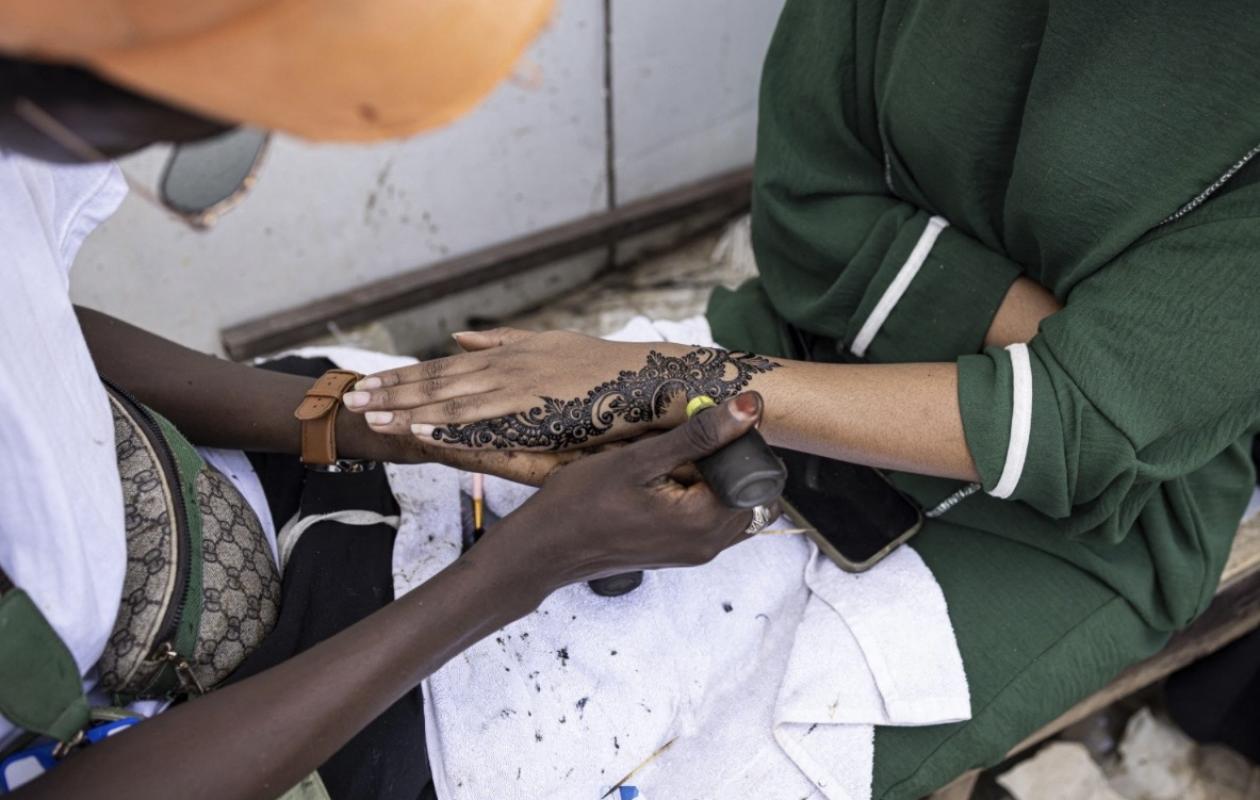
Mouton, sagnsé et condiments : L'impossible équation d'une Tabaski complète à 500 000 F CFA
Just hours before Tabaski, the capital's usual hustle and bustle masks a deep-seated financial anxiety. Between soaring food prices, skyrocketing ram costs, and the demands of clothing, putting together a "complete Tabaski budget" has become a real economic feat. On this sunny Wednesday afternoon, the traffic is heavy and chaotic. Horns and engines roar, adding to the din, as vendors display spices, jewelry, and other wares, and breeders present their finest rams. But behind this festive facade, customers are scarce and haggling over every penny.
The consensus is unanimous: celebrating Tabaski with a sheep, clothing, and ingredients has become a luxury that is difficult to afford. In 2026, a "medium but decent" sheep cost between 150,000 and 250,000 CFA francs. A household basket (onions, oil, potatoes, and spices) cost between 40,000 and 70,000 CFA francs. As for clothing, it required between 100,000 and 200,000 CFA francs, depending on the size of the family. In total, a complete Tabaski celebration cost between 290,000 and over 500,000 CFA francs: a staggering sum for the average Senegalese person.
For Amadou Beye, an accounting manager, the stability of his income is no longer enough to cover the considerable expenses of a large family. “As an employee, everyone thinks you're financially secure, and requests for help multiply. But my salary hasn't changed, while the price of a ram has skyrocketed. I had to spend 200,000 CFA francs on the sheep and 250,000 CFA francs on fabric and tailoring. My Tabaski (Eid al-Adha) costs are over 400,000 CFA francs. I asked for an advance for Tabaski, which I'll be carrying around like a debt for months,” he confides.
The decline in sales figures and the saving grace of tontines
The situation is just as bleak for Khady Seck, an e-commerce entrepreneur. “Customers are saving all their money for the holidays. My sales have dropped by half. I spent 60,000 CFA francs on ingredients. The tailor charged me 120,000 CFA francs for my sagnsé (traditional Senegalese dress) and my two daughters' dresses. Braids and accessories cost me 50,000 CFA francs. All my professional savings have been wiped out. We chase after social prestige, but the financial reality is harsh,” she explains.
Faced with this surge in costs, some are preparing through rotating savings and credit associations (tontines). Astou Niang, a restaurant owner and widow, explains: “Thanks to my neighborhood tontine, I collected 300,000 CFA francs at the beginning of the month. I bought my sheep very early for 130,000 CFA francs. For the ingredients, my neighbors and I pooled our resources to buy in bulk, which cost me 35,000 CFA francs. As for clothes, I opted for simple ready-to-wear for 50,000 CFA francs. In total, I'm managing with 215,000 CFA francs. It's tough, but dignity is priceless.” Whether they are salaried employees or entrepreneurs, Senegalese people are finding creative ways to celebrate Tabaski.
But while the finery will shine on the big day, many already know that the next day will be a time for hardship, as they try to replenish wallets emptied by the Tabaski business.








![[EXCLUSIF] Le lutteur Ama Baldé arrêté par la BR de Keur Massar](https://image.seneweb.com/content/news/2026-22-27//thumb_1260x800_6a174f4ee60cb_SOgkg3Pd2C.png)











Commentaires (0)
Participer à la Discussion
Règles de la communauté :
💡 Astuce : Utilisez des emojis depuis votre téléphone ou le module emoji ci-dessous. Cliquez sur GIF pour ajouter un GIF animé. Collez un lien X/Twitter, TikTok ou Instagram pour l'afficher automatiquement.