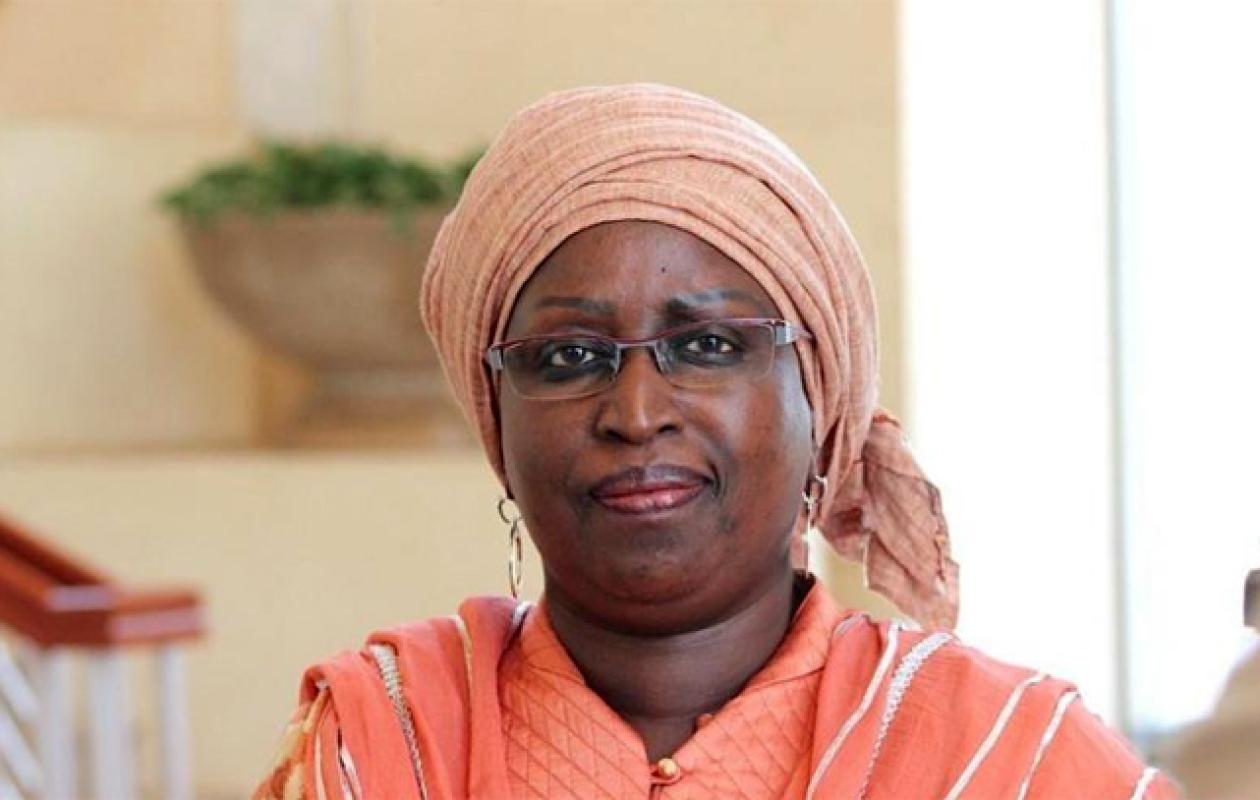
Penda Mbow : « Nous sommes dans une société sénégalaise traversée par des contentieux non réglés »
Invited to the Sunday Jury program on iRadio, Penda Mbow, a historian and committed intellectual, shared her analysis of Senegalese society, which she believes is facing a multidimensional moral, social, and political crisis. Femicides, murders for a few thousand francs, domestic violence, and sectarian and religious extremism: for Penda Mbow, these events can no longer be analyzed as mere individual failings. They are symptoms of a profound breakdown in social cohesion. "Bestiality has reached an alarming level. It must be analyzed holistically," she warned, describing a society where violence has become ingrained in daily life, to the point of normalizing horror.
Feminism: Heritage, Transmission, and Running Out of Steam
The historian also questions the relative silence of the major historical voices of Senegalese feminism. While the struggles waged in the 1970s and 1980s produced significant progress—girls' education, women's access to knowledge, economic autonomy, and the public sphere—the momentum seems weakened today. "We can't wage a battle forever. We must pass the torch to younger generations," she insists, noting that many are unaware of the struggles that led to the current achievements.
Penda Mbow rejects any simplistic interpretation of gender relations. While women's empowerment offers hope, it has also generated unprecedented tensions, notably a crisis of masculinity among some men destabilized by the loss of their dominant position. She also emphasizes that power, when unregulated, can be wielded by anyone, including some women, reminding us that they are neither passive nor inert in power dynamics.
Marriage, family and a "schizophrenic" society
At the heart of her analysis, the historian describes a Senegalese society caught in an unresolved historical contradiction. The country oscillates between African traditions that value the maternal figure and patriarchal systems inherited from monotheistic religions and colonization. "We live with several systems of rights transmission that coexist without being harmonized," she explains, speaking of a "schizophrenic" society where marriage, family, and parental authority are profoundly weakened. The increase in divorces, marital conflicts, and single-parent families, she argues, testifies to both a modernization of society and a profound normative disarray.
Youth, social immobility, and the temptation of breaking away
For Penda Mbow, the mass emigration of young Senegalese, despite the deadly risks, is also explained by a persistent lack of social mobility. Access to power, monopolized by a minority, has fostered the accumulation of wealth without redistribution, fueling frustration and anger. "When a society no longer allows young people to envision their future, a breakdown becomes inevitable," she analyzes, linking this phenomenon to the emergence of protest movements driven by social anger.
The historian is particularly critical of the elites. For her, belonging to the elite implies moral exemplarity and a capacity for self-discipline. "You can't be an elite and behave like everyone else," she asserts, referring to a past generation of leaders and intellectuals for whom service to the state took precedence over personal enrichment. This requirement, she believes, is lacking today, weakening the role of role model that the elites should embody.
Furthermore, despite their academic excellence and growing presence in all sectors, women remain, according to Penda Mbow, largely unheard in major national debates. "The first form of empowerment is speaking out," she asserts, calling on women to become more involved in the public, intellectual, and political spheres.
She urges people to confront society's dysfunctions without fear. Neither religion, nor traditions, nor political rhetoric can replace collective work on values, education, and the rebuilding of the social contract. "We have several revolutions to undertake that we have never undertaken," she summarizes, inviting women and men to engage together in the debates necessary for Senegal's transformation.



![[Billet d’humour] Diomaye Président : Mbour, le test qui interroge](https://image.seneweb.com/content/news/2026-19-10//thumb_1260x800_6a008342c328b_0bscHsJLlN.jpeg)









Commentaires (8)
C'est leur arme préférée comme leur gourou yolom guégno.
Et Dieu sait que c'est une belle contribution.
Arrêtez de tout le temps accuser les autres
Vous n’êtes responsables de rien ?
Participer à la Discussion
Règles de la communauté :
💡 Astuce : Utilisez des emojis depuis votre téléphone ou le module emoji ci-dessous. Cliquez sur GIF pour ajouter un GIF animé. Collez un lien X/Twitter, TikTok ou Instagram pour l'afficher automatiquement.