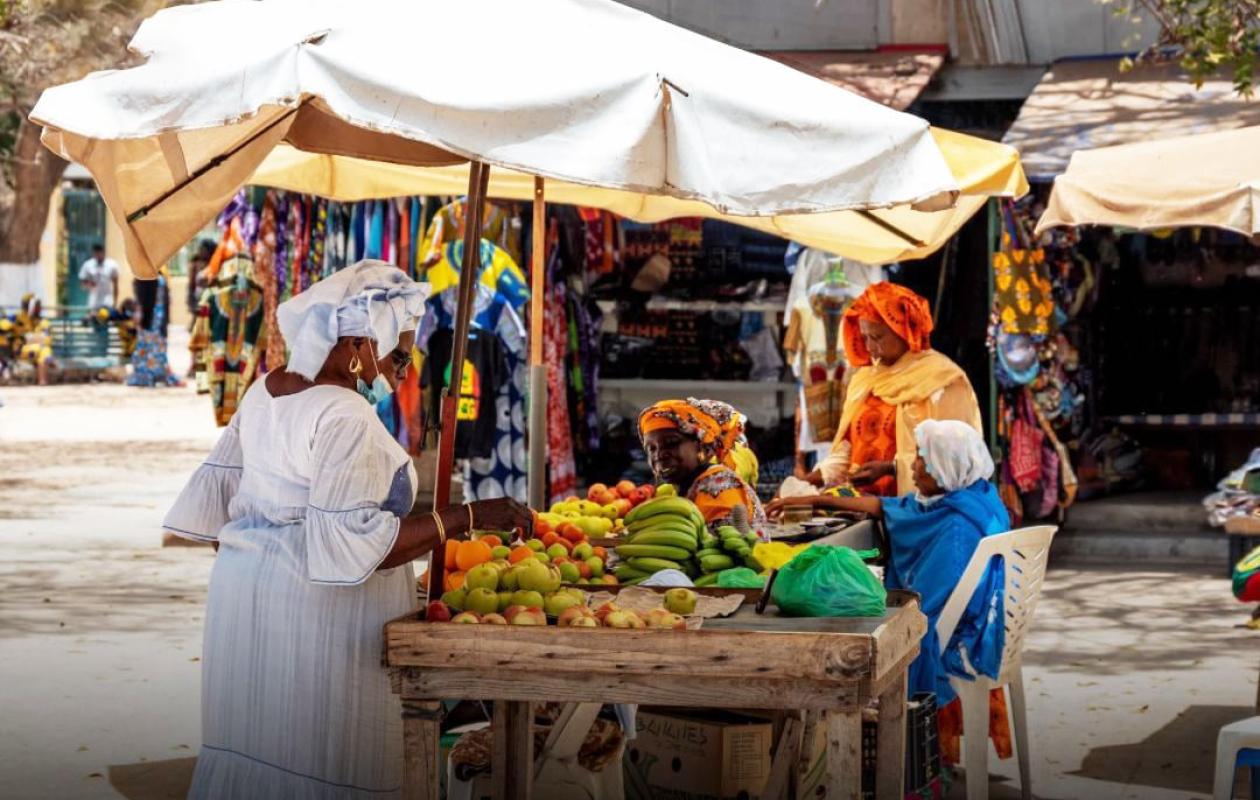
Panel Journée mondiale de la santé — Institut Pasteur de Dakar / OMS
Life expectancy in Senegal has increased from 67 to 69 years between 2015 and 2025, a crucial improvement credited to science's role in enhancing the national healthcare system, stated Professor Ibrahima Seck, head of the Preventive Medicine and Public Health department at Cheikh Anta Diop University (UCAD) in Dakar, on Wednesday.
"The tangible transformation of Senegal's health system through science is reflected in the health progress observed over the past decade," he said, citing as an example the rise in life expectancy from 67 to 69 years between 2015 and 2025.
During this same period, he continued, "there has also been a decline in neonatal mortality (deaths during the first month of life), which dropped from 39 to 21 per 1000 live births."
Professor Ibrahima Seck was speaking at a panel discussion focused on the theme of World Health Day: Collectively Investing in Innovation and Evidence-Based Policies to Accelerate Universal Health Coverage (UHC) in Senegal.
The Institut Pasteur de Dakar organized a roundtable in partnership with the World Health Organization to mark the day.
Among the health progress observed in Senegal thanks to science, Professor Seck also highlighted the drop in under-five mortality from 48 to 31 per 1000 live births, and a maternal mortality rate that fell from 392 deaths per 100,000 live births to 153 in 2023.
The head of Preventive Medicine and Public Health at UCAD stated that science in the service of health has also enabled a real and concrete transformation of Senegal's health system with a significant improvement in access to care.
"Thanks to the development of digital health, through numerous platforms, a doctor can now consult remotely, schedule appointments online, or monitor the progression of an illness without traveling," he praised, citing the crucial contribution of telemedicine and artificial intelligence.
"This evolution has helped reduce geographical inequalities and brought patients closer to healthcare professionals," the professor in the white coat asserted.
According to him, "these innovations are particularly useful in rural areas where medical infrastructure is sometimes insufficient."
Beyond the medical aspect, Professor Ibrahima Seck indicated that the discovery of certain medicines and vaccines has significantly reduced morbidities and mortalities, thereby improving population health and reducing deadly childhood diseases preventable by vaccination.
Dr. N'da Konan Michel Yao, the World Health Organization's Resident Representative, believes for his part that "science is the engine of innovation for effective health solutions."
For him, it enables an understanding of health challenges and an effective response thanks to "evidence generated," he added, advocating for decision-making based on scientific research.
"Without local scientific capacity, there can be no sovereignty," he warned.
Sokhna Faty Isseu SAMB








![[Édition Spéciale] Tout Sur la Composition du Nouveau Gouvernement](https://image.seneweb.com/content/news/2026-23-01//thumb_1260x800_6a1ddca812d4e_URisx1rdt4.jpg)










Commentaires (6)
Participer à la Discussion
Règles de la communauté :
💡 Astuce : Utilisez des emojis depuis votre téléphone ou le module emoji ci-dessous. Cliquez sur GIF pour ajouter un GIF animé. Collez un lien X/Twitter, TikTok ou Instagram pour l'afficher automatiquement.