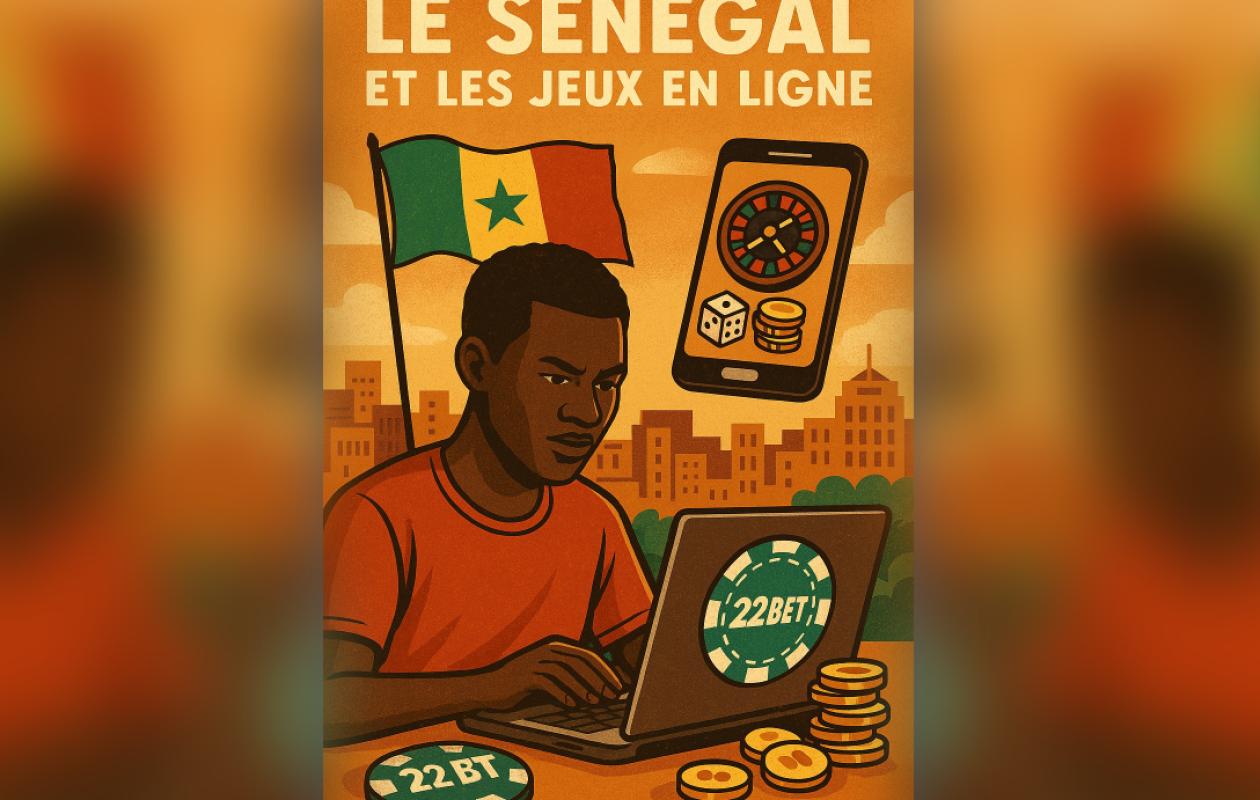
Sénégal et Jeux en Ligne : Entre Passion Populaire et Logiques de Pouvoir
In Senegal, the rise of online gaming has become a major phenomenon. Young, precarious workers, students, and even the unemployed are flocking to these platforms. It's not just a form of entertainment: it's a social space, a way to share, comment, and build a daily life often marked by economic uncertainty. But behind this dynamism lies a darker reality: the appropriation of these practices by transnational corporations that see them as a financial windfall.
The platforms claim to offer simple and open access. All you need is a smartphone and a weak internet connection to participate in this new digital world. On the surface, it appears to be democratization. Yet, this rhetoric masks a deeply unequal system. Profits are concentrated in the hands of a few companies. The players, for their part, fuel this system without ever reaping any structural benefits.
Online gaming in Senegal cannot be separated from the broader logic of digital capitalism. Platforms collect data, cultivate addiction, and shape consumer habits. It's not just a market; it's a tool of control. Every click becomes a source of profit. Every minute spent is transformed into value for distant shareholders.
The example of 22Bet illustrates this dynamic. Presented as an entertainment platform, it captures popular energy and converts it into financial flows. Players believe they are participating in a space of freedom, while in reality they are reinforcing an extractive economy. This process is not limited to the bets themselves: it is accompanied by targeted advertising, constant notifications, and a system designed to capture and exhaust attention.
More than half of Senegal's population is under 25. Faced with massive unemployment and a lack of prospects, these young people find an escape in online gaming. But what appears to be a refuge quickly becomes a trap. Addiction mixes with frustration. Gaming becomes a mirror of their precarious situation: many gamble with money they don't have, hoping to change their circumstances, and end up even poorer.
In Senegal, gambling isn't limited to digital platforms. A popular betting culture already exists, present in horse racing, traditional wrestling, and small neighborhood games. International companies exploit this tradition to legitimize their influence. They claim to be extending a cultural practice, while in reality they are profoundly altering its nature, diverting it to serve foreign interests.
The Senegalese diaspora, often living far away, is not immune to this trend. Financial transfers that support entire families are sometimes diverted to online gambling. Platforms directly target these communities, playing on nostalgia and their connection to the homeland. Here again, the money is captured by transnational networks, bypassing collective needs.
Women, often rendered invisible in analyses, also participate in these dynamics. Some play, but many suffer the consequences: reduced family budgets, domestic violence linked to losses, and economic instability. Online gaming thus reveals a gendered dimension of social injustice, one that is too rarely considered.
Faced with this dominance, resistance is growing. Youth associations, community groups, and awareness campaigns are reminding people that gaming is not neutral. They are inventing alternative ways of thinking about entertainment: free sports tournaments, independent cultural festivals, and collaborative digital spaces. These initiatives prove that another use of digital technology is possible, free from predatory logic.
It is impossible to understand the rise of online gaming without considering the colonial and neocolonial legacy. Economic structures inherited from the past created a dependence on foreign capital. Today, digital platforms extend this logic: they exploit the weaknesses of a system designed to extract wealth from the country and channel it abroad. Online gaming thus becomes a contemporary tool of economic domination.
In the digital world, profit isn't just about money wagered; it's also about captured attention. Every second spent on a platform is transformed into value through advertising, data collection, and habit building. Players aren't just consumers, but unwitting producers of wealth. Their time, their focus, their desires become a raw material, exploited just like natural resources.
The issue of online gaming cannot be left solely to economic actors or institutions. It must become a subject of public debate, driven by workers, young people, associations, and local communities. For it is here that the future lies: either accepting that platforms shape society according to the rules of global capitalism, or building grassroots alternatives where digital technology becomes a tool for empowerment.
Online games are not inherently doomed. They could become a space for creativity, solidarity, and sharing. But as long as they are dominated by the logic of global capitalism, they will remain a tool of dependence and dispossession. The challenge for Senegal is not to ban them, but to transform them. To regain control. To make the digital world not a field of exploitation, but a collective space, built by and for the people.























Commentaires (1)
Participer à la Discussion
Règles de la communauté :
💡 Astuce : Utilisez des emojis depuis votre téléphone ou le module emoji ci-dessous. Cliquez sur GIF pour ajouter un GIF animé. Collez un lien X/Twitter, TikTok ou Instagram pour l'afficher automatiquement.