Yad Vashem / musée de l’Holocauste: un monument et un nom face à l’oubli
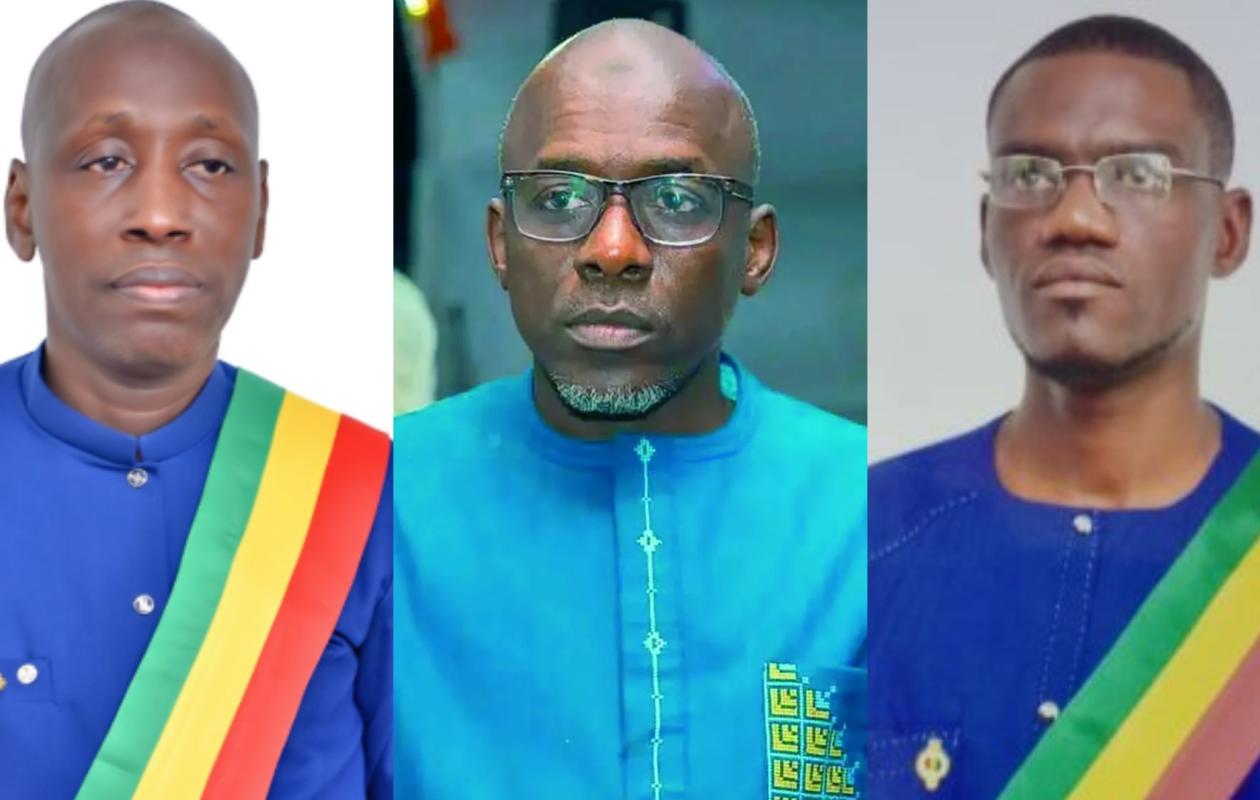
In the heart of Jerusalem, on the Mount of Remembrance, Har HaZikaron, the global Holocaust memorial, stands out as an immersive and profoundly moving experience. A journey of stone, light, and names, where the duty to remember becomes a universal awakening. This is what French-speaking journalists from Senegal, Ivory Coast, Benin, Togo, Burundi, the Democratic Republic of Congo, and Guinea experienced during a guided tour in Israel that plunged them into the heart of history.
The very name is a vow. “Yad Vashem” is taken from Isaiah 56:5: “I will give them in my house and within my walls a memorial and a name… that will never be erased.”
On August 19, 1953, two years after the creation of Israel, the Knesset unanimously passed the "Yad Vashem Law." The goal was to prevent the 6 million murdered Jews from becoming just a number. Names, faces, and stories were needed.
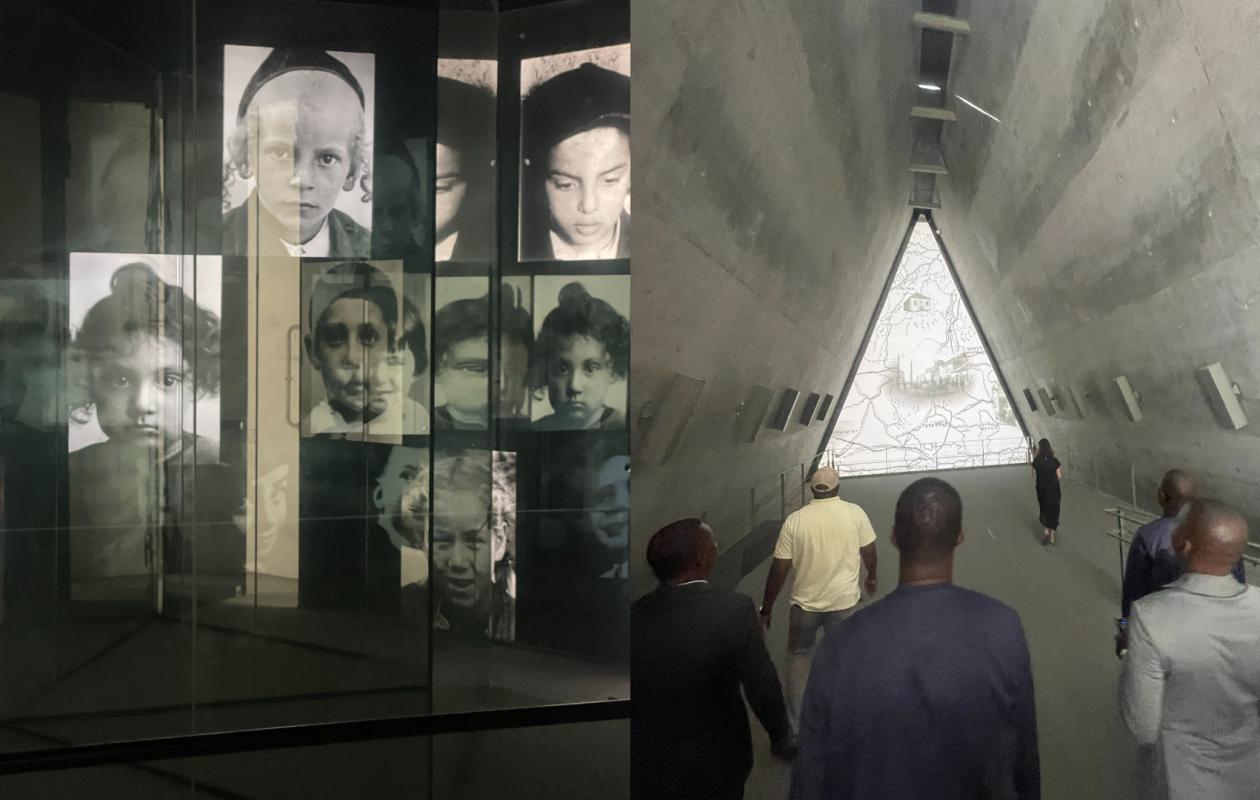
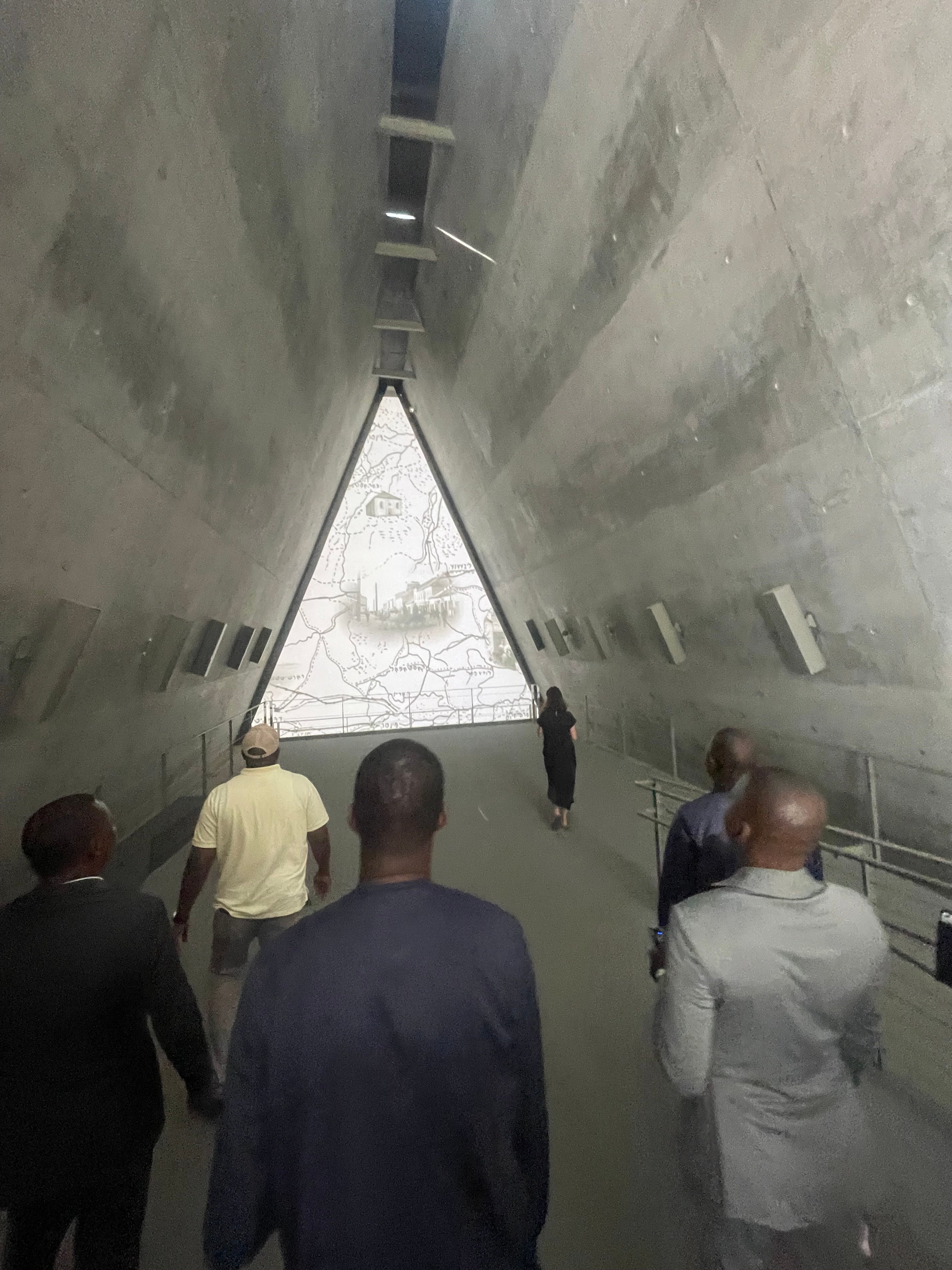
The first stone was laid in 1954 and the first museum opened in 1957. Then, after more than 13 years of work, the architect Moshe Safdie inaugurated in 2005 the new "Shoah History Museum", a triangular prism of concrete that pierces the mountain.
Architecture is already a language. A pyramid whose corridors descend and narrow, creating a feeling of gradual suffocation. Spread across 18 hectares of forest, Yad Vashem now encompasses museums, archives, a research center, a school, and monuments. A memorial complex at the heart of the gardens.
The Museum: Entering the chiaroscuro of history
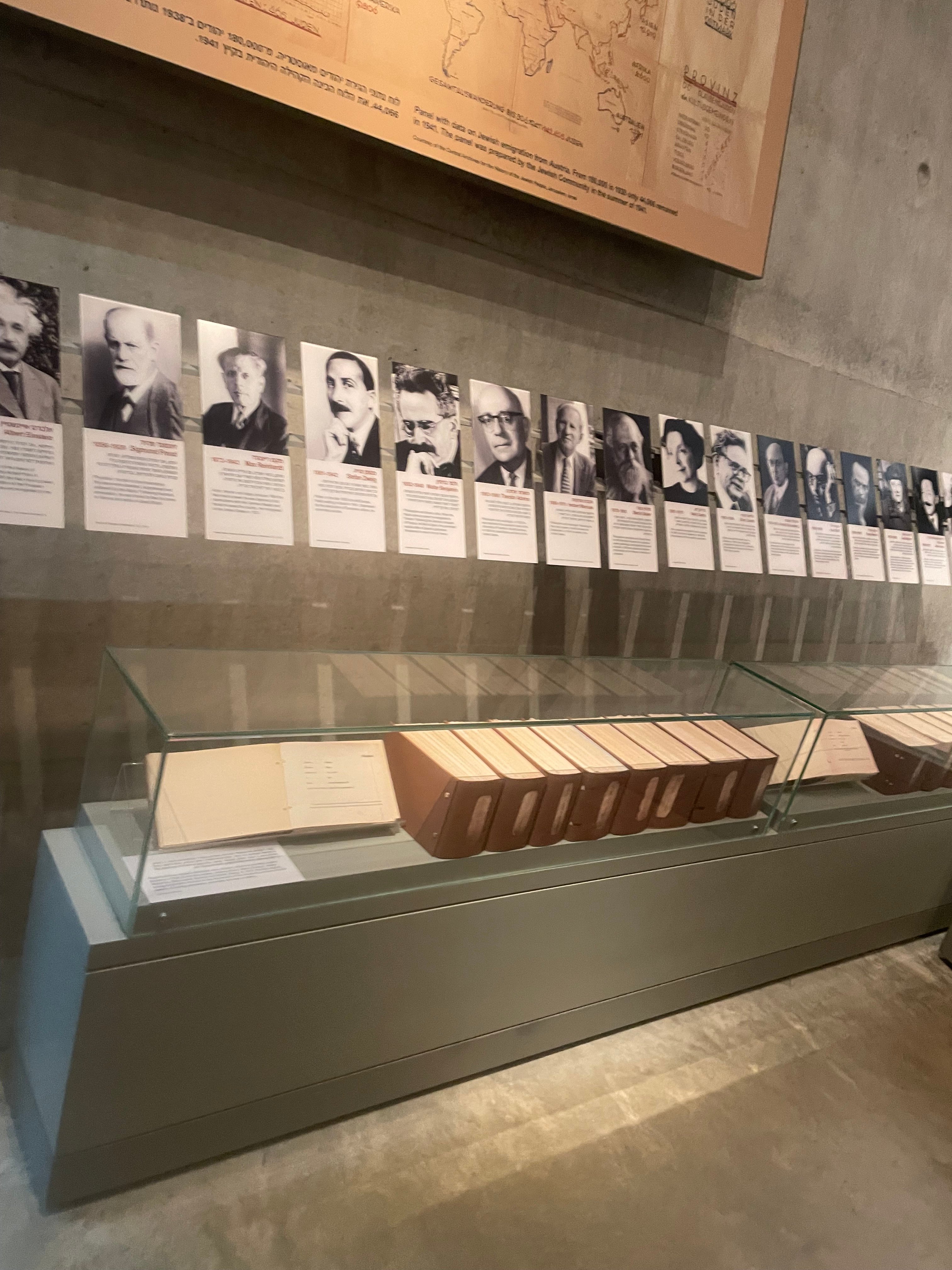
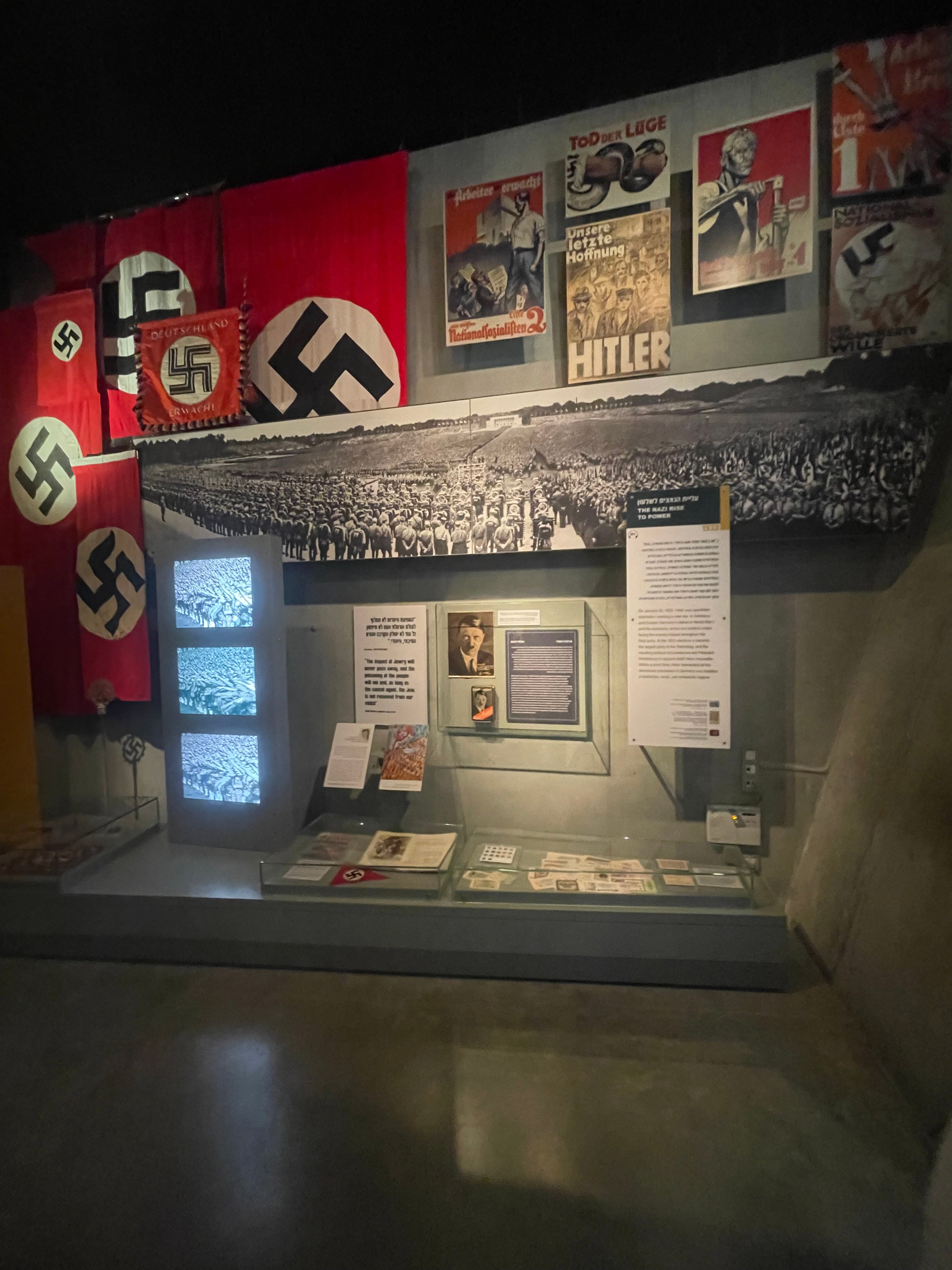
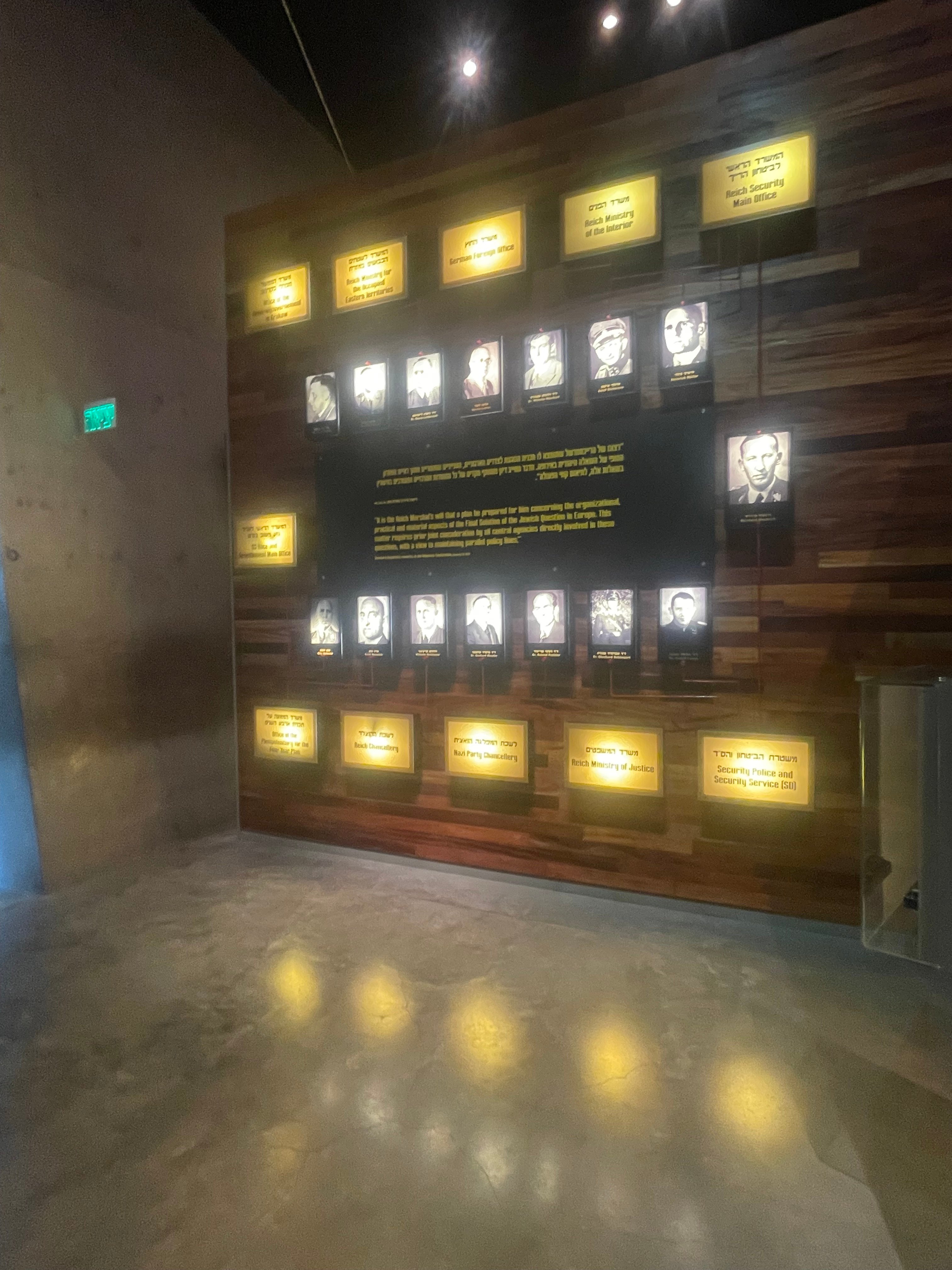
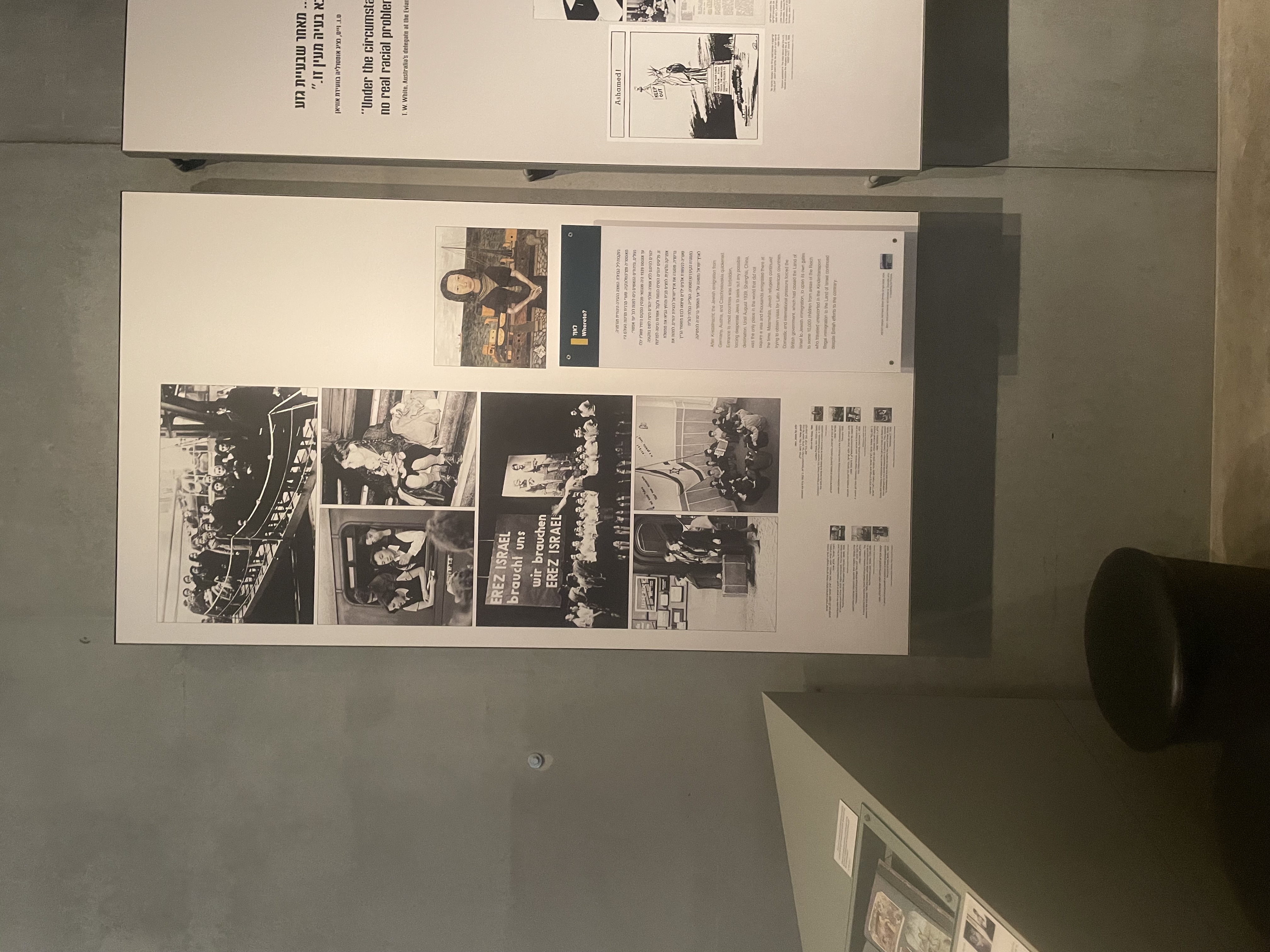
The underground journey begins. The lighting dims. The noise of the outside world disappears. Ten chronological galleries recount the march toward the abyss: from pre-war Jewish life in Europe to the "Final Solution." An entire room is devoted to Nazi Germany, from Hitler's rise to power to Kristallnacht in 1938, the first major pogrom in which synagogues were burned and sacred books desecrated. It was there that Jews were excluded from citizenship. The signal for destruction.
Memories
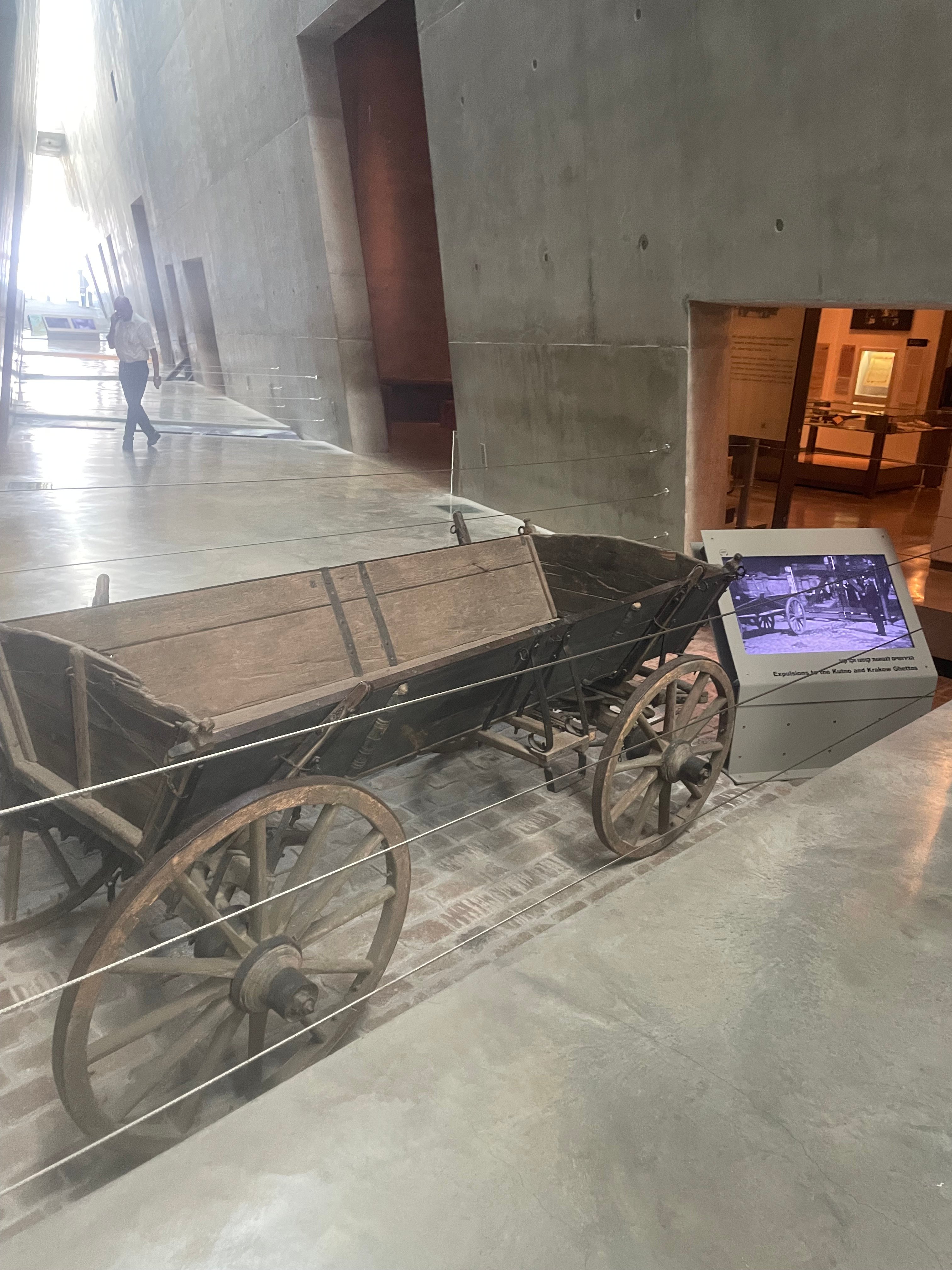
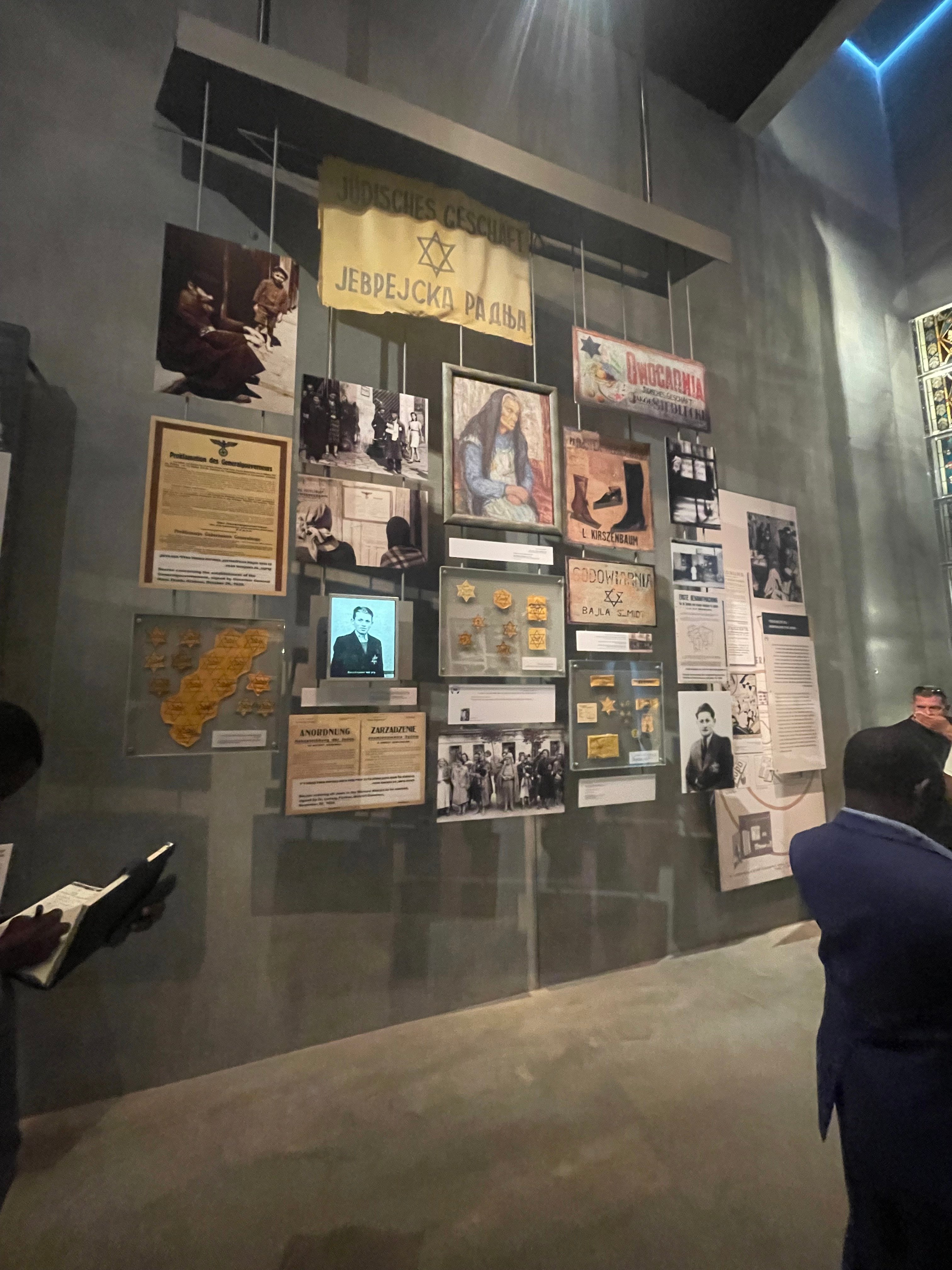
Here, authenticity is a requirement. "Only two items aren't authentic. Everything else is," explains Arielle Nahmias, head of French-language educational programs at the International School for Holocaust Studies. Personal belongings, period documents, clothing. And above all, thousands of works from the "Holocaust Art Museum," such as paintings, drawings, and sculptures created in the ghettos or camps. Screens continuously broadcast survivor testimonies. Nothing here is insignificant. Everything evokes our pity and lays bare humanity, capable of both the best and the worst.
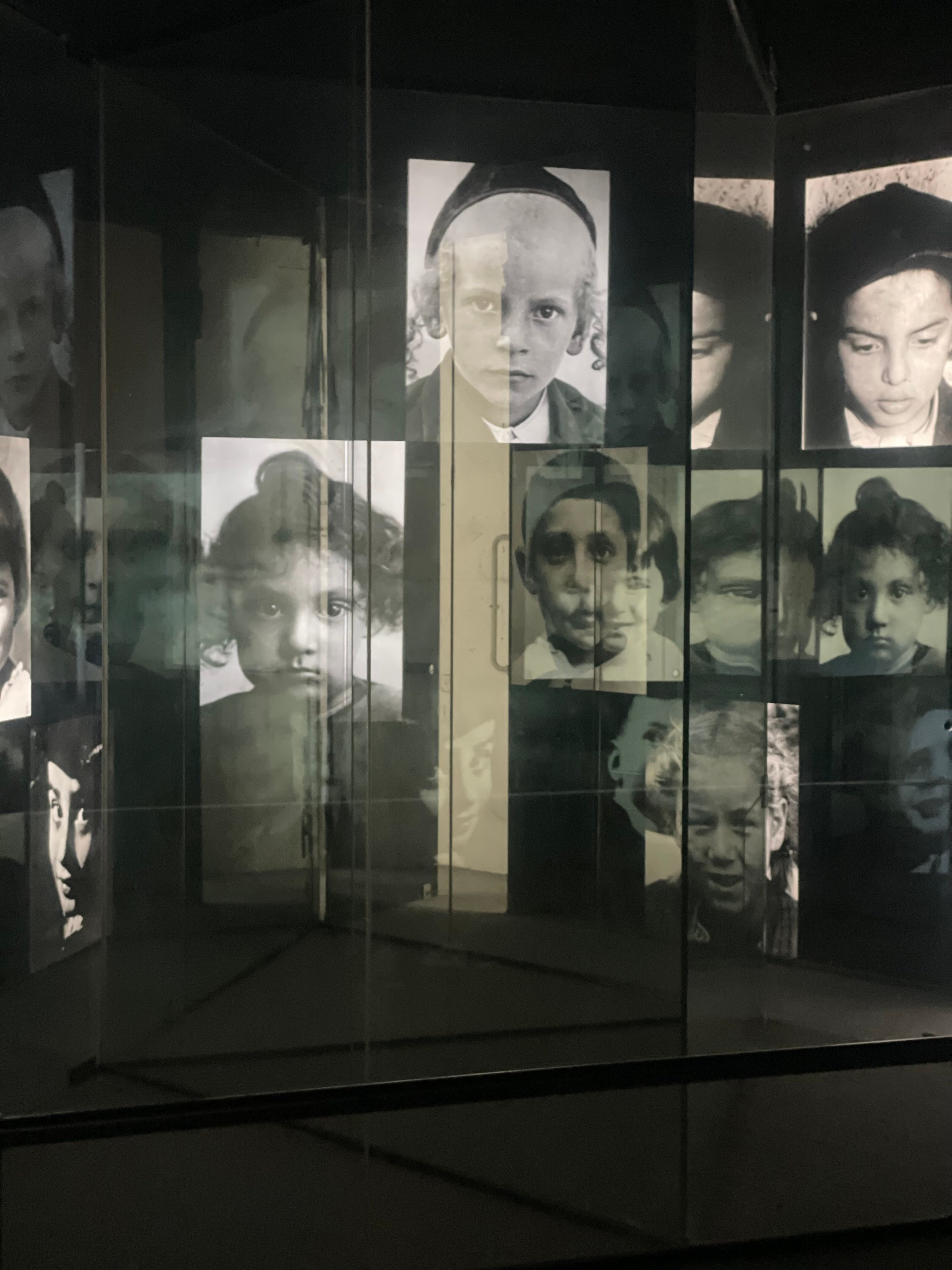
The tour leads to the "Hall of Names." This central circular hall, beneath a dome, houses the entire collection of "testimony sheets," which are short biographies of each of the victims of the Holocaust. More than two million sheets are preserved in this circular repository, along the outer wall of this hall, which is large enough to hold six million. The hall's ceiling is a ten-meter-high cone, pointing skyward, on whose walls are displayed 600 photographs and fragments of testimony sheets. This exhibition represents a small part of the six million men, women, and children who belonged to the Jewish world destroyed by the Nazis and their collaborators.
The most striking place: the children's memorial
This is the most moving part. It's the crypt built in homage to the 1.5 million murdered Jewish children. In total darkness, a single candle burns at the center. Mirrors multiply it infinitely, like thousands of lost souls. A voice recites their first names, ages, and countries of origin. The atmosphere is heavy. "As if the place still harbors the fears and sorrows of those little angels," a visitor confides.
“Here, you have the faces of children. This place commemorates a process, the grand narrative of history. We want to remember each of these children. Children are the foundation of a people,” explains Arielle Nahmias.
The Righteous and the Communities
Before entering, a tree-lined path catches the eye: the "Avenue of the Righteous Among the Nations." More than 2,000 trees are planted for the non-Jews who risked their lives to save Jews. Their names are engraved on a wall of honor.
Nearby is the "Valley of Communities," with stone walls engraved with the names of more than 5,000 destroyed Jewish communities. Yad Vashem here affirms the unique nature of the Holocaust: the intent to completely annihilate a people.
After more than an hour of immersion, the visit ends in a somber atmosphere. However, the key takeaway is that Yad Vashem rejects numbers. It chooses faces and names, like those of Esther Finkel and her son Richard, Primo Levi, Elie Wiesel… “What is here is a story that touches all of humanity,” emphasizes Arielle Nahmias. Since the Institute's School was founded in 1999, hundreds of delegations of teachers from around the world have received training there. Unfortunately, after the events of October 7, 2023, the number of delegations has dwindled. This situation saddens Ms. Nahmias, who usually welcomes eight groups of teachers a year. “This year, I only received one,” she laments.
However, Yad Vashem remains what it has always been: a warning. A place where memory cries out, so that humanity may be silent and listen. So that no one can say tomorrow, "I didn't know."






















Commentaires (7)
Participer à la Discussion
Règles de la communauté
💡 Astuce : Utilisez des emojis depuis votre téléphone ou le module emoji ci-dessous. Cliquez sur GIF pour ajouter un GIF animé. Collez un lien X/Twitter, TikTok ou Instagram pour l'afficher automatiquement.
Se connecter
Commentez avec votre profil, votre photo, et soyez averti des réponses.