
"Filière arachidière en danger": le CAFAS dénonce la taxe de 40 F CFA et alerte sur 100 000 emplois menacés
The Collective of Actors of the Senegalese Peanut Sector (CAFAS), under the leadership of its president Amadou Ndiaye Sakho, held a press conference this Tuesday, December 16, 2025 in Touba to warn about the risks linked to the delay in the start of the peanut seed export campaign and the tax of 40 CFA francs per kilogram on exports.
A worrying silence that jeopardizes the entire industry.
According to Amadou Ndiaye Sakho, the government's silence and delay are killing the export season. International buyers plan their procurement between December and January. Without swift official communication, contracts will go elsewhere, and Senegal will be absent for the entire 2025-2026 season.
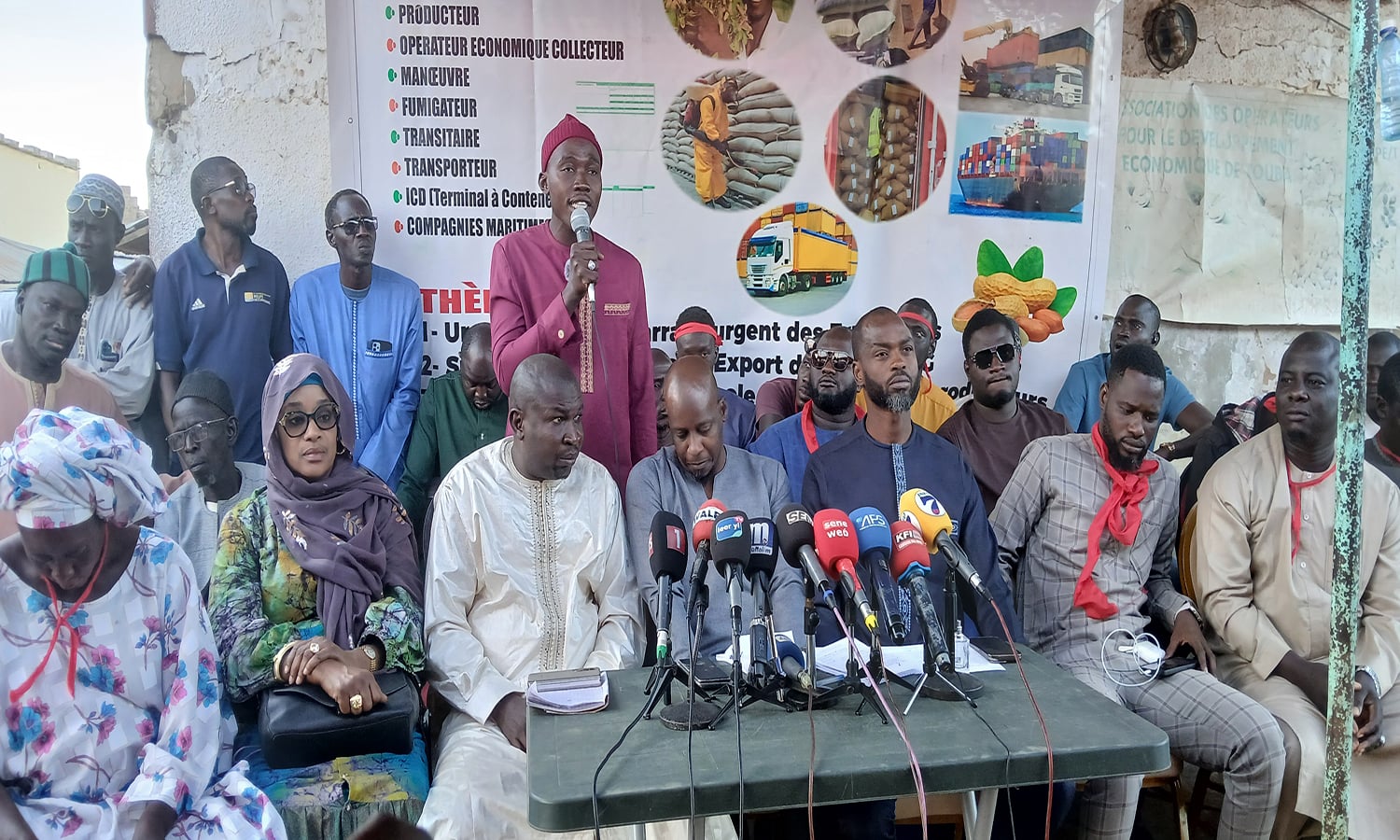
“We are gathered here today to alert our authorities to the situation in the peanut sector. Given the decisions that have been taken by the government, which initially set a price 55 francs higher than the world market price, and subsequently imposed a tax of 40 francs per kilogram of shelled peanuts for export, this constitutes a barrier to our activity and represents impacts for the entire sector and the entire value chain,” said Cheikh Ahmadou Bamba Fall, a member of CAFAS.
A total loss of international competitiveness
According to Amadou Ndiaye Sakho, these decisions make Senegalese peanuts more expensive than those of all its competitors. Competing countries like Gambia, Nigeria, Sudan, Argentina, and India do not apply export duties on raw peanuts. International buyers, particularly China, the European Union, and Turkey, base their decisions solely on the price delivered to the port.
The tax of 40 CFA francs per kilogram amounts to 40,000 CFA francs per ton, or several billion CFA francs over the course of a season. No rational operator can export at a loss, the source asserts. Senegal is thus automatically excluded from the market.
More than 100,000 jobs at risk
“We are not asking for subsidies or privileges. We are simply asking for the right to work, the right for farmers to sell peanuts, and therefore the right to keep jobs in this country. Because more than 100,000 jobs are at stake, and therefore the impacts could be very, very disastrous for our economy,” Cheikh Ahmadou Bamba Fall emphasized.
According to Amadou Ndiaye Sakho, it is not speculators who are affected, but a national economic ecosystem. More than 100,000 direct and indirect jobs are threatened: handlers, transporters, dockworkers, freight forwarders, workers in hulling plants, SMEs in logistics and services, as well as hundreds of Senegalese companies already committed (bank loans, contracts, stocks).
A serious impact on the rural economy and producers
According to the group, maintaining these measures paradoxically leads to a decrease in the price paid to farmers. Low demand equates to unsold produce. Operators who are still buying are doing so below the minimum price due to a lack of outlets.
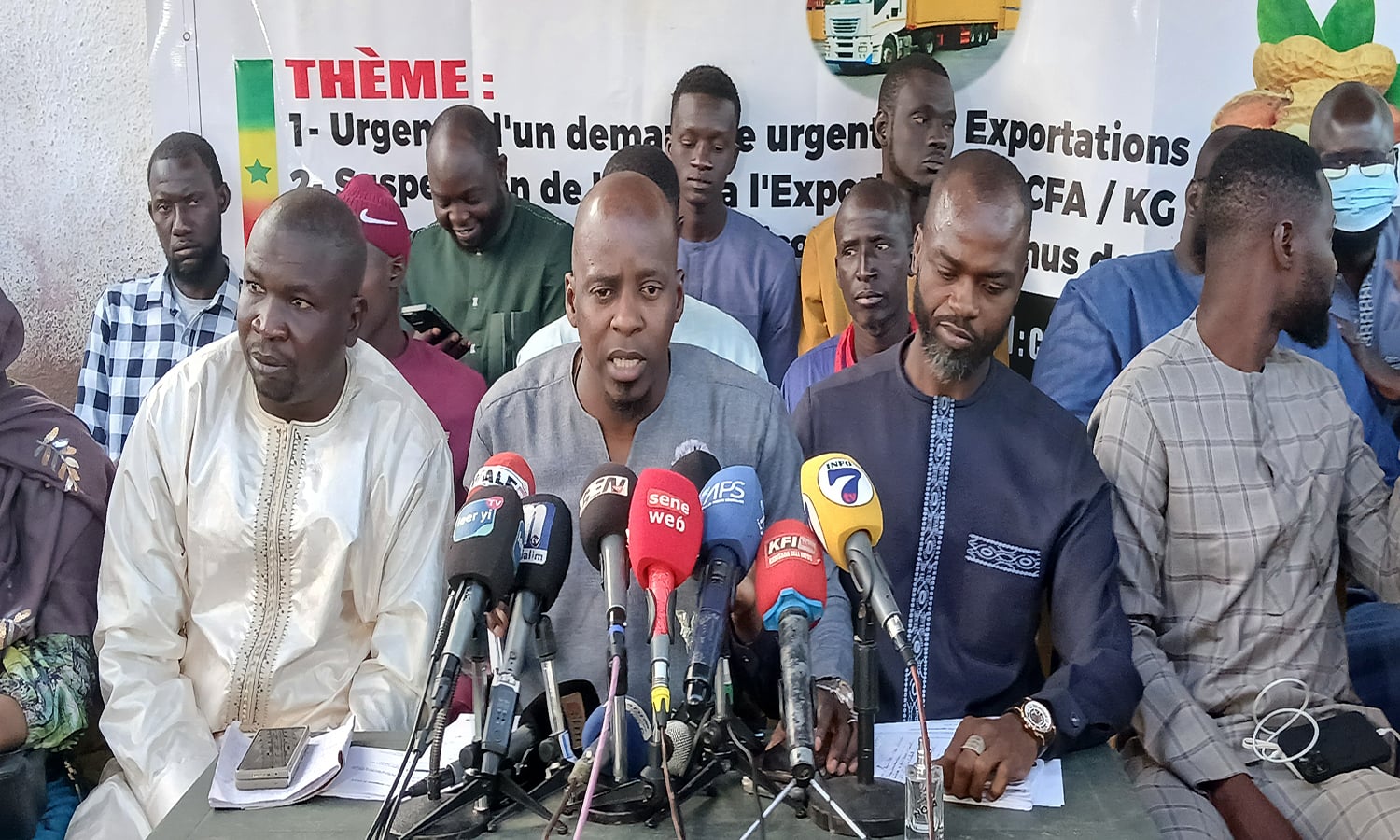
The major risks include prolonged storage at the producer's premises, deterioration in quality, rural debt, and a loss of confidence among farmers in the peanut sector. Without smooth exports, the floor price becomes theoretical and unenforceable, the source emphasizes.
The state loses more than it gains
CAFAS points out that blocking exports costs the state more than allowing them. Losses include foreign currency, port revenues, VAT and taxes paid by businesses, as well as formal employment.
The export chain generates far more indirect revenue than the 40 CFA franc per kilogram tax. A state earns more with a high volume of exports without a tax than with a tax on a zero volume, the source explains.
The proposals of CAFAS
The Collective is not opposed to the State; it proposes pragmatic solutions, according to the Collective. Its clear recommendations are as follows:
-Immediate suspension of the 40 CFA franc per kilogram tax for the current campaign,
-Official announcement before the beginning of January regarding the opening of the export campaign,
-Establishment of a consultation framework between the State, exporters, and producers to define a more realistic pricing mechanism, work on local processing in the medium term, and secure State revenue without destroying the sector.
A strong political conclusion
“We solemnly alert the authorities: the peanut sector is not asking for subsidies or privileges, it is simply asking for the right to work, to sell and to preserve Senegalese jobs. Eliminating the export tax and quickly announcing the opening of the campaign means saving a strategic sector, the rural economy and thousands of families,” the documents presented by the collective read.

“Moreover, protecting this sector, and therefore exports, would allow us to generate 1 point of GDP and a 1% growth rate by 2026. This would be very beneficial for the State. We are truly requesting the elimination of the 40-franc tax and clear, understandable communication from our supervising minister, providing us with a clear timetable for the resumption of exports, so that foreign partners can come and buy peanuts and surplus production, and revitalize our rural economy,” concluded Cheikh Ahmadou Bamba Fall.




















Commentaires (7)
2- En plus de cela une taxe de 40 frs/ kg a l'export
3-Une production de 960.00T T et le besoin du senegal avec huilers biensur ne depasse pas 350.000 T
4- Un surplus de production de plus de 500.000 T Qui les exportations absorbent
Si on met routes ses barrieres on Risque MEVENTE
PERTE 100MILLE EMPLOI
FAMINE DANS LE MONDE RURAL
Participer à la Discussion
Règles de la communauté :
💡 Astuce : Utilisez des emojis depuis votre téléphone ou le module emoji ci-dessous. Cliquez sur GIF pour ajouter un GIF animé. Collez un lien X/Twitter ou TikTok pour l'afficher automatiquement.