Projet Fleming Fund Phase 2 et programme Fellowship Sénégal : le Sénégal fait le point sur la résistance aux antimicrobiens
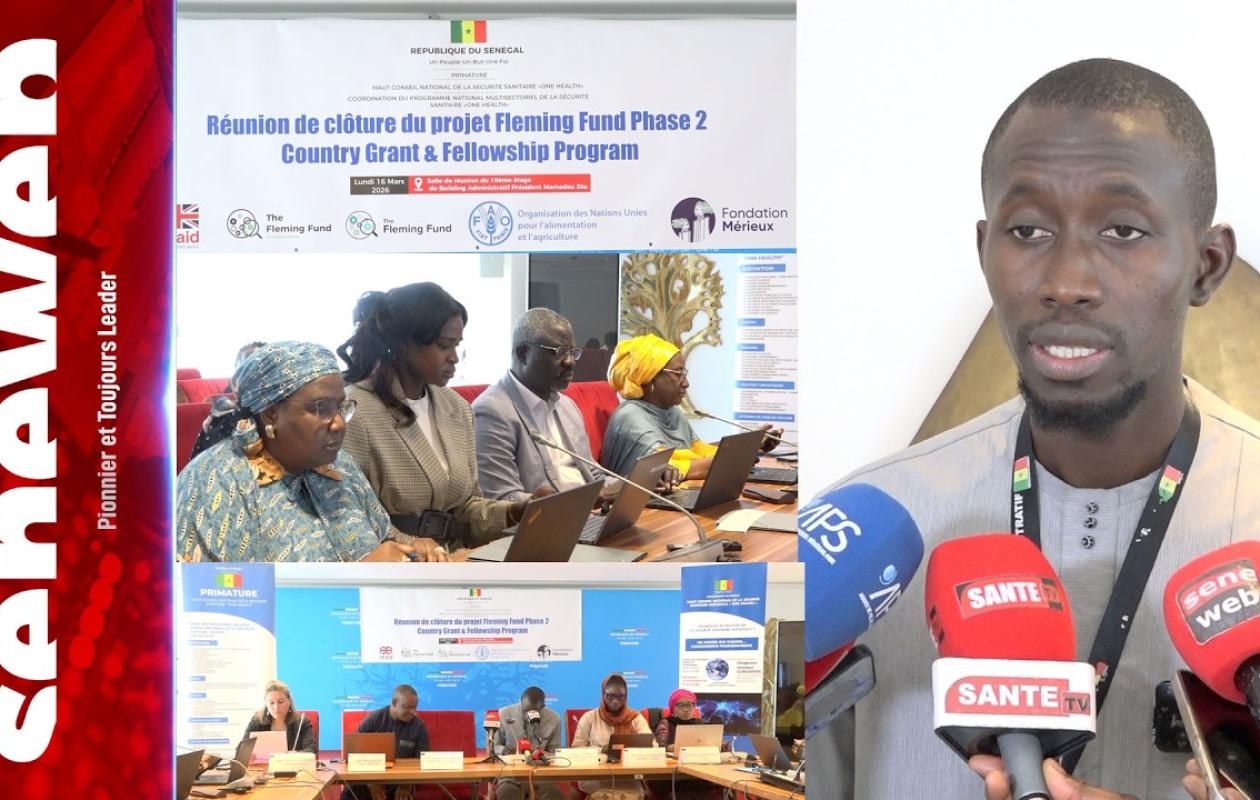
As part of the "One Health" approach, which links human health, animal health and ecosystem health, to strengthen the national system for combating antimicrobial resistance (AMR), the Mamadou Dia administrative building hosted the closing meeting of the Fleming Fund Phase 2 - Country Grant project and the Fellowship Senegal program on Monday, March 16.
This aid program from the British government, which supports nearly 25 countries in Africa and Asia in the fight against antimicrobial resistance with the support of technical partners such as the Mérieux Foundation and the FAO, aims to strengthen integrated AMR surveillance in the country.
The objective is to improve the collection and analysis of data relating to the use and consumption of antimicrobials, to strengthen the technical capacities of laboratories and health professionals, and to promote multi-sectoral collaboration within the framework of the One Health approach.
This meeting, based on collaboration between the human, animal, and environmental health sectors, also provided an opportunity to share best practices, identify persistent challenges, and discuss strategies for ensuring the sustainability of the program's achievements. During the meeting, Bakary Thior, the Prime Minister's technical advisor on health, emphasized the importance of this fight in Senegal.
According to Mr. Thior, phase 2 of the Fleming Fund project facilitated the training of several stakeholders in health, environment, and agriculture on detection techniques. It enabled the identification and equipping of dedicated laboratories, as well as the funding for the development of strategic plans and procedural manuals to strengthen AMR surveillance in Senegal.
Bakary Thior also indicated that AMR has consequences for veterinary health, particularly with regard to the use of medications and products in livestock. The advisor to the Prime Minister therefore suggested the creation of a High Council for Health Security, a mechanism for detecting AMR that would bring together all relevant sectors.
For her part, the Director of Quality, Safety and Hospital Hygiene at the Ministry of Health and Public Hygiene, Mame Awa Ndoye, recalled the importance of the fight against RAM in healthcare facilities.
According to her, the main objective is to ensure that patients are treated with effective antimicrobials. Ms. Ndoye indicated that a survey conducted with the help of the Mérieux Foundation revealed alarming findings on antimicrobial prescribing in hospitals; data that is crucial for improving practices and ensuring patient safety.
She also noted that a publication in The Lancet revealed that antimicrobial resistance is a global phenomenon that could lead to the deaths of 22 million people by 2038. Understanding the importance of this challenge, Senegal has put in place concrete initiatives to address it.
The director also emphasized the importance of sectoral coordination. According to her, the National High Council for Health Security, and in particular the One Health platform, plays a crucial role. Ms. Ndoye further noted that antimicrobial resistance not only affects human health but also impacts the environment, particularly through the use of chemicals and pesticides in agriculture.
Speaking at the event, Dr. Aicha Marceline Sarr, head of the Mérieux Foundation's West Africa office, indicated that the Foundation, with over 50 years of experience in the fight against infectious diseases, has successfully completed this project to strengthen Senegal's capacity in this area.
Dr. Sarr stated that antimicrobial resistance is a reality in Senegal and poses a major threat to public health. She concluded by affirming the Mérieux Foundation's commitment to supporting Senegal in this fight, in collaboration with relevant ministries and technical and financial partners.











![[Exclusif] Mame Dior « Bete Bete » et son amie visées par une enquête pour « actes contre-nature »](https://image.seneweb.com/content/news/2026-14-30//thumb_1260x800_69cac74703b8d_aRJEQ9WyoP.jpg)











Commentaires (1)
Participer à la Discussion
Règles de la communauté :
💡 Astuce : Utilisez des emojis depuis votre téléphone ou le module emoji ci-dessous. Cliquez sur GIF pour ajouter un GIF animé. Collez un lien X/Twitter, TikTok ou Instagram pour l'afficher automatiquement.