

Donald Trump révolutionne la fête nationale américaine.
il y a 7 ans
3,345 Lectures
0 Commentaires
💡 Bon à savoir
Cette interface de recherche vous permet d'explorer toutes les archives d'actualités du Sénégal, de 2006 jusqu'à aujourd'hui. Profitez de notre base de données complète pour retrouver les événements marquants de ces dernières années.

Donald Trump révolutionne la fête nationale américaine.

Donald Trump révolutionne la fête nationale américaine. Le président entend se placer au centre d’un événement traditionnellement censé célébrer l’unité du pays.

La mode du "thigh gap" se calme depuis quelques temps. Cet écart entre les cuisses considéré comme le témoin minceur ultime par certaines jeunes femmes a été très critiqué depuis son expansion sur les réseaux sociaux. Debout ou assise, les jeunes femmes se prennent en photo, fières d'avoir le fameux espace entre leurs cuisses.

SUPA CED - I HAD A DREAM

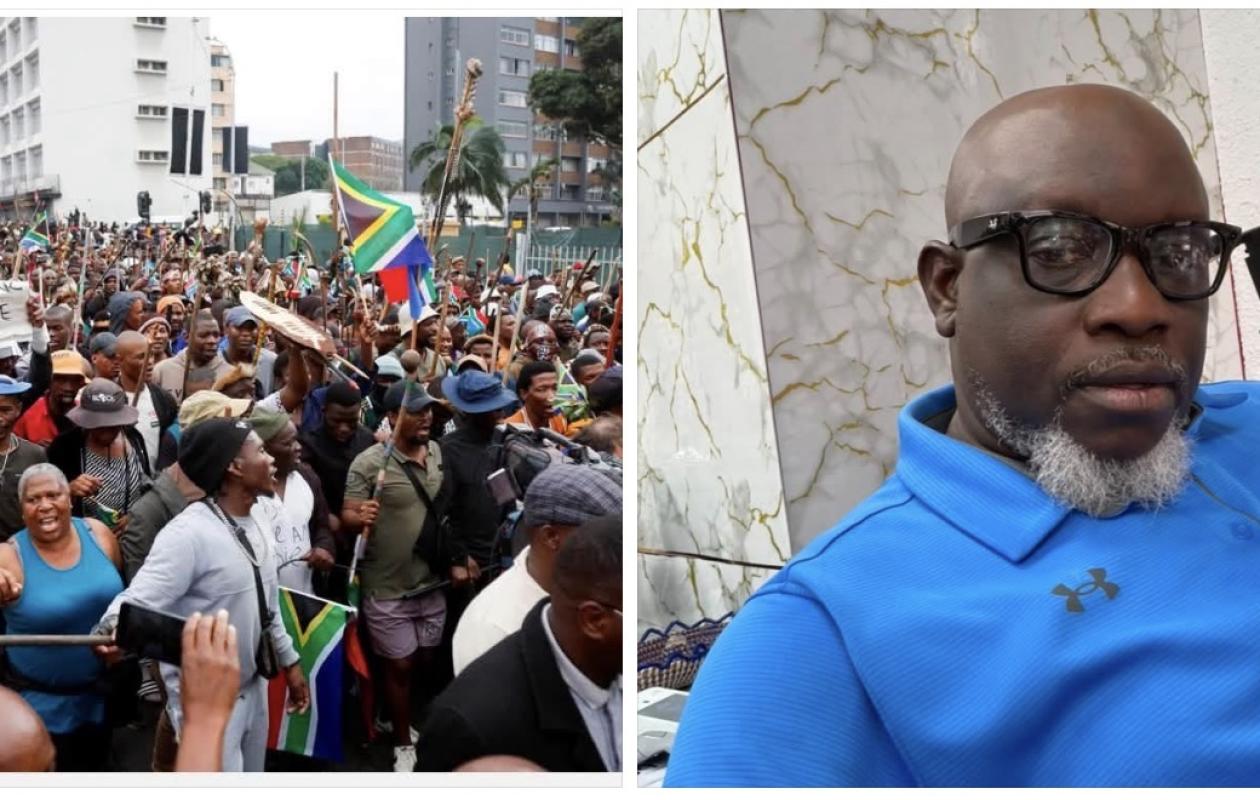
DAKARACTU.COM Nombre de Sénégalais restent avec des questions sans réponses suite au soulèvement populaire du 23 juin contre le projet de révision constitutionnelle instituant un ticket président - vice-président à la tête de l’Exécutif. Les interrogations fusent de toutes parts. D’où vient l’idée de ce projet de loi ? Au profit de qui était-il concocté ? Qui est ce fameux opposant pressenti pour le ticket dont une certaine presse a parlé ? Qu’est-ce qui a poussé le chef de l’Etat, Abdoulaye Wade, à reculer ?

Everything I have, everything I ownAll my mistakes man you already knowI wanna be free, I wanna be freeFrom Senegal West AfricaTo St. Louis, MissouriThanks to Katherine DunhamFor giving my pops his gloryHe came down with his drumAnd a dream to change the worldIn a free upliftin worldAnd thats all he ever wantMom came a little afterGave birth to my brotherthen all of the pressureMade em fight one another
Watch out for this young bassist. He's just breaking onto the scene with his first solo CD featuring such luminaries as Russell Ferrante and Eric Marienthall, and fitting in like a glove with these jazz icons. Known as a "Richard Bona protégé", (quite a statement to uphold) he shows on this first effort to have tremendous potential in quite a few directions. Being an accomplished composer as well as a player, he represents yet another generation of young lions to be reckoned with. With a surprisingly defined maturity to his playing, coupled with his great sense of melody, Cheikh will become a familiar voice on the scene sooner than later.
It was the unexpected success of his East Harlem high school robotics team in April that forced Amadou Ly, 18, to reveal his secret: He was an illegal immigrant from Senegal, left at 14 to fend for himself in hopes of completing an American education, but caught instead in what seemed like a losing battle against deportation. But when the secret became front-page news in The New York Times, scores of strangers rallied to his side. To pressure the Department of Homeland Security on his behalf, volunteer lawyers built a team that included 6 senators, 23 members of the House of Representatives, Mayor Michael R. Bloomberg and the Senegalese ambassador. Word spread that even the man in the Oval Office had weighed in.
The current political climate in our nation, makes it ripe for change. We, the people want change, we want it desperately, but we are still not sure what kind of change it is we want or even how to attain that change. Historically, when the people of a nation demand change it is because they have come to a common consensus that their best interests have not been the primary consideration of the government, therefore, it is time to take matters into their own hands. In the Feudal System during the Middle Ages, the rich and royalty lived pampered lives on the backs of the common man - who had no hope of acquiring wealth or status. No opportunity for betterment was afforded to the vassal such as education or property ownership.
Amadou Ly and his East Harlem teammates won no prizes at the national robotics competition in Atlanta last weekend. But Amadou, 18, who was brought to New York from Senegal at 13 and left to fend for himself a year later, won an outpouring of support for his legal fight against deportation and his dream of going to college. Scores of strangers who read about his bittersweet success in The New York Times last week called or sent e-mail messages offering to help pay his college tuition and his legal expenses, or even to adopt him if that could help him stay in the United States.
A small, troubled high school in East Harlem seemed an unlikely place to find students for a nationwide robot-building contest, but when a neighborhood after-school program started a team last winter, 19 students signed up. One was Amadou Ly, a senior who had been fending for himself since he was 14. The project had only one computer and no real work space. Engineering advice came from an elevator mechanic and a machinist's son without a college degree. But in an upset that astonished its sponsors, the rookie team from East Harlem won the regional competition last month, beating rivals from elite schools like Stuyvesant in Manhattan and the Bronx High School of Science for a chance to compete in the national robotics finals in Atlanta that begins tomorrow.
A U.S. Senate breakthrough on a long-sought overhaul of immigration law on Thursday could clear the way for approval of a bill that would give millions of illegal immigrants a path to citizenship, lawmakers said. But the compromise still faced opposition from some Republicans who said it would give amnesty to people who broke the law, and it was unclear whether it could be passed before Congress starts a two-week break, due to begin this week. Senate Republican Leader Bill Frist of Tennessee and Senate Democratic Leader Harry Reid of Nevada told reporters details of an agreement needed to be worked out, but they were optimistic the Senate could pass the legislation.
The personal narratives of lawmakers whose parents and grandparents came to the United States from elsewhere were a key factor pushing the US Senate to reach its hard-fought compromise on immigration reform. In the case of Republican Senator Mel Martinez, it was not a distant forebear, but he himself who arrived in the United States from another country. Cuban-born Martinez, who helped to craft the key breakthrough compromise that Democrats and Republicans signed on to Thursday after days of stalemate, said he has been helped in the debate by his perspective as an immigrant.