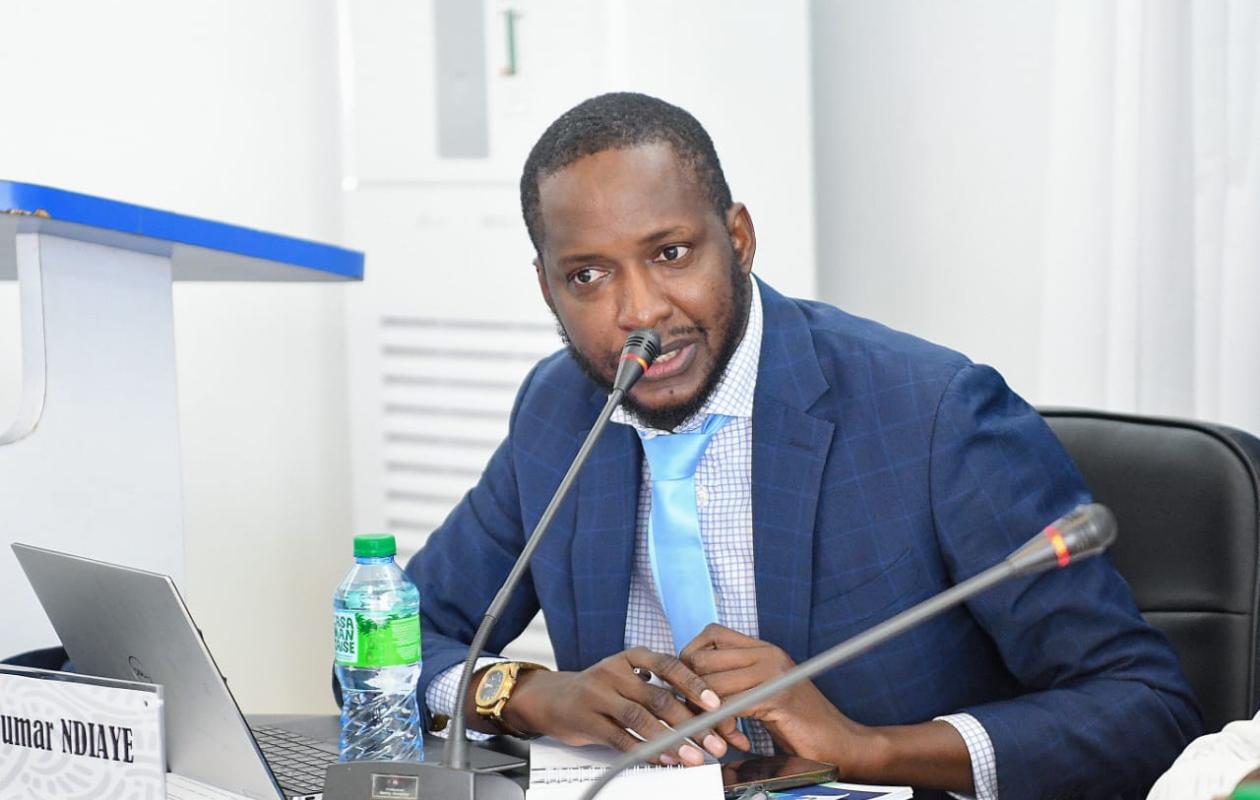
Oumar Ndiaye : « Le prestige international de Macky Sall est indéniable, mais le local pèsera à New York »
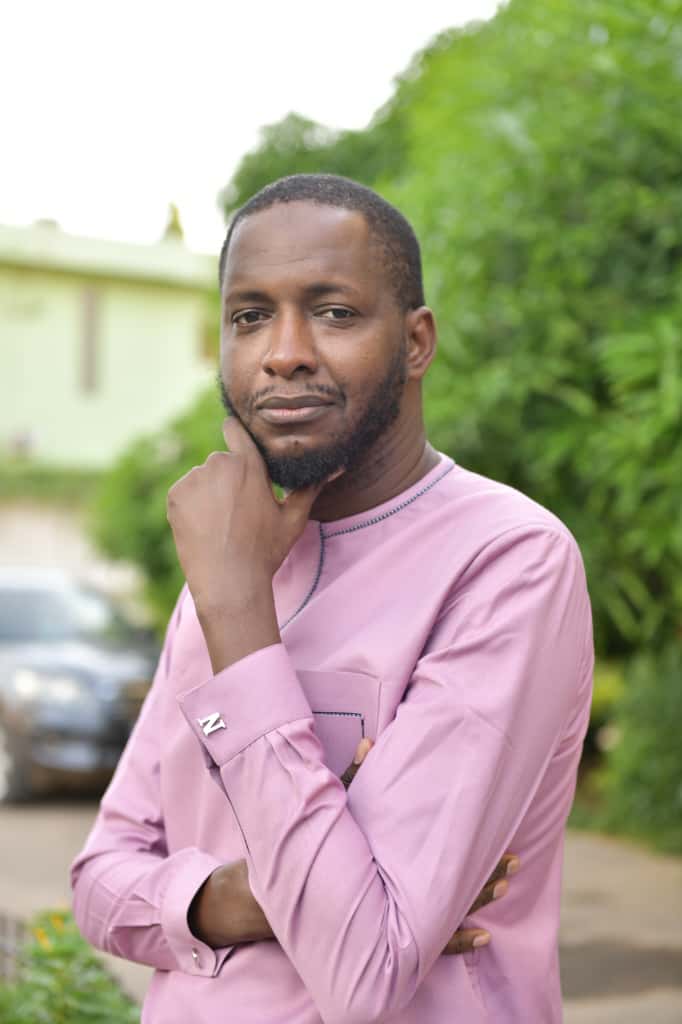
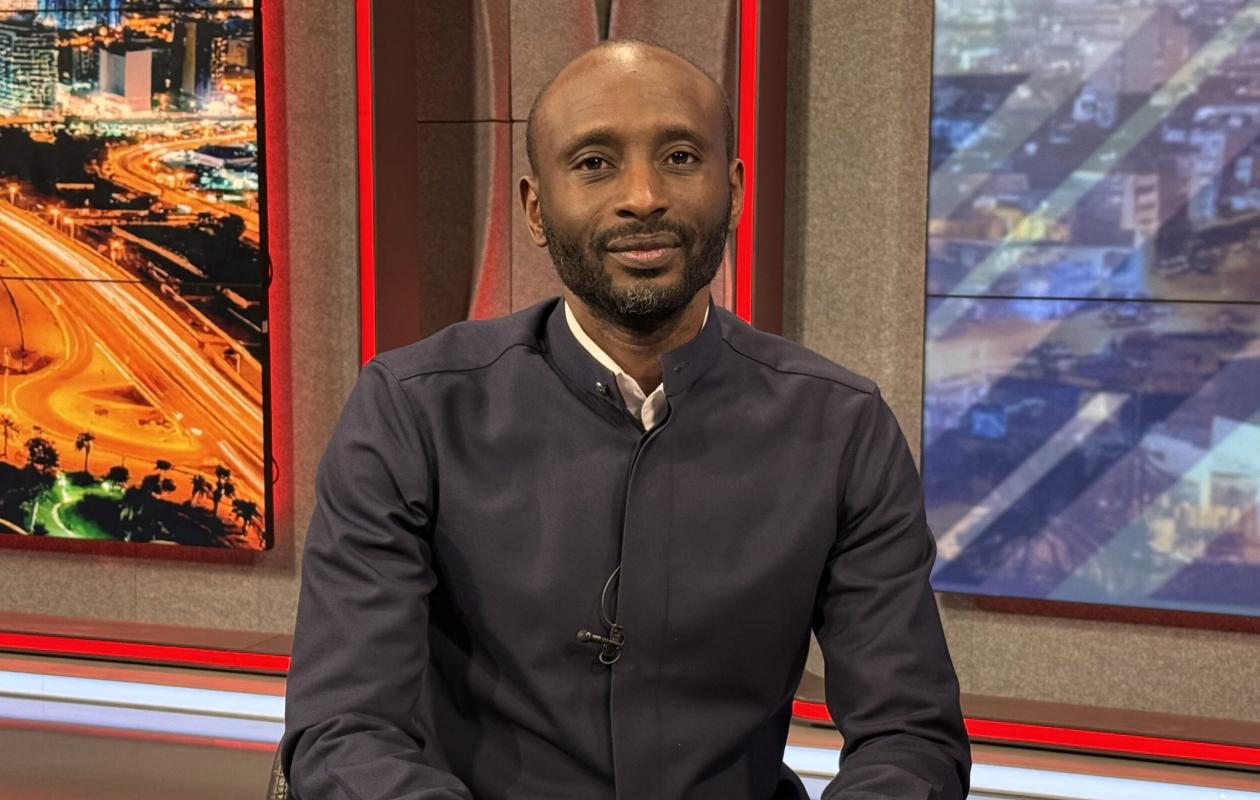
Oumar Ndiaye, a journalist and analyst specializing in defense and security issues, provides technical and geopolitical insight into current diplomatic affairs. A graduate of Renmin University in Beijing and CHEDS/UCAD, this winner of the Ecowas Awards of Journalism, currently Head of the International Desk at the daily newspaper Le Soleil, analyzes the implications of former Senegalese President Macky Sall's candidacy for the position of Secretary-General of the United Nations. Between a lack of national support, continental obstacles, and the "global village," he astutely examines whether the former head of state's international prestige will be enough to overcome the turbulence of his domestic political record.
Historically, candidacies for the position of UN Secretary-General have relied on a solid national diplomatic foundation. With the explicit refusal of Bassirou Diomaye Faye's government to support his predecessor, doesn't Macky Sall become an "out-of-touch candidate"? To what extent does this lack of support from Senegal technically and politically invalidate his legitimacy before the Security Council?
It is true that, generally, candidates for leadership positions in multilateral organizations like the UN receive support from their countries of origin, which, in addition to organizing their campaigns, dedicate significant resources to them. For the race for the position of Secretary-General of the United Nations, Macky Sall's candidacy is not the only one that is "out of touch," as you say. Michelle Bachelet's candidacy was also rejected by the Chilean government, which decided to withdraw its support for the former United Nations High Commissioner for Human Rights.
" Support from one's country strengthens the legitimacy of a candidate, but is neither necessary nor mandatory in the case of the United Nations Secretary-General."
All things considered, it was domestic disagreements and circumstances that led to the lack of support from Senegal and Chile for Macky Sall and Michelle Bachelet, respectively, both of whom, coincidentally, are former heads of state. Here we see a fundamental principle of international relations, theorized by numerous researchers, such as the Italian Dario Battistella, author of the seminal work *Theories of International Relations*, who defines "foreign policy as the continuation of domestic policy by other means." While national support strengthens a candidate's legitimacy, it is neither necessary nor mandatory for the position of Secretary-General of the United Nations, unlike other organizations such as the presidency of the African Union Commission or ECOWAS, where national nomination is mandatory. This situation contrasts with that of António Guterres who, in 2016, benefited from the support of his country, almost all of his continent, Europe, and also Africa, because the Portuguese had long led the Africa Committee of the Socialist International.
The rejection of his candidacy by the African Union in March 2026, marked by opposition from some twenty states including Nigeria, appears to break the unwritten rule of African consensus. Is this impasse purely due to a lack of support from his own country, or does it reflect a desire on the part of Africa to sanction his human rights record and his handling of pre-electoral crises?
The principle of African consensus has been promoted in supranational institutions such as the AU and Regional Economic Communities (RECs), like ECOWAS, to establish common ground on international issues and presidential candidacies. However, it has not always been respected. African countries that have objected to President Macky Sall's candidacy have more often cited procedural than substantive issues. Nigeria and Rwanda are the most frequently mentioned countries that have publicly expressed this rejection. Their arguments are primarily related to the process itself.
For Nigeria, an economic and political giant, the tacit—though historically inconsistent—principle of continental rotation for the UN Secretary-General position was invoked. As for Rwanda, its stance is understandable given the animosity with its neighbor, Burundi, which supported Macky Sall's candidacy. Among the twenty or so states opposed to the Union's resolution on this candidacy, none, to our knowledge, justified its decision by a lack of support from Senegal or by the handling of events in 2021 and 2023. It is more related to the contingencies of African regional organizations, often marked by disagreements among member states.
On one side, Macky Sall is highlighting his international network (particularly through the Paris Pact) and his experience leading the African Union. On the other, the Senegalese opposition and some NGOs are pointing to "blood crimes" and hidden public debt. Between his profile as a "high-flying diplomat" and his image as a "controversial president," which character trait will carry more weight during the hearings this week before the ambassadors in New York?
Macky Sall's international prestige is undeniable, but its true impact on the accusations related to the events of 2021 and 2023, and especially on the hidden debt scandal that has garnered significant international attention, remains to be seen. We have long been living in what the Canadian scholar Marshall McLuhan called the "global village," where local issues influence global ones and vice versa. Inevitably, the candidate's political baggage will be a factor. The question is, how much weight will this baggage carry when the Security Council is chosen? Will it outweigh the international prestige he accumulated during his twelve years in power (2012-2024)?
This prestige was evident during his presidency of the African Union (2022-2023). He achieved successes on major issues, such as Africa's integration into the G20. Securing permanent seats on the Security Council with veto power was also among his priorities. Regarding his relations with global powers, particularly China—a permanent member of the Security Council—which I know well from my studies there, it must be acknowledged that Macky Sall's leadership has allowed Senegal to occupy a prominent place on the Chinese agenda. During the decade from 2014 to 2024, a large portion of the country's road infrastructure was built through Chinese cooperation. As an aside, in 2018, during Xi Jinping's visit to Dakar, a former West African head of state was offended at being ignored, believing that his country maintained closer ties with China. Even Senegal's nomination for the FOCAC in 2021 was a testament to his leadership. Not to mention his role within the Paris Pact for Peoples and Planet (4P). However, all this may not be enough: a delicate balance between local and global approaches will be necessary to succeed.
"In this race, none of the favorites enjoys unanimous support in their country or continent. Macky Sall therefore has room to maneuver to turn the tide."
"Faced with profiles like Michelle Bachelet (Chile) or Rafael Grossi (Argentina), who benefit from an image of neutrality or strong technical expertise, what are the real chances of an African candidate disavowed by part of his own bloc? Does Macky Sall still have any leverage in negotiations to turn the tide?"
Chilean Michelle Bachelet and Argentinian Rafael Grossi, despite having led or still leading UN institutions, have often been accused of bias. As head of the Office of the High Commissioner for Human Rights, Bachelet faced sharp criticism from China, which accused her of being a "proxie" for the West, particularly on the Xinjiang issue. As for Grossi, who has led the IAEA since 2019, he is at the heart of the Iranian dossier, and his statements are sometimes poorly received by Tehran. Neither candidate, therefore, enjoys a completely unified image. In this race, none of the frontrunners enjoys unanimous support in their country or continent. Macky Sall thus has room to maneuver to turn the tide.
If his candidacy were to fail due to a lack of regional support, what would be the consequences for Macky Sall's international diplomatic influence? Would a defeat at the UN mark the end of his overall political career, or could he still make a comeback in another multilateral organization despite the complete break with Dakar?
Given his track record, a setback at the UN Secretariat will not necessarily mean his international retirement. He will certainly be sought after elsewhere, especially since he has been one of the most prominent voices on issues such as climate change and the energy transition. Macky Sall is what one might call a "young retiree"; at just sixty years old, he still has considerable capacity for action. His international stature is undeniable, regardless of any internal criticisms. I believe he will be able to bounce back in another organization if he so chooses, should he experience disappointment in New York.
Interview conducted by Adama Ndiaye







Commentaires (18)
Participer à la Discussion
Règles de la communauté :
💡 Astuce : Utilisez des emojis depuis votre téléphone ou le module emoji ci-dessous. Cliquez sur GIF pour ajouter un GIF animé. Collez un lien X/Twitter, TikTok ou Instagram pour l'afficher automatiquement.