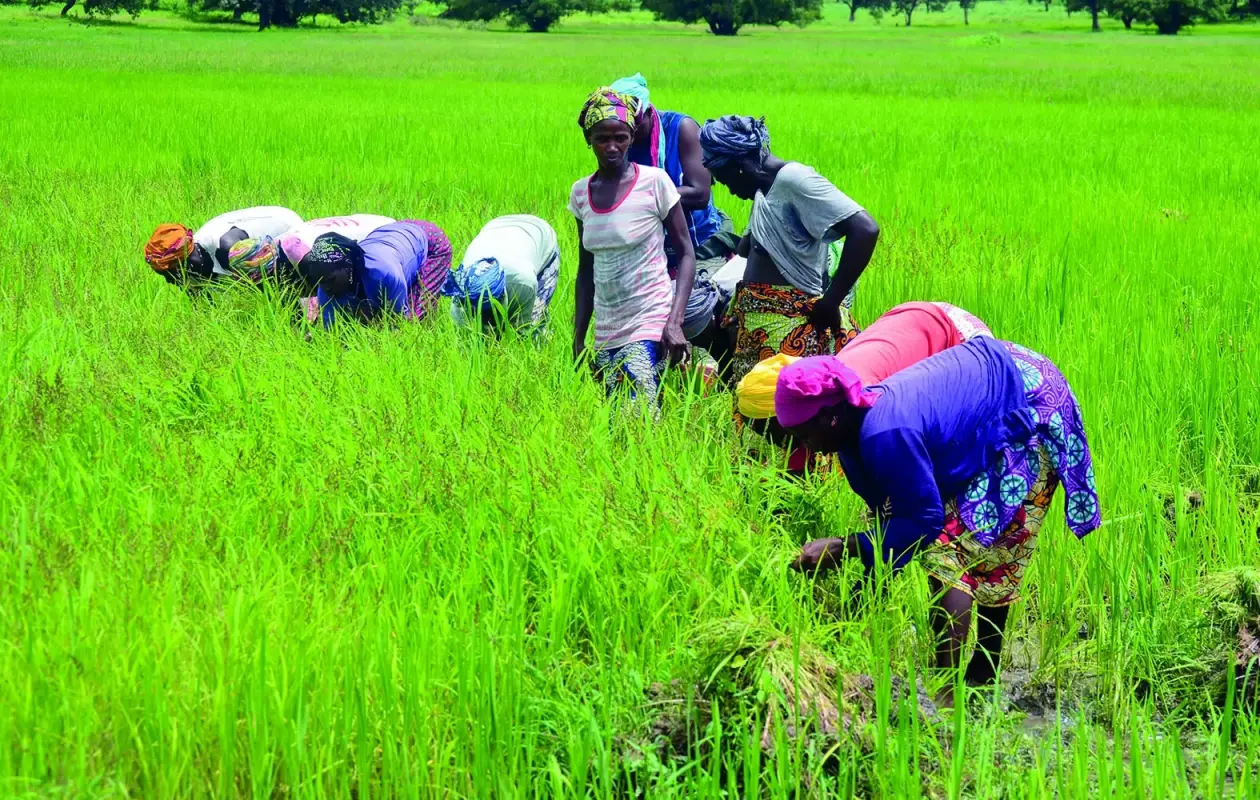
L’illusion de l’autosuffisance : Les maillons manquants de l'agriculture sénégalaise
Food sovereignty has emerged in recent years as a central objective in many economic and political discourses. In a country like Senegal, heavily dependent on imports for certain staple foods, the idea of producing more locally seems obvious. Rising international prices, logistical disruptions since the pandemic, and tensions in agricultural markets have reinforced this desire to reduce external vulnerability. Yet, behind the political rhetoric, the concrete realization of this objective runs up against deep-seated structural constraints.
Senegal still imports a significant portion of its food, particularly rice, wheat, sugar, and milk. According to foreign trade data published by the Directorate of Forecasting and Economic Studies, food imports regularly exceed 1 trillion CFA francs annually, representing a substantial share of the trade deficit. Rice alone constitutes one of the largest import categories, despite successive programs aimed at achieving self-sufficiency. This situation demonstrates that food security depends not only on agricultural potential but also on the overall organization of the food supply chain.
Increasing local production remains necessary, but it is not enough. Difficulties often arise after harvest due to a lack of adequate storage, processing, and transportation capacity. A portion of agricultural production is lost or sold under unfavorable conditions, while imported products benefit from more efficient supply chains and sometimes more competitive costs. Without sufficient infrastructure, local supply struggles to compete, even when production volumes increase.
Industrial processing is another essential link. When agricultural raw materials are minimally processed locally, added value remains limited and market opportunities are more restricted. Developing processing units would not only reduce imports of finished products but also stabilize agricultural incomes and create jobs. Several public programs have encouraged this approach, but the necessary investments remain significant and results are gradual.
The issue of food sovereignty is also linked to competitiveness. Imported products can remain cheaper due to subsidies in exporting countries, economies of scale, or lower logistics costs. Under these conditions, protecting local production can lead to higher prices for consumers, making trade-offs difficult. Agricultural policies must therefore reconcile support for producers, affordable prices, and budgetary balance.
Food sovereignty thus appears less as a one-off objective than as a long-term process. It requires simultaneous improvements in production, infrastructure, financing, and the organization of supply chains. Without a complete value chain, dependence on imports remains difficult to reduce, even in a country with significant agricultural potential.
The question is therefore not just about producing more, but about producing better, processing more, and distributing better.










![[ EXCLUSIF ] Réseau Pape Cheikh Diallo : Une 46e arrestation confirme la dimension internationale du dossier](https://image.seneweb.com/content/news/2026-12-22//thumb_1260x800_69c0115b893f0_Yh8N0LDTcE.jpg)

![[Entretien] Diomaye, sa coalition, risques de rupture avec Sonko…: Les "vérités" du député Ismaïla Wone de Pastef](https://image.seneweb.com/content/news/2026-12-22//thumb_1260x800_69bfc610232aa_9v6AO6kuoI.png)











Commentaires (1)
Participer à la Discussion
Règles de la communauté :
💡 Astuce : Utilisez des emojis depuis votre téléphone ou le module emoji ci-dessous. Cliquez sur GIF pour ajouter un GIF animé. Collez un lien X/Twitter, TikTok ou Instagram pour l'afficher automatiquement.