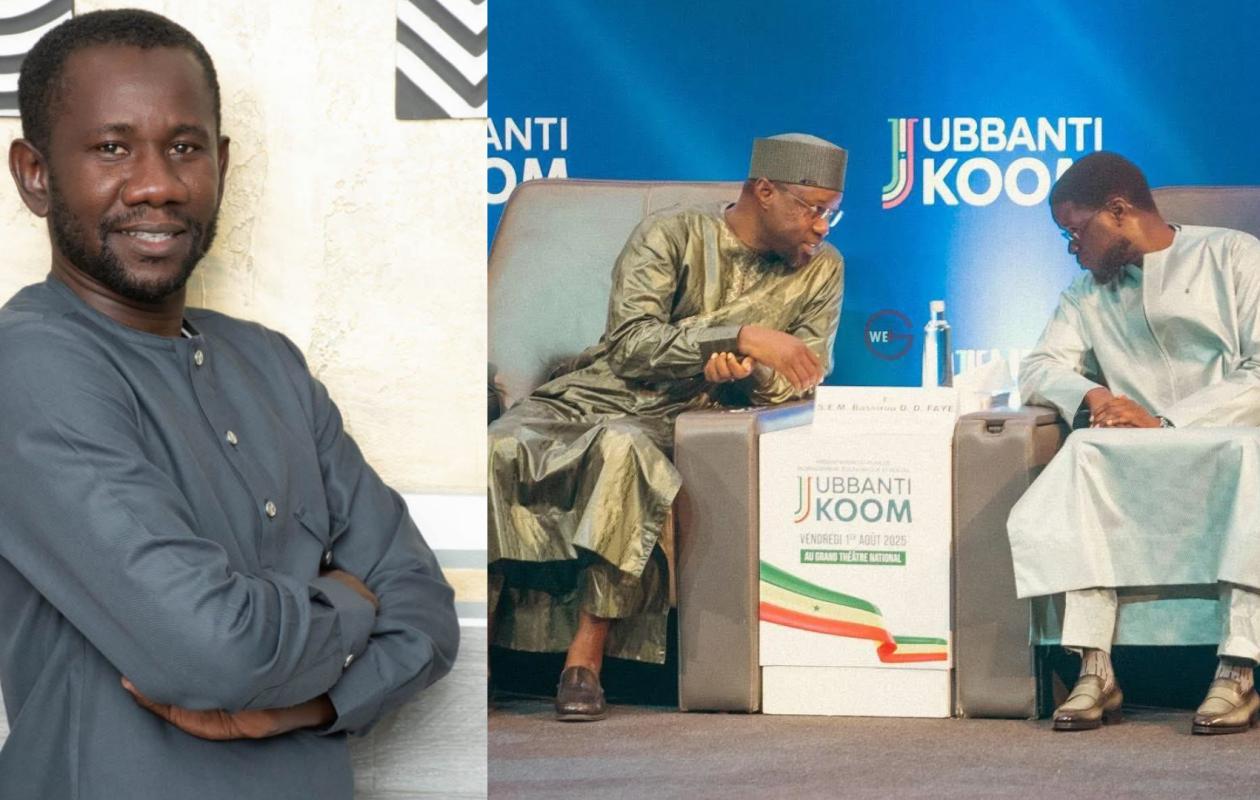
BASSIROU DIOMAYE FAYE ET OUSMANE SONKO : LECTURE COMPORTEMENTALE D'UN TANDEM POLITIQUE EN MUTATION (Par Saliou Mbaye)
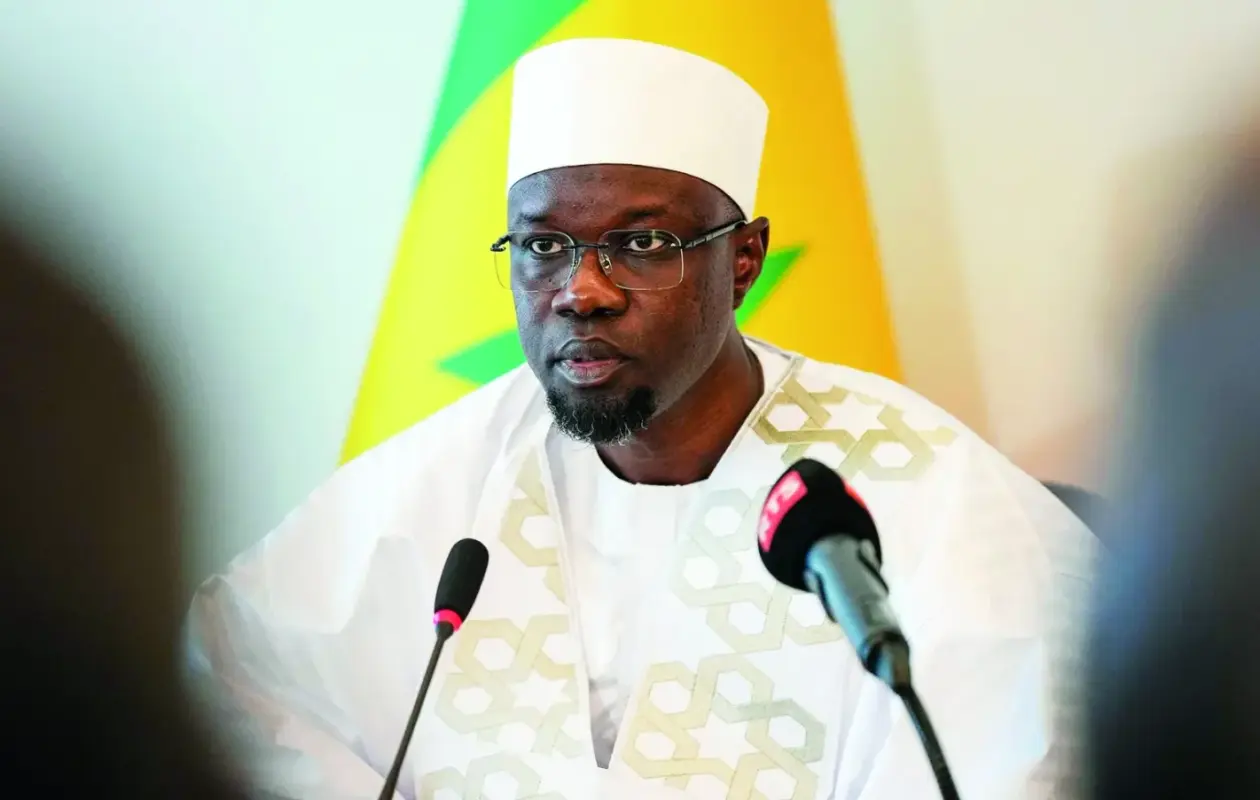
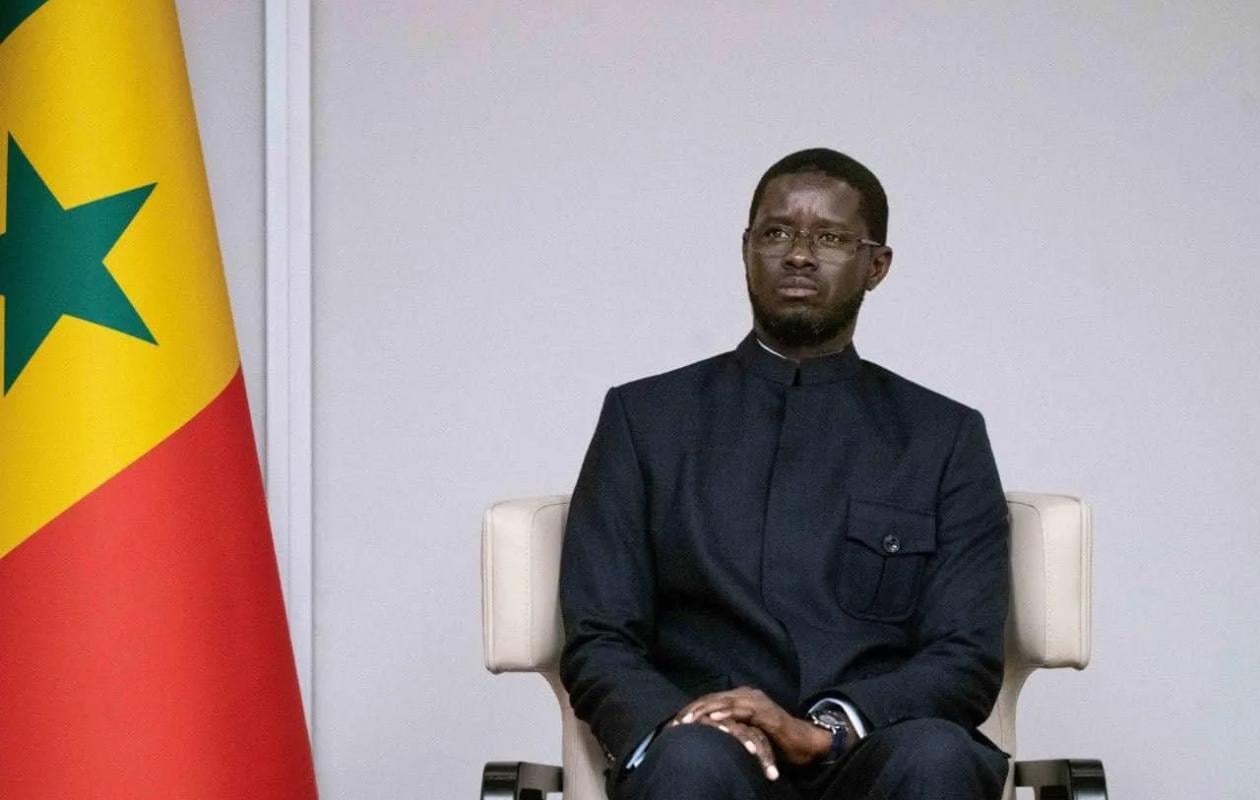
In less than two years, Senegal has experienced a political sequence unprecedented on the continent: two men released from prison, propelled by a movement of change, came to power with an overwhelming majority and the promise of a new kind of governance. " Diomaye moy Sonko " — Diomaye is Sonko — summed up in three words what the Senegalese people had chosen: not a man, but a project; not a leader, but a partnership. Today, that same slogan has turned against itself. The disagreements are public, the tensions documented, and the question circulating in political, intellectual, and civic circles is as simple as it is consequential: what happened? This article does not claim to offer a moral judgment. It proposes a systemic analysis, grounded in an examination of behavioral preferences and value orientations, to understand how two complementary profiles within the opposition can become sources of friction within the government — and what this implies for the coherence of the national project.
A COMPANIONSHIP FORGED IN ADVERSITY
The partnership between Bassirou Diomaye Faye and Ousmane Sonko was not forged in the halls of power, but in the prisons of the outgoing regime. Founding members of PASTEF – African Patriots of Senegal for Work, Ethics, and Fraternity – they shared legal ordeals, simultaneous imprisonment, and joint release thanks to the 2024 amnesty law. This shared history generated a rare level of trust in contemporary African politics, symbolized by the campaign slogan " Sonko moy Diomaye ," which reflected less a confusion of identities than an affirmation of ideological continuity.
In this oppositional configuration, the hierarchy was clear, the objective unifying, and differences in temperament absorbed by the primacy of the common goal. What needed to change, and what did indeed change, was the very nature of the terrain on which these two men would have to operate.
ROLE REVERSAL: AN UNDERESTIMATED CHALLENGE
On April 2, 2024, Bassirou Diomaye Faye was elected President of the Republic with 54% of the vote in the first round—a historic victory made possible by the nomination of Sonko himself, who had been barred from running by the courts. Ousmane Sonko became Prime Minister. The institutional framework was in place, but the psychological and symbolic framework remained to be redefined.
It is precisely this work of redefinition that did not take place explicitly and in a structured way. The second became the first. The natural leader, the institutional second. This reversal is not simply a change of organizational chart: it implies a redistribution of decision-making, symbolic, and relational centers of gravity that neither the two men nor their entourage seem to have fully anticipated.
TWO BEHAVIORAL PROFILES UNDER TENSION: A DISC GRID READING AND A SPRANGER READING
To understand the nature of this tension, it is useful to employ two complementary analytical frameworks.
William Moulton Marston's theory of behavioral preferences— the DISC model, Emotions of Normal People, 1928 —distinguishes four dominant traits: Dominance , Influence , Steadiness , and Conformity . Based on observable public behavior, Ousmane Sonko presents a profile with a marked dominance of Dominance: quick decision-making, public assertiveness, assertive confrontation, and the ability to mobilize through impulsive action. Bassirou Diomaye Faye, on the other hand, exhibits traits more oriented towards Steadiness and Conformity : deliberation, institutional prudence, a search for consensus, and an adherence to procedural legitimacy.
These complementary profiles, in their opposition, constitute an undeniable strength: one provides impetus, the other structures and channels. But in positions of power, this same complementarity can become a source of friction when roles are no longer defined by a clear hierarchy, and when everyone must assume full and complete responsibility to the State.
Eduard Spranger's framework— Types of Men, 1928 —allows for a more nuanced analysis based on value orientations. Sonko presents a dominant political orientation in the Sprangerian sense: the central value is power as a lever for transformation. Diomaye demonstrates a more social and theoretical orientation, prioritizing cohesion and institutional legitimacy over the assertion of power. These different orientations explain not a disagreement on the ends—both share the sovereignist and pan-Africanist project—but a profound divergence on the means, the pace, and the method.
POWER AS A REVEALER: CHRONOLOGY OF A FRICTION MADE PUBLIC
According to several observers, tensions had existed since the beginning of their partnership, but were kept in check by party discipline. The authorities made them visible, then public.
In July 2025, Ousmane Sonko crossed an unusual threshold by publicly criticizing the President for a "lack of authority" and a "technocratic drift" far removed from the ideals of the project. A head of government openly criticizing his head of state: the signal was strong.
In November 2025, a crisis erupted over a specific case. President Diomaye unilaterally decided to replace Aïssatou Mbodj—a close ally of Sonko—as head of the Diomaye President coalition, appointing Aminata Touré, former Prime Minister under Macky Sall. This decision directly contradicted Sonko's public statement a few days earlier that "there will be no change at the head of the coalition." PASTEF responded with a press release refusing to acknowledge that Diomaye "had the power to dismiss Aïssatou Mbodj" and declaring that it shared "neither the same values nor the same principles" with Aminata Touré.
On December 7, 2025, Sonko publicly acknowledged his disagreements with the President during Martyrs' Day, before a crowd of supporters. The original slogan " Diomaye moy Sonko " (Diomaye is Sonko) has now been reversed in the streets to " Diomaye du Sonko " (Diomaye of Sonko) — Diomaye is not Sonko.
In February 2026, tensions persisted. PASTEF MPs received at the Presidential Palace left visibly uncomfortable. One of them declared that "the problem between Diomaye and Sonko remains unresolved" and risks "continuing to poison the party and the governance of the regime."
TWO IRRECONCILIABLE LOGICS? LOYALTY TO ALLIES VERSUS PARTISAN PURITY
This is where the two remarks mentioned above take on their full analytical significance, and where they shed concrete light on the behavioral divergence.
Diomaye's logic: not to betray those who served
The decision to maintain and restructure the Diomaye President coalition by opening it to new allies is deeply consistent with the identified S/C profile. Following his call for self-determination, Diomaye invited his allies to join the new coalition, which saw a significant increase in membership. For Diomaye, the partners who supported his candidacy in 2024—often at the cost of their own positions within their own parties—deserve reciprocal loyalty. These allies had, in fact, worked actively during the November 2024 legislative elections to ensure PASTEF's victory, even though they were not officially included on the lists. Excluding them would be, in his value system, a form of institutional and moral betrayal. His preference for cohesion, recognition, and inclusive legitimacy thus leads him to want a broad, representative, and open coalition—even if it means welcoming figures who are controversial in PASTEF's eyes.
Sonko's strategy: consolidate PASTEF, sideline opportunistic allies
Sonko, for his part, operates according to a radically different logic, consistent with his dominant "D" profile and his Sprangerian-esque political orientation. The PASTEF Political Bureau reaffirmed its commitment to restructuring the coalition by placing PASTEF at the center, refusing to rebuild a coalition with recycled dignitaries from the old regime or parties lacking popular legitimacy. For Sonko, the 2024 election was won by PASTEF and the people who support it. The allies of the Diomaye President coalition were useful vehicles, but their role ended there. PASTEF, under his leadership, won 130 of the 165 seats in the legislative elections, which, in his view, gives it overwhelming electoral legitimacy that renders any outreach to actors outside the project unnecessary—or even counterproductive.
These two logics are coherent in themselves. However, they are structurally incompatible if they are applied simultaneously to the same object — the coalition — without a defined framework for arbitration.
DESERTION OR TRANSFORMATION OF POSTURE? FOR A NON-MORALIZING READING
To characterize this evolution as "desertion" implies a demonstrable break in values. However, the factual examination reveals something else: not an abandonment of the project, but a divergence on the interpretation of this project and on who has the authority to define its contours .
Three interpretations coexist, which are not mutually exclusive:
Institutional interpretation : Diomaye, by resigning from all party bodies after his election in order to "rise above parties," severed the organic link with PASTEF. He now exercises a fully autonomous presidency, which structurally places him in a position of divergence with his Prime Minister, who remains at the head of the party.
Strategic interpretation : Diomaye is seeking to broaden his electoral base for 2029, moving beyond the sole PASTEF electorate. The appointment of Aminata Touré would fit within this strategy of openness, perceived as a betrayal by the most orthodox members of the project.
Behavioral analysis : In line with the identified profiles, Diomaye now expresses his own convictions—institutional rigor, dialogue, procedural legitimacy—without filter, convictions that were previously restrained by party discipline. The "lock" of the second-in-command conforming to the leader has been broken with the reversal of roles.
These three readings converge towards the same conclusion: the current friction is less the product of an ideological betrayal than of a misalignment between personal convictions, institutional framework and non-renegotiated relational dynamics .
REGULATORY METHODS FOR THE NATIONAL INTEREST
If we adopt a systemic approach, three levers appear essential to stabilize the tandem and preserve the coherence of the project.
First priority: explicitly redefine the common objective. Moving from seizing power to exercising it requires a shared strategic reformulation—clear, time-bound, and with measurable indicators. The absence of this reformulated objective creates a void that each party fills with their own priorities and style.
The second priority is to formally clarify the decision-making boundaries. Who decides what, within what framework, and with what arbitration procedure in case of disagreement? The Aida/Mimi crisis precisely illustrates the lack of clear rules of the game regarding the boundaries between presidential and partisan prerogatives.
Third priority: institutionalizing relational regulation. Contemporary theories of executive leadership—particularly work on dual executives and intra-coalition cohabitation—emphasize that a stable partnership relies on explicit mechanisms for dialogue, arbitration, and disagreement management. Emotional, relational, and situational intelligence cannot be left to the opportunistic goodwill of the actors involved.
CONCLUSION: UNDERSTAND BEFORE JUDGING, ACT BEFORE IT'S TOO LATE
“ Diomaye moy Sonko ” was a promise of continuity. “ Diomaye du Sonko ” is an acknowledgment of divergence. Between the two, there is perhaps simply the weight of reality, the complexity of governing, and two temperaments that are no longer compatible.
The central question is not: who has changed? It is: has the context changed faster than the tandem's adjustment mechanisms?
Saving this duo is not a matter of sentimental loyalty. It is a matter of national interest. Senegal brought these two men to power on the promise of a coherent break with the past. This promise will only be kept if both men—and their entourages—have the clarity of vision to understand their differences, the maturity to manage them, and the courage to subordinate their personal ambitions to the collective objective they have set for themselves before the people.
Saliou MBAYE
Certified Professional Coach
Behavioral analysis expert

















Commentaires (2)
Participer à la Discussion
Règles de la communauté :
💡 Astuce : Utilisez des emojis depuis votre téléphone ou le module emoji ci-dessous. Cliquez sur GIF pour ajouter un GIF animé. Collez un lien X/Twitter, TikTok ou Instagram pour l'afficher automatiquement.