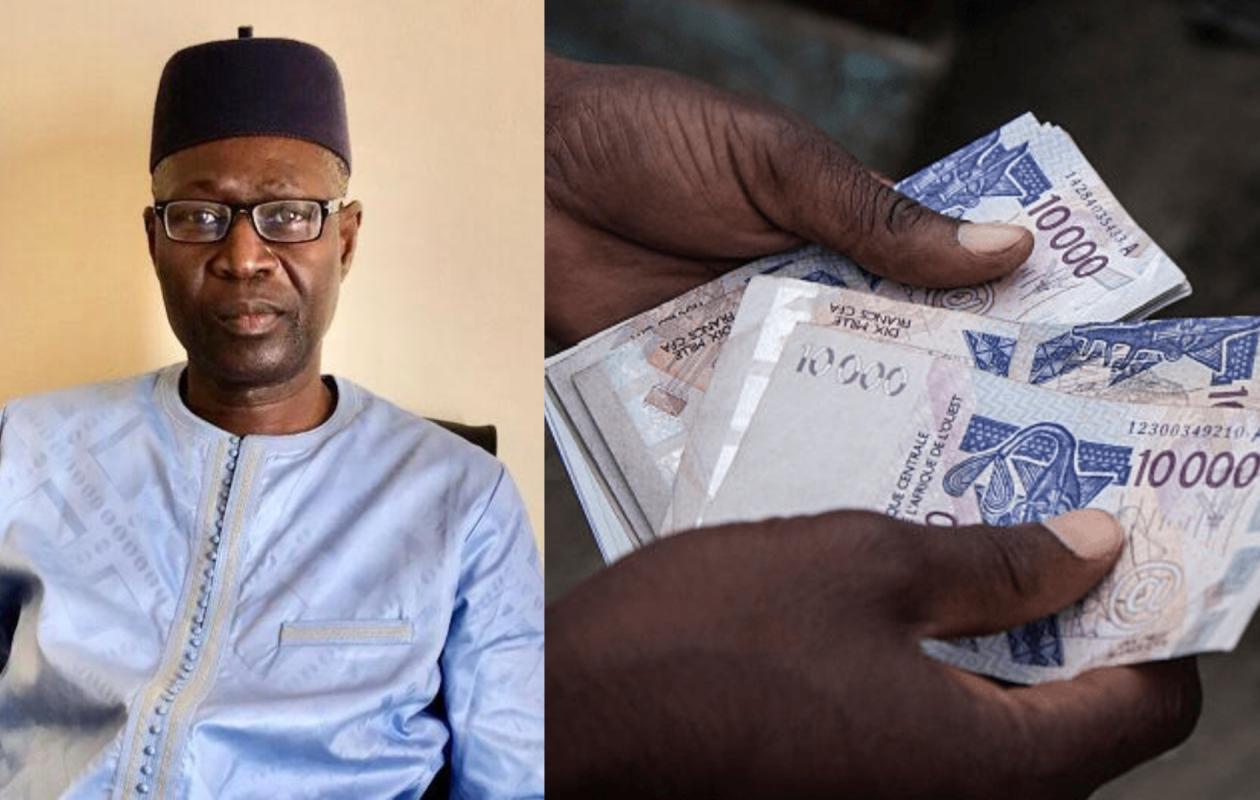
MONNAIE ET RICHESSE : UNE CONFUSION AU CŒUR DU DÉBAT SUR LE FCFA (par le Pr Amath Ndiaye)
At a time when controversies surrounding the CFA franc are dominating public debate, it seems essential to revisit some fundamental monetary concepts. One of the most frequent misunderstandings is the conflation of money and wealth. This confusion fuels unrealistic expectations about the supposed power of money and obscures the analysis of the true challenges of development.
Money: an instrument, not wealth
Money is not wealth in itself. It is an instrument that facilitates the production, exchange, and circulation of goods and services.
The true wealth of a nation lies in what it produces: agricultural products, industrial goods, infrastructure, services, innovations, and human capital.
In other words, it is neither banknotes nor the figures recorded in bank accounts that make a country prosperous, but its ability to produce efficiently and competitively.
The illusion of the "magical power" of money
We must not fall into the utopian trap of believing that money possesses a magical power to create wealth.
Creating more money without a corresponding increase in production does not make a country richer. This generally leads to:
inflation;
currency depreciation;
the loss of purchasing power;
the decline in investor confidence.
Economic history is full of examples, from Zimbabwe to Venezuela, showing that a country can multiply its money supply while becoming poorer.
Banknotes: a small part of the currency
In the collective imagination, money is often reduced to banknotes and coins. In reality, these represent only a fraction of the money supply.
In 2024:
In the United States, banknotes and coins represented approximately 11% of the M2 money supply;
In Senegal, this proportion was approximately 24%.
This means that the bulk of money exists in the form of bank deposits, transfers, cards, mobile money and other electronic instruments.
How banks create money
Scriptural money is created primarily by banks when they grant loans.
Let's take a simple example. A bank grants a loan of 10 million FCFA to company A to purchase equipment produced by company B.
The bank credits company A's account with 10 million FCFA. The money supply immediately increases by the same amount.
When company A pays company B, the 10 million disappears from A's account and appears in B's. The money continues to exist, but it has simply changed hands.
When company A repays its loan, the money created is gradually destroyed.
No banknotes are created or printed: monetary creation results from a simple set of accounting entries.
The long-term trend is clear: banknotes and coins are playing an increasingly smaller role in everyday transactions.
Soon, we will likely see fewer and fewer banknotes and coins in circulation, but this does not mean the disappearance of money. It will continue to exist in a primarily intangible form: bank deposits, cards, transfers, mobile money, and digital currencies.
Money will therefore remain a central instrument of economic activity, even if it becomes less and less materially visible.
Professor Amath Ndiaye
FASEG-UCAD























Commentaires (4)
Participer à la Discussion
Règles de la communauté :
💡 Astuce : Utilisez des emojis depuis votre téléphone ou le module emoji ci-dessous. Cliquez sur GIF pour ajouter un GIF animé. Collez un lien X/Twitter, TikTok ou Instagram pour l'afficher automatiquement.