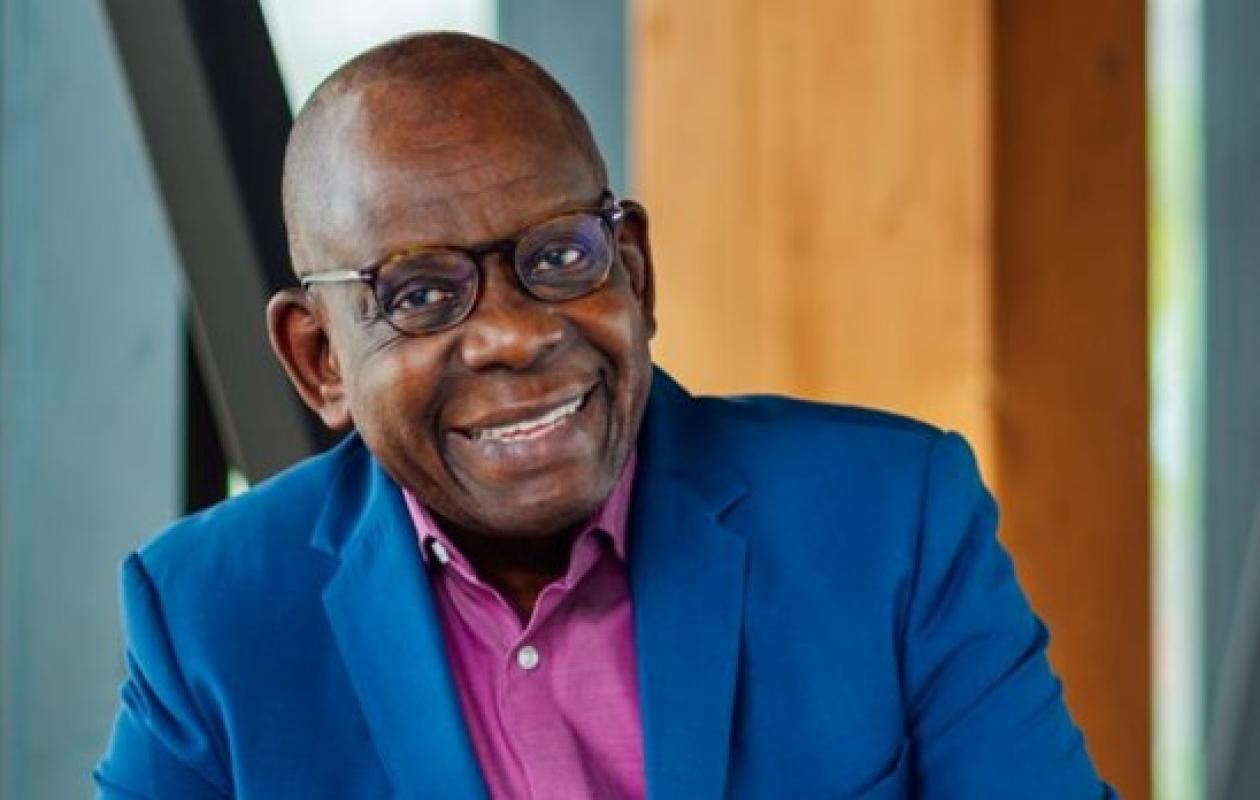
Québec, islam politique et responsabilité démocratique : pour sortir des mots inflammables (Par M. Khadiyatoulah Fall)
Recent statements by Paul St-Pierre Plamondon, leader of the Parti Québécois, regarding "brotherhoodism" and the Muslim Brotherhood have revived a recurring debate in Quebec: how to name real concerns related to radicalism, ideological influence strategies or contemporary forms of political infiltration, without fostering confusion with ordinary Muslim citizens, fully integrated into Quebec life?
The subject deserves better than Pavlovian reflexes. It demands method, lexical precision, and an ethics of public speaking.
The first problem lies in the vocabulary. The word "Brotherhood," popularized primarily in France, does not belong to a stable scientific category. It functions more as a political and media term than as a concept unanimously defined by research. Depending on usage, it can refer sometimes to the historical ideology of the Muslim Brotherhood, sometimes to conservative networks of influence, and sometimes to a style of gradual action within democratic institutions. Such semantic fluidity produces a formidable effect: everyone projects their fears, convictions, or interests onto it.
But a vague word, when it touches on religion, immigration and national identity, quickly becomes explosive.
It is important to reiterate a fundamental distinction here. Islam is a global religion, encompassing multiple theological, cultural, and political currents. The Muslims of Quebec constitute a diverse population in terms of origins, languages, religious sensibilities, levels of religious practice, and civic orientations. The Muslim Brotherhood, on the other hand, refers to a historical organization that originated in Egypt in 1928, whose ramifications, evolution, and interpretations have varied according to countries and eras. To conflate these three levels—religion, population, and organization—leads to intellectual error.
But intellectual error quickly becomes political error.
A democracy obviously has the right, and even the duty, to monitor any movement—religious, identitarian, far-left, far-right, or sectarian—that seeks to circumvent common rules, undermine civic equality, or substitute ideological loyalty for democratic institutions. No seriousness requires naiveté. Rejecting idealism is part of political maturity.
However, vigilance never replaces the need for proof.
When a political leader raises the issue of a threat, three requirements should be paramount: defining the threat, documenting the facts, and carefully choosing the words. Without these, the debate shifts from analysis to fear-mongering suggestion. The danger is no longer solely what is being denounced; it also lies in the manner in which it is denounced.
Quebec has already experienced several instances where poorly chosen words have produced lasting social effects: widespread suspicion, heightened identity tensions, civic fatigue among minorities forced to justify themselves, and electoral polarization that is profitable in the short term but costly in the long term. Each time, media hype has outweighed the actual understanding of the phenomenon.
The paradox is well known: the more a society talks about a group without it, the less it understands it.
The Quebec case calls for particular caution. Quebec simultaneously seeks to assert its national identity, protect the French language, regulate immigration, defend institutional secularism, and maintain viable social cohesion. These are legitimate objectives. But they become fragile when they transform into a perpetual drama of threat.
A confident nation does not need symbolic enemies to define itself.
She can clearly say: yes to the secularism of the State; yes to the fight against all extremism; yes to gender equality; yes to public safety; yes to linguistic integration; yes also to religious freedom, to the dignity of Muslim citizens and to the rejection of amalgamations.
It is precisely this dual firmness that is often lacking in public debate: firmness against excesses, firmness against generalizations.
It is also important to remember a sociological fact: the first lines of defense against radicalism are often located within the communities themselves. Parents, teachers, social workers, intellectuals, responsible religious leaders, and engaged young professionals: these are crucial actors. Treating them as suspects by default weakens the most valuable allies.
The right question is therefore not: "how to designate an internal enemy?" It is rather: how to strengthen a common citizenship strong enough to contain all radicalism?
Quebec would benefit from replacing inflammatory words with a more mature public doctrine: targeted intelligence rather than generalized suspicion; serious research rather than imported slogans; demanding dialogue rather than complacency; civic universality rather than ethnicization of the debate.
Political leaders have the right to raise the alarm. They even sometimes have a duty to do so. But they also have a greater obligation not to unnecessarily fracture the civic body.
Between denial and stigmatization, there is a more difficult path: that of democratic lucidity. It is the only one worth taking for Quebec.
Mr. Khadiyatoulah Fall, Professor Emeritus,
University of Quebec at Chicoutimi and
CELAT Inter-University Centre














Commentaires (2)
Participer à la Discussion
Règles de la communauté :
💡 Astuce : Utilisez des emojis depuis votre téléphone ou le module emoji ci-dessous. Cliquez sur GIF pour ajouter un GIF animé. Collez un lien X/Twitter, TikTok ou Instagram pour l'afficher automatiquement.