Finances : Les signaux d’alerte surveillés par les banques centrales
When a central bank raises or lowers its key interest rates, the decision often makes headlines because it directly influences the cost of credit, inflation, or economic activity. Other publications attract far less attention, yet they play a crucial role in monitoring modern economies. This is the case with financial stability reports, published regularly by central banks and supervisory authorities to assess the soundness of the financial system and identify risks that could threaten its stability.
These documents address a concern that has become increasingly prominent since the major financial crises of recent decades. The Asian crisis of 1997, the global financial crisis of 2008, the turbulence caused by the Covid-19 pandemic in 2020, and the bank failures observed in the United States in 2023 have shown that a financial system can appear solid while accumulating vulnerabilities that only become visible when a crisis erupts.
The purpose of financial stability reports is precisely to avoid this kind of blindness. Rather than focusing solely on inflation or economic growth, they examine all the risks that could affect banks, insurance companies, financial markets, payment systems, or large financial institutions.
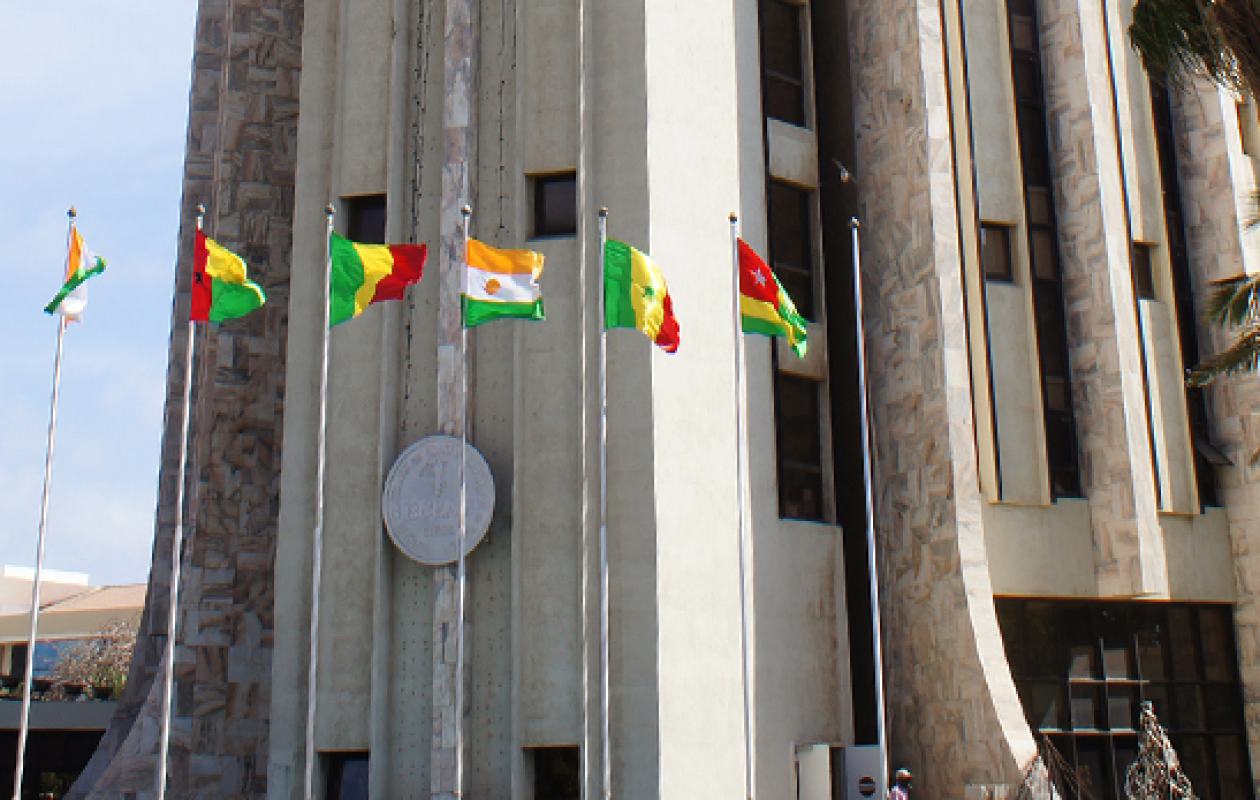
The BCEAO publishes a Report on Financial Stability in the WAEMU, which is now one of the main tools for monitoring the regional financial sector. These analyses cover an economic area of over 150 million inhabitants, encompassing eight countries and a banking sector whose total assets now exceed 60 trillion CFA francs.
One of the first things examined concerns the health of the banks. The authorities are particularly monitoring the quality of loans granted to households, businesses, and public administrations. A too-rapid increase in non-performing loans can signal broader economic difficulties.
In the WAEMU, the gross non-performing loan ratio has hovered around 10% in recent years, according to BCEAO data, although situations vary between countries and institutions. This type of indicator is closely monitored because an excessive accumulation of non-performing loans can weaken bank balance sheets and reduce the sector's capacity to finance the economy.
The reports also analyze the solvency of financial institutions. Banks must have sufficient capital to absorb potential losses. At the end of 2024, the average solvency ratio of the WAEMU banking sector remained above the regulatory minimum set within the regional prudential framework. This information allows the authorities to assess the banks' ability to withstand adverse economic shocks.
The risks associated with public debt are also increasingly prominent in these publications. African banks often hold a significant portion of the bonds issued by their respective governments. According to data from the BCEAO and UMOA-Titres, the outstanding amount of government securities in the Union exceeded 20 trillion CFA francs in 2025. This situation has advantages, particularly because it allows for the mobilization of regional savings to finance public needs, but it also creates close links between the health of public finances and that of the banking sector.
Financial markets are also subject to constant monitoring. A sharp drop in asset prices, tensions in bond markets, or a sudden reduction in liquidity can have repercussions throughout the entire financial system. Reports therefore seek to measure the exposure of different market participants to these risks.
The international dimension is playing an increasingly important role. Central banks know that a crisis originating thousands of kilometers away can have rapid effects on local economies. The rise in US interest rates that began in 2022 provides an illustration of this. This trend has led to an increase in the cost of financing for many emerging and African countries, complicating access to international capital markets.
Financial stability reports also incorporate simulation exercises. Authorities construct various crisis scenarios to assess the resilience of financial institutions. For example, they may measure the consequences of a severe recession, a sharp rise in interest rates, a fall in commodity prices, or a default by some borrowers.
These exercises proliferated after the 2008 global financial crisis. At the time, several major international financial institutions still displayed seemingly satisfactory ratios just months before their collapse. This experience convinced regulators that it was not enough to simply observe the current situation; it was also necessary to analyze the system's capacity to withstand extreme scenarios.
New technologies have broadened the scope of surveillance. Central banks are now focusing on risks related to cybersecurity, digital payments, and the increasing interconnectedness of financial systems. In a region where mobile money processes trillions of CFA francs in transactions each year, these issues are taking on growing importance.
The financial stability report also plays a communication role. When a central bank publishes its assessment, it informs investors, banks, governments, and businesses about the vulnerabilities it identifies. This transparency helps strengthen confidence in the financial system while encouraging stakeholders to address certain weaknesses.
Investors, in fact, pay close attention to these publications. A deterioration in financial stability indicators can influence the perception of a country's risk, affect the cost of financing, or alter certain investment decisions.
Behind their sometimes austere appearance, these reports therefore fulfill a very concrete function. They constitute a kind of early warning system designed to identify imbalances before they escalate into a financial crisis. Economic history shows that crises often cost years of growth, thousands of jobs, and sometimes several percentage points of gross domestic product. In this context, the ability to detect vulnerabilities early enough represents one of the main preventative tools available to central banks and supervisory authorities.












![[Exclusif] : Ass Dione confronté par le juge d’instruction à 3 de ses présumés amants](https://image.seneweb.com/content/news/2026-26-25//thumb_1260x800_6a3d4ac0555d3_9OCWAjqjOR.jpeg)










Commentaires (2)
Participer à la Discussion
Règles de la communauté :
💡 Astuce : Utilisez des emojis depuis votre téléphone ou le module emoji ci-dessous. Cliquez sur GIF pour ajouter un GIF animé. Collez un lien X/Twitter, TikTok ou Instagram pour l'afficher automatiquement.