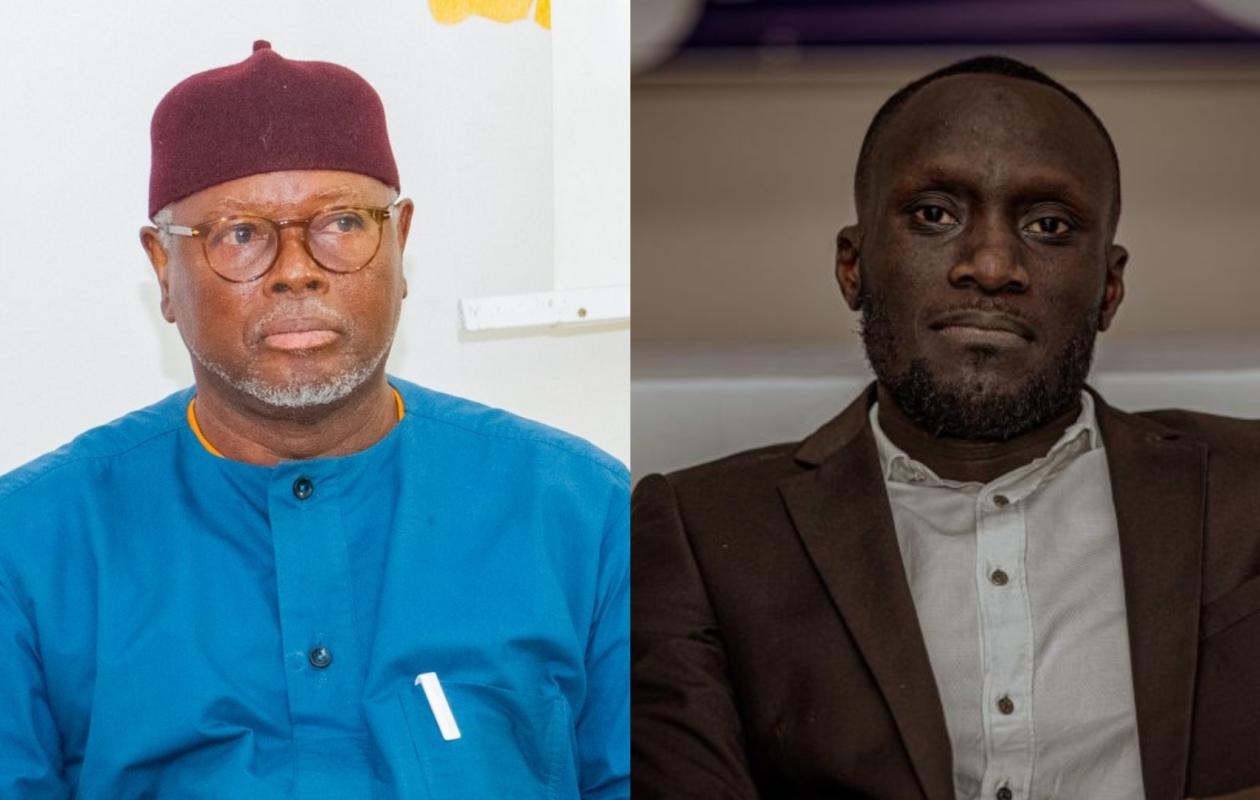
"C'est une régression" : La double passe-d'arme entre Alioune Tine et le directeur de la Communication
In the space of 3 hours, the founder of the Think-tank Africajom Center, Alioune Tine, and the Director of Communication at the ministry headed by Alioune Sall, Habibou Dia, clashed on social media twice.
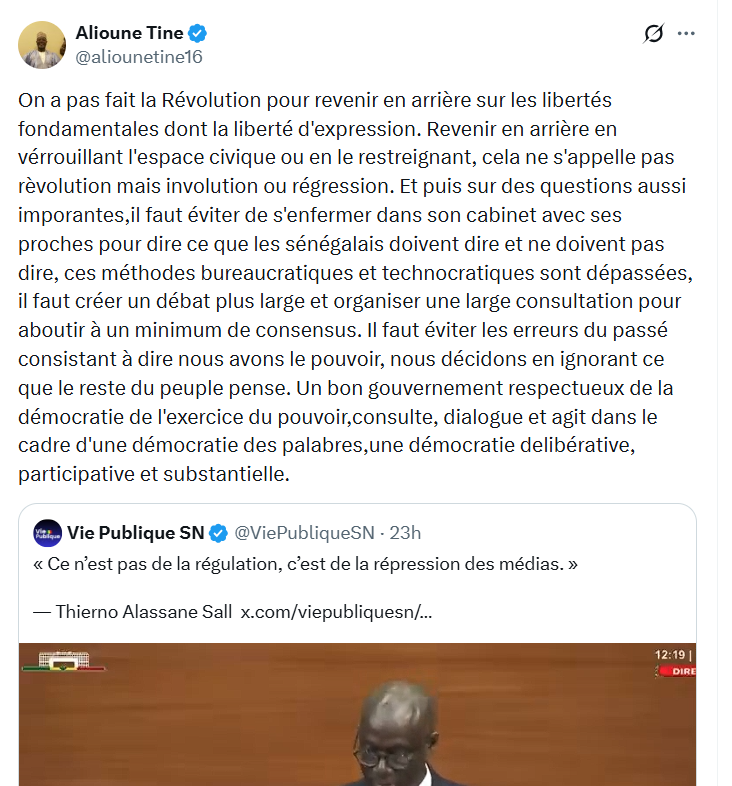
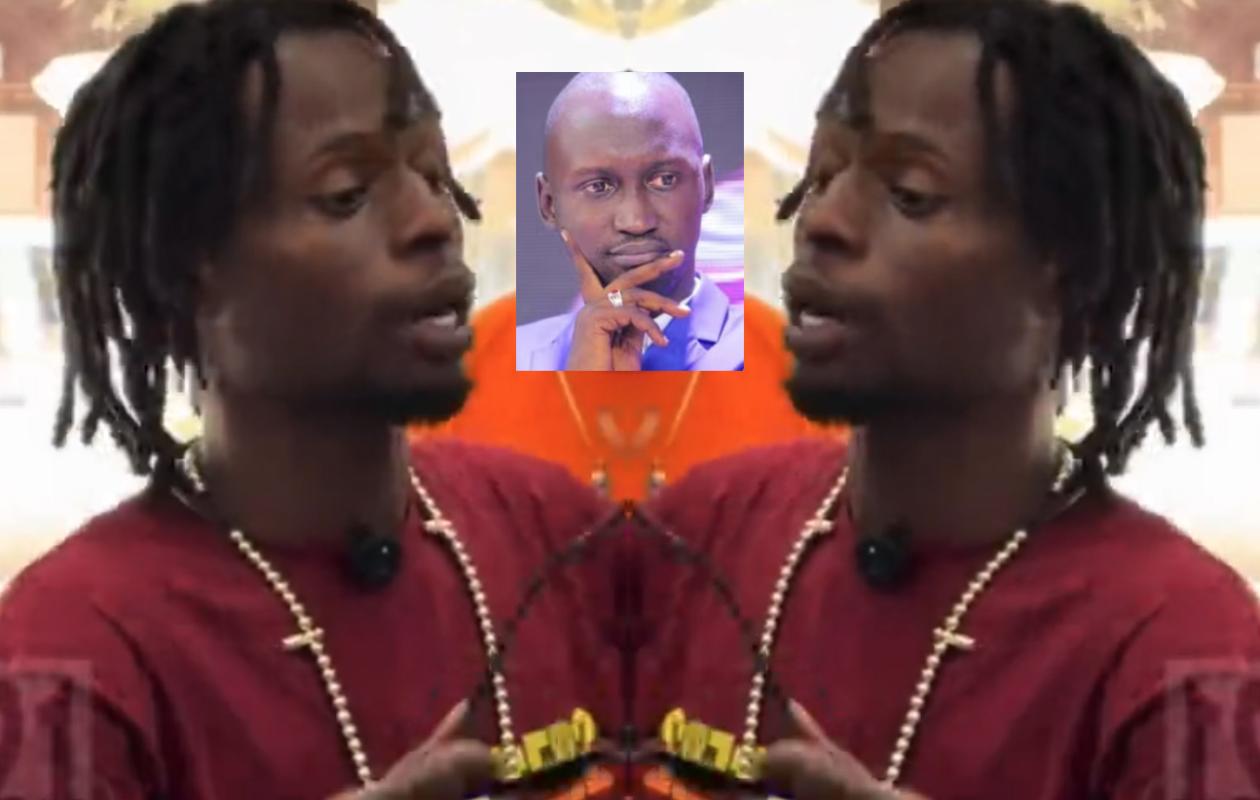
It all started with a post by Alioune Tine, sharing a video of opposition leader Thierno Alassane Sall, to criticize the creation of the National Media Regulatory Council (CNRM) in place of the CNRA. "We didn't have a revolution to go back on fundamental freedoms, including freedom of expression. Going backward by locking down or restricting civic space isn't called a revolution, but rather involution or regression (...) A good government, respectful of democratic principles, consults, engages in dialogue, and acts within the framework of a deliberative, participatory, and substantive democracy," the civil society member wrote.
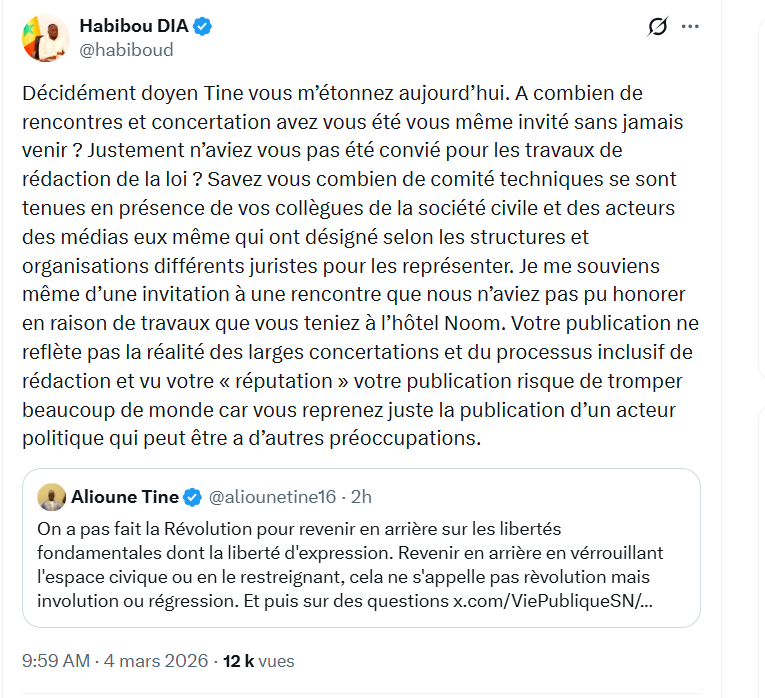
Habibou Dia did not share this view at all, and he made his feelings known to him on X. "Dean Tine, you truly surprise me today. How many meetings and consultations have you yourself been invited to without ever attending? Weren't you invited to the drafting of the law? I even remember an invitation to a meeting that you couldn't attend because of work you were doing at the Noom Hotel. Your publication does not reflect the reality of the extensive consultations and the inclusive drafting process, and given your 'reputation,' your publication risks misleading many people because you are simply repeating the publication of a political figure who may have other concerns," the communications director at the Ministry of Communication, Telecommunications, and Digital Affairs reproached him.
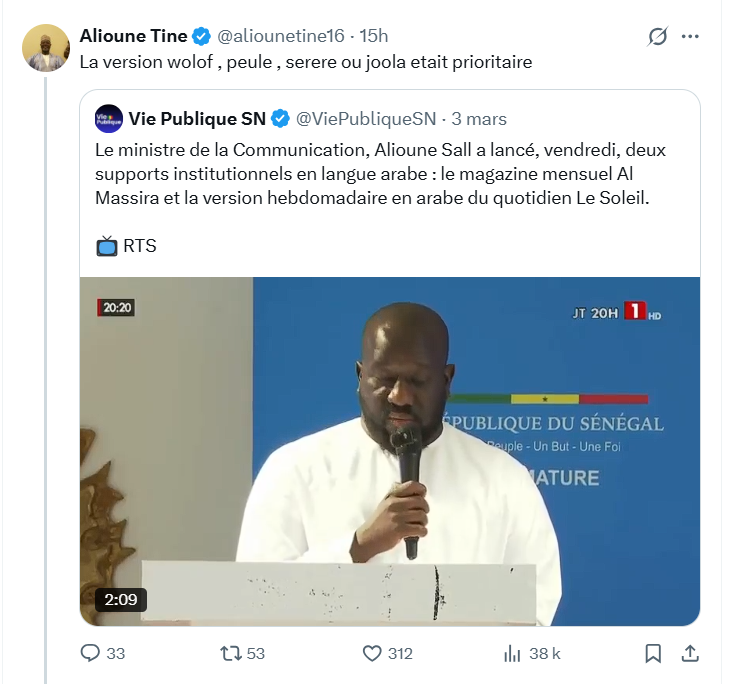
An hour later, the two men again displayed their disagreement, this time on a very different subject. It concerned the decision by Alioune Sall's ministry to launch Arabic editions of two newspapers to facilitate the inclusion of Arabic speakers.
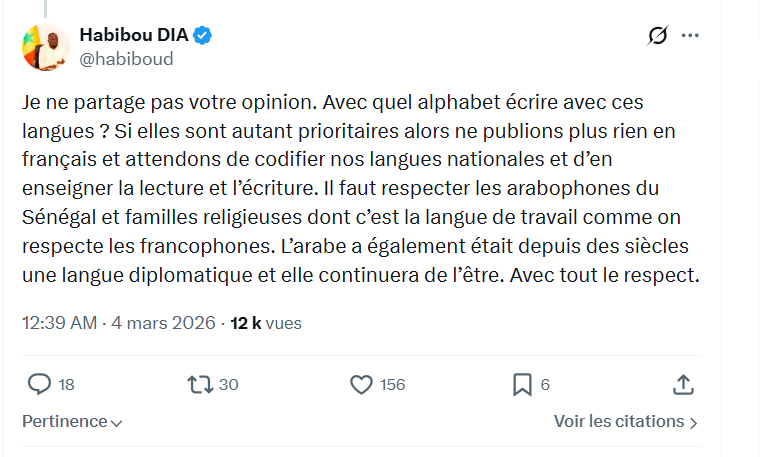
On the social network X, Alioune Tine argued that an edition in our national languages should have taken precedence over Arabic. "The Wolof, Fulani, Serer, or Joola versions should have been prioritized," wrote Alioune Tine. "What alphabet should we use to write in these languages? If they are such a priority, then let's stop publishing anything in French and wait until our national languages are codified and their reading and writing are taught. We must respect the Arabic speakers of Senegal and religious families for whom it is their working language, just as we respect French speakers," replied Habibou Dia.
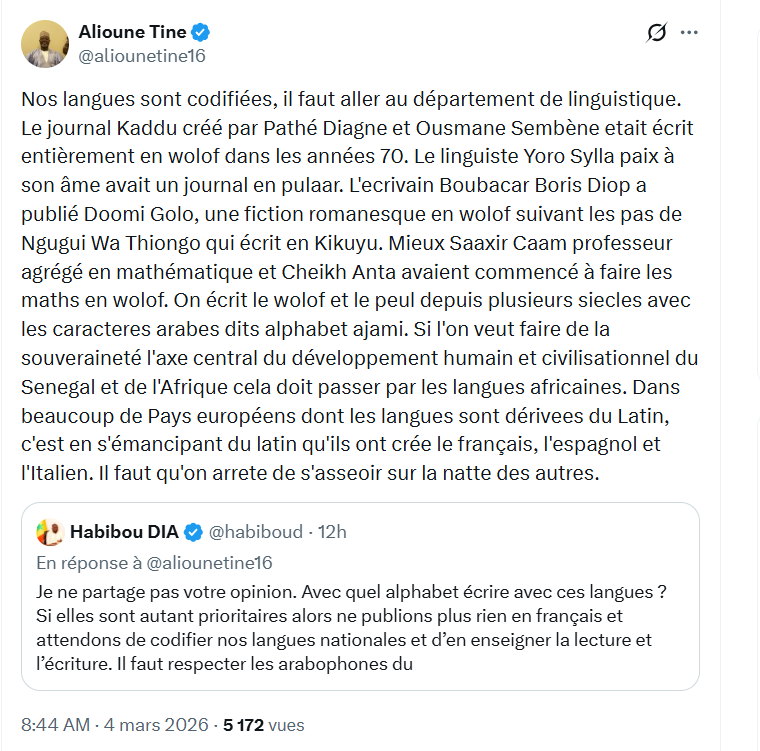
The exchange of barbs doesn't end there, as Alioune Tine is going to come back with another attack. "Our languages are codified, you have to go to the linguistics department. (...) Wolof and Fulani have been written for several centuries with Arabic characters known as the Ajami alphabet. If we want to make sovereignty the central axis of the human and civilizational development of Senegal and Africa, it must go through African languages," he adds.
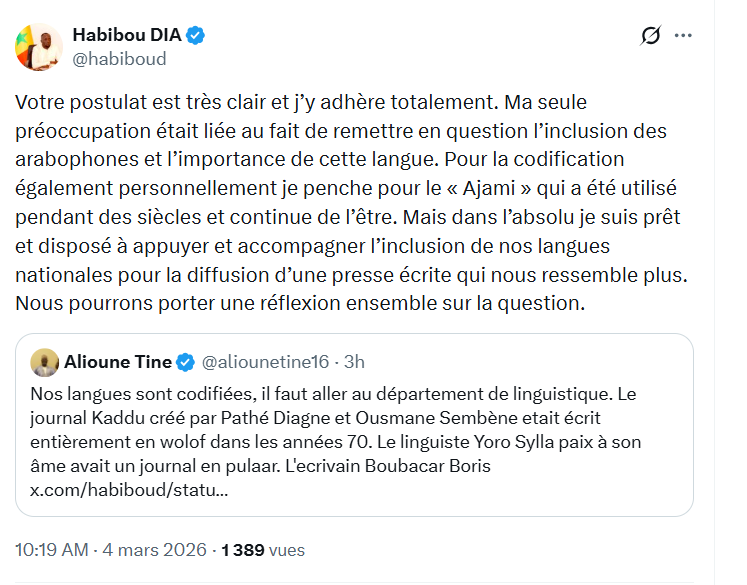
Ultimately, the two men ended their exchange on good terms, as Habibou Dia expressed openness to the "Dean's" proposal. "Your premise is very clear, and I fully agree with it. My only concern was the question of the inclusion of Arabic speakers and the importance of that language. Regarding the writing system, I personally favor Ajami, which has been used for centuries and continues to be used. But in principle, I am ready and willing to support and facilitate the inclusion of our national languages for the dissemination of a print media that better reflects our identity. We can discuss this issue together," stated the communications director.














Commentaires (10)
Participer à la Discussion
Règles de la communauté :
💡 Astuce : Utilisez des emojis depuis votre téléphone ou le module emoji ci-dessous. Cliquez sur GIF pour ajouter un GIF animé. Collez un lien X/Twitter, TikTok ou Instagram pour l'afficher automatiquement.