
Classement Liberté de la Presse : Pourquoi le Sénégal a basculé à la 78ème place et a vu son score dégradé
Reporters Without Borders (RSF) unveiled its 2026 World Press Freedom Index on Thursday. Senegal, classified as a country with a "problematic situation," did not improve its score or its ranking. On the contrary, it fell four places, ranking 78th . Its score declined from 59.43 in 2025 to 58.11 in 2026.
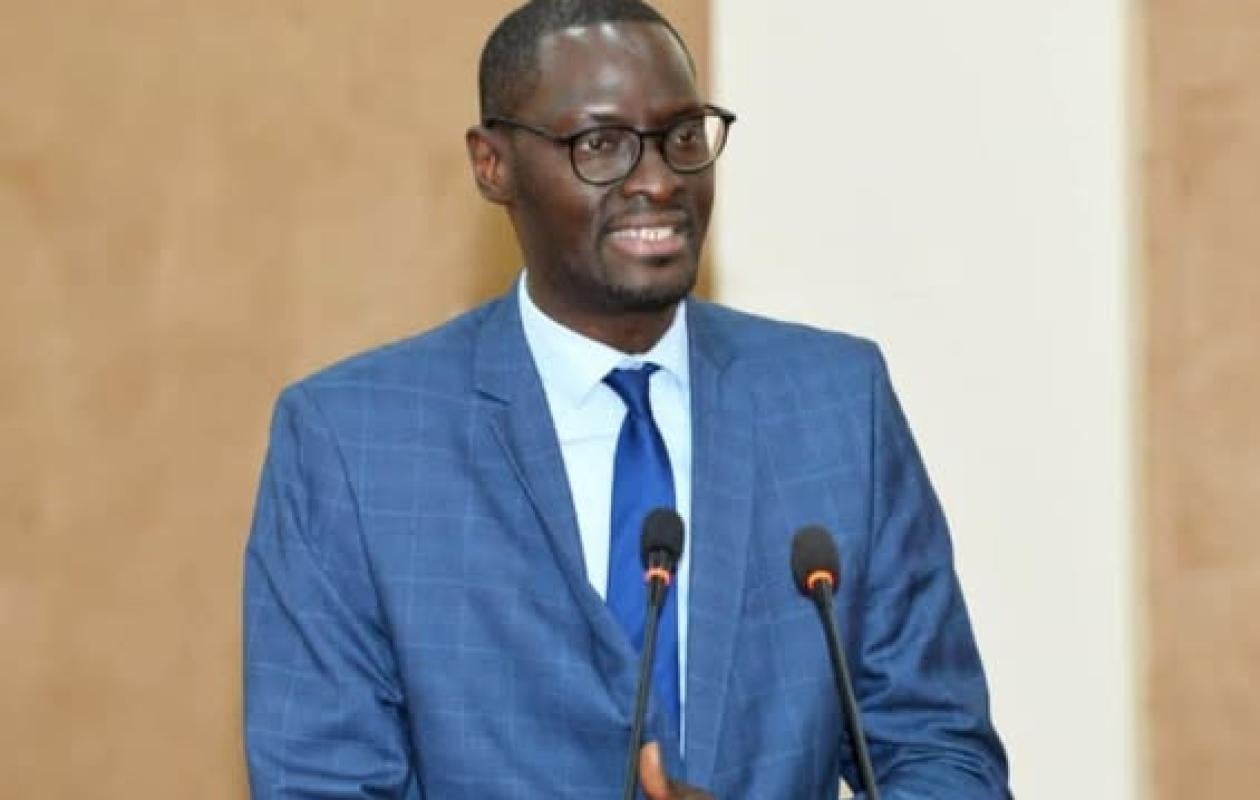
“The key takeaway is that some of the country’s indicators have fundamentally declined. The country has lost 1.3 points in its score,” noted Sadibou Marong, Director of RSF’s West Africa office. Why such a poor performance?
The blocking of aid to the press
Mr. Marong mentions two levels of analysis. The first is the economic score, "which has fundamentally declined." This is due to the difficulties that media outlets have faced in recent years, particularly with the freezing of press subsidies.
"Those who observe how the media are evolving in Senegal can see that it is indeed very, very difficult, very complicated. The media have gone two years without receiving public subsidies for the press," Mr. Marong points out.
Public advertising is also blocked.
Added to this are difficulties in accessing advertising, particularly from national companies, and the fact that some media outlets, which "were supposed to receive payments, especially for orders already placed, did not receive them." These problems dragged down Senegal's score.
Added to this economic aspect are the difficulties between the media and public authorities. This is particularly true on the legal front, with journalists and columnists appearing before investigators. In 2024, summonses did not systematically lead to imprisonment. But in 2025 (under review), things changed rapidly.
The Babacar Fall and Maïmouna Ndour cases…
"In 2025, the trend became complicated with many summonses of columnists, journalists and arrests. The trend was exacerbated with referrals, placements under arrest warrants for journalists and columnists," laments Mr. Marong.
The forceful arrests of Babacar Fall and Maimouna Ndour Faye were not left unmentioned: "There were difficult situations in 2025, with the emblematic cases of Maimouna Ndour Faye and Babacar Fall," Mr. Marong lamented, denouncing the fact that the police went to arrest Mr. Fall right in his office.
Formal notices, signal cuts…
Furthermore, Reporters Without Borders emphasizes that the formal notices issued by the CNRA (National Audiovisual Regulatory Council), particularly against the Futurs Médias group, following remarks made on the Jakaarlo program, are unjustified. According to Reporters Without Borders, these are disproportionate measures, as were the removals of certain channels from digital terrestrial television (DTT).
As for points of satisfaction, RSF cites the passing of the law on access to information. It also welcomes the ability of press organizations to challenge decisions made by the authorities. "There have been decrees, for example, on the issue of media outlets, which were, in quotation marks, compliant, and which were challenged. And the Supreme Court ruled in favor. That is important," applauds Mr. Marong.
RSF's recommendations
In terms of recommendations, RSF suggests strengthening self-regulatory mechanisms "to avoid the criminalization of journalism." At this level, it recommends strengthening the Council for the Observation of Ethical and Professional Standards in the Media (Cored) and enabling it to handle complaints against journalists.
He also calls on the authorities to implement the conclusions of the national media conference. "It's a country that offers a favorable environment, but we do believe it's important to continue dialogue between the media and the authorities," Mr. Marong recommends.








Commentaires (5)
Participer à la Discussion
Règles de la communauté :
💡 Astuce : Utilisez des emojis depuis votre téléphone ou le module emoji ci-dessous. Cliquez sur GIF pour ajouter un GIF animé. Collez un lien X/Twitter, TikTok ou Instagram pour l'afficher automatiquement.