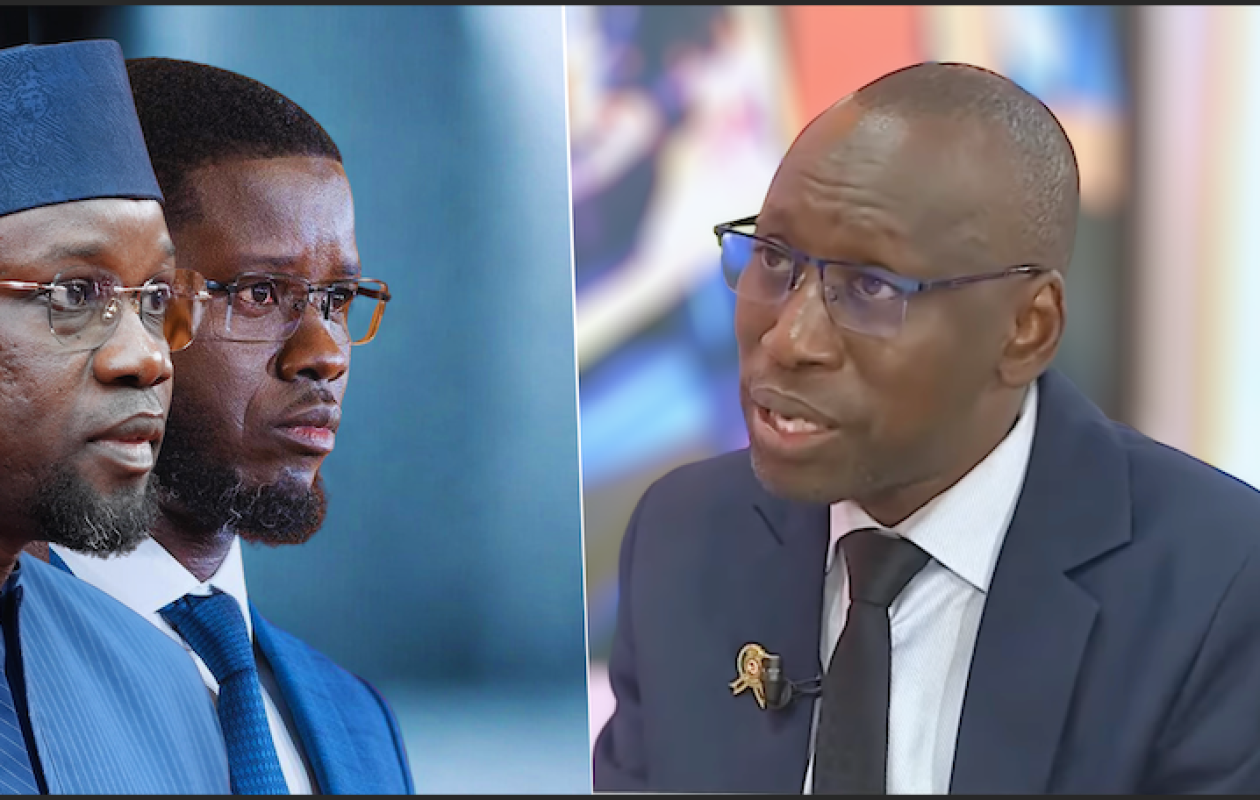
[Entretien] Diomaye, sa coalition, risques de rupture avec Sonko…: Les "vérités" du député Ismaïla Wone de Pastef
In December 2024, when Ousmane Sonko decided not to take his seat in the National Assembly, Ismaila Wone replaced the Pastef leader in the chamber. A Pastef representative in Podor, Wone discusses this significant turning point in his political life. In this interview, he focuses primarily on the falling out between Diomaye and Sonko, the President's recent remarks, and the risks of a complete break. A candid interview!
You are the one who replaced Prime Minister Ousmane Sonko in the National Assembly. How does it feel to be serving in the chamber knowing that you are now occupying his seat?
It is far more than an honor: it is a historic responsibility to be the deputy of one of the most influential political leaders in Senegal and Africa. To be by his side is to champion a vision, embody a struggle, and assume, before the people, a demand for results.
Taking on his role in the National Assembly is not simply a replacement; it is a total commitment. For one cannot replace such a man: one continues his struggle, defends his convictions, and works tirelessly to live up to the trust placed in him.
My greatest achievement in politics is not a title, nor a position: it is having been his substitute, having contributed, in my place, to advancing the project he is carrying for our nation.
At the twilight of my political life, beyond the service rendered to the people, I will remember above all this: I had the honor of sitting in the chamber to defend a vision, to carry a collective ambition, and to accompany an exceptional man in his fight for the transformation of Senegal and Africa.
How would you feel if he ever felt the urge to return to the chamber?
If he were to return to the chamber, we would renew our total commitment and absolute loyalty to him without reservation. But whether we are in the Assembly or elsewhere, one thing is clear: the fight continues, and it is intensifying.
In the Podor department, I will play my full part in this political battle for 2029. We cannot afford to fail. We have a duty to bring him to the highest office to complete the profound transformation of our country and definitively put an end to the ways of the past.
And let's be clear: whatever his decision, we will fully support it. Because President Ousmane Sonko has always demonstrated clarity of thought, courage, and strategic acumen where others hesitate or calculate.
But today, the stakes go beyond mere positions. For the good of Senegal, he must remain at the heart of executive power. Beyond the symbolic role, he must be the linchpin, the bulwark, and the guarantor of rigorous governance. His presence at the Prime Minister's office is a crucial line of defense against opportunists, those who seek to exploit the system, and all those who hover around power with hidden agendas.
We did not come to support the system; we came to transform it. We did not seize this power only to dilute it or share it with those who fought against it. This power belongs to the people, and it is embodied by the PASTEF project. We must exercise it fully, without hesitation, without compromise, and without retreat. This is a historic responsibility. And we will fulfill it to the very end.
You recently voted for a law toughening penalties against homosexuality. The opposition denounces the exclusion of criminalization. What is your response to them?
In Senegal, we are faced with a spineless opposition. An opposition that no longer thinks, that proposes nothing, that builds nothing. An opposition that lives in the shadow of Ousmane Sonko and only breathes according to his pronouncements.
Whatever the law, whatever the decision, their only political line is clear: to oppose Sonko. That's their plan. That's their level of understanding. And they think they can fool the people with that?
But the Senegalese people are mature. They understand. They see through their game. They know that this opposition is driven not by convictions, but by hatred, fear, and hidden agendas. And this hatred will ultimately destroy them politically.
On the issue of homosexuality, let's be clear: whatever the decision, they would have done the opposite. If it had been criminalized, they would have cried foul. If the penalties were increased, they would still protest. This proves only one thing: they are lost, completely lost.
Meanwhile, the harsher sentences have been welcomed by the public and endorsed by many legal experts. But they continue to make a fuss, out of touch with reality, out of touch with the people.
And why? Because some, in the old regime, were long under the influence of external networks and interests. Because their political stance was dictated from elsewhere. Because they had to please circles that in no way represent the values of the Senegalese people. That is why some refused to vote for this law. Not out of conviction. But out of conformity. Out of submission. Out of calculation.
Today, the choice is simple: On one side, a clear, committed political project, supported by the people. On the other, a disoriented, opportunistic opposition, without direction or courage. We have chosen our side. The side of the people. The side of truth. And we will see it through to the end.
Outside the country, voices like Mélenchon's have also protested against the law. What is your response to them as well?
Let's be clear. Senegal is not a territory under trusteeship. We have no lessons to learn from anyone about what our values, norms, or social organization should be.
We have embarked on a fight for economic sovereignty, and we will wage the fight for cultural and social sovereignty with the same determination. And on this front, there will be neither ambiguity nor retreat. We firmly reject any attempt at interference aimed at imposing models that are not our own. What some countries elevate to the status of a benchmark has no intention of becoming a universal norm. We have our own points of reference. We have our own history. We have our own principles. And we do not have to justify them. Let it be understood once and for all: our societal choices are neither negotiable, nor exportable, nor subject to external validation.
Respect is not a one-way street. We respect the choices of other peoples, but we demand the same respect in return. Those who speak of tolerance should begin by tolerating difference. For to seek to standardize the world's values is to deny what constitutes the very richness of humanity. Senegal will remain steadfast, true to itself, and determined to defend its convictions, without pressure, without hesitation, and without compromise.
What is your opinion on President Diomaye's latest statement during his coalition's general assembly?
What happened at King Fahd is not a simple incident. It is a major political blunder. Seeing members of the so-called “Diomaye President” coalition, the Mimi Touré faction, including Mimi Touré, Abdourahmane Diouf, and others, publicly attack Ousmane Sonko is already serious. But for this to happen in the presence of the President of the Republic, Bassirou Diomaye Faye, crosses a red line.
This is unacceptable. And what is even more shocking is the President's own attitude. Not only does he allow it to happen, but he gives the impression of condoning, through his words and his silence, attacks directed against the very person to whom he owes a large part of his political legitimacy.
Let's be honest: this is incomprehensible. President Ousmane Sonko deserves neither this treatment nor this disloyalty. He led a fight, built a project, and enabled the emergence of a political generation, of which the current head of state is a part.
Today, seeing political figures from another era, lacking vision and genuine popular support, dominating the political scene and dictating the pace is deeply concerning. President Bassirou Diomaye Faye must pull himself together. And quickly. Because those surrounding him today will bring him neither stability in governing nor lasting political credibility. On the contrary, they risk undermining his authority and muddying the waters.
One cannot demonstrate greater loyalty to a coalition of convenience than to PASTEF, the sole political framework that shaped, nurtured, and guided one to the highest office in the land. At some point, a choice must be made: loyalty to a project and a cause, or short-term political calculations. History will be the judge. But for now, the message sent is bad. Very bad.
Were you disappointed by his stance, prioritizing his coalition at the expense of Pastef?
As I just said, I'm not just disappointed, I'm deeply shocked. For anyone who knows Bassirou Diomaye Faye, his career, and the sacrifices he made for our party, the current situation is difficult to comprehend. He was a central figure, a pillar in the organization and structure of PASTEF. He was indispensable to the party. It's therefore absolutely no coincidence that Ousmane Sonko chose him. This choice was based on trust, loyalty, and a shared struggle. That's precisely why what we're seeing today is so perplexing.
To see him adopt such a stance, allowing situations to develop that undermine this political and human foundation, is almost inexplicable. It creates profound unease among all those who believed in, fought for, and continue to defend this project. At this level of responsibility, it's no longer simply a matter of political strategy. It's a matter of consistency, loyalty, and respect for a collective commitment. Today, many are questioning this, and rightly so.
As someone within the party, are you worried about a break between the two men?
For my part, I stand by the position clearly expressed by our leader, Ousmane Sonko. He acknowledged the existence of political differences with his brother, President Bassirou Diomaye Faye. But he was also very clear on a crucial point: in terms of governing the state, the work is carried out in a spirit of responsibility and collaboration. That is what we take away from this.
We do not want any rupture. That is neither our objective nor our policy. But if, by necessity, a change were to occur, then it must be done responsibly. As Prime Minister Ousmane Sonko has stated, we will pursue a path of peaceful coexistence, guided by a single imperative: the greater good of the nation and the management of the state's emergencies. Beyond our differences, Senegal must remain the absolute priority.
On March 26, the Pastef parliamentary group will submit a draft resolution supporting the government's position of not resorting to a restructuring of the public debt. Why such an initiative?
This initiative stems first and foremost from a fundamental choice made by the new regime: a commitment to truth and transparency towards its citizens. From the outset, the government highlighted a troubling reality: the existence of a public debt, partly concealed by the previous regime, which had severely weakened our public finances and damaged Senegal's international credibility. Faced with this situation, the State of Senegal, under the leadership of Prime Minister Ousmane Sonko, made a clear strategic choice: to prioritize domestic financing solutions rather than engaging in restrictive external mechanisms.
Today, the results are tangible. Senegal is turning things around. Even better, our country recently met a particularly heavy debt repayment deadline, demonstrating its ability to fulfill its obligations without resorting to restructuring.
In this context, there is no justification for imposing a debt restructuring on Senegal. On the contrary, such a move could hinder the ongoing process of rebuilding credibility with our partners. We therefore believe there is no reason to systematically align ourselves with an IMF directive if it does not correspond to our reality or our interests. As representatives of the people, we have a duty to support the government's efforts to improve public finances.
This is the whole point of the draft resolution put forward by the PASTEF parliamentary group: to affirm a clear support for a sovereign, responsible strategy adapted to the realities of Senegal.
Prime Minister Ousmane Sonko has reportedly announced his intention to submit a bill to restrict the President of the Republic's power to dissolve the National Assembly to only once: What is your opinion on such an initiative?
Fortunately, you mentioned it in the conditional tense. At this stage, I have no verified information confirming these statements. But if it were to be confirmed, I would consider it a significant democratic step forward. Our institutions must evolve so that they are no longer dependent on the decisions or directives of a single individual. Strengthening institutional mechanisms means consolidating the rule of law and guaranteeing more balanced governance. For my part, I will vote for any initiative that moves in this direction: one that strengthens our democracy, protects our institutions, and serves the public interest.
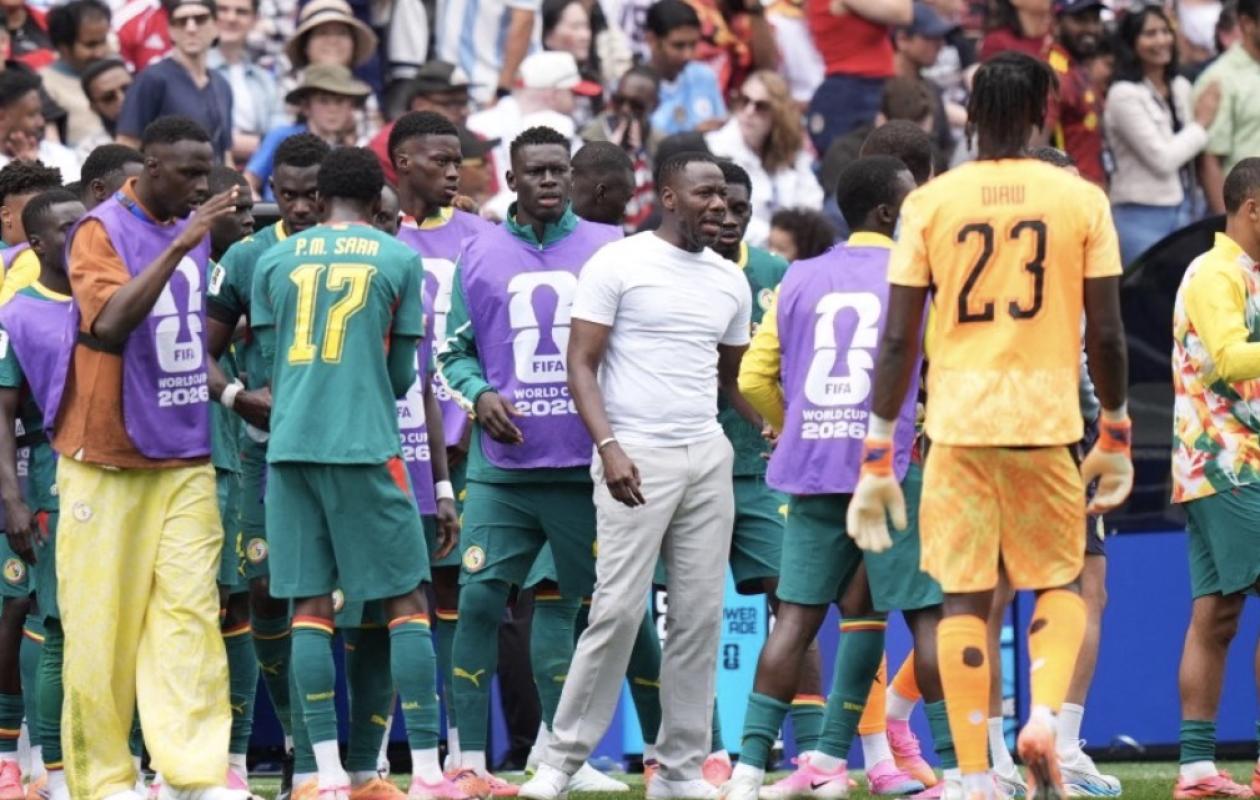
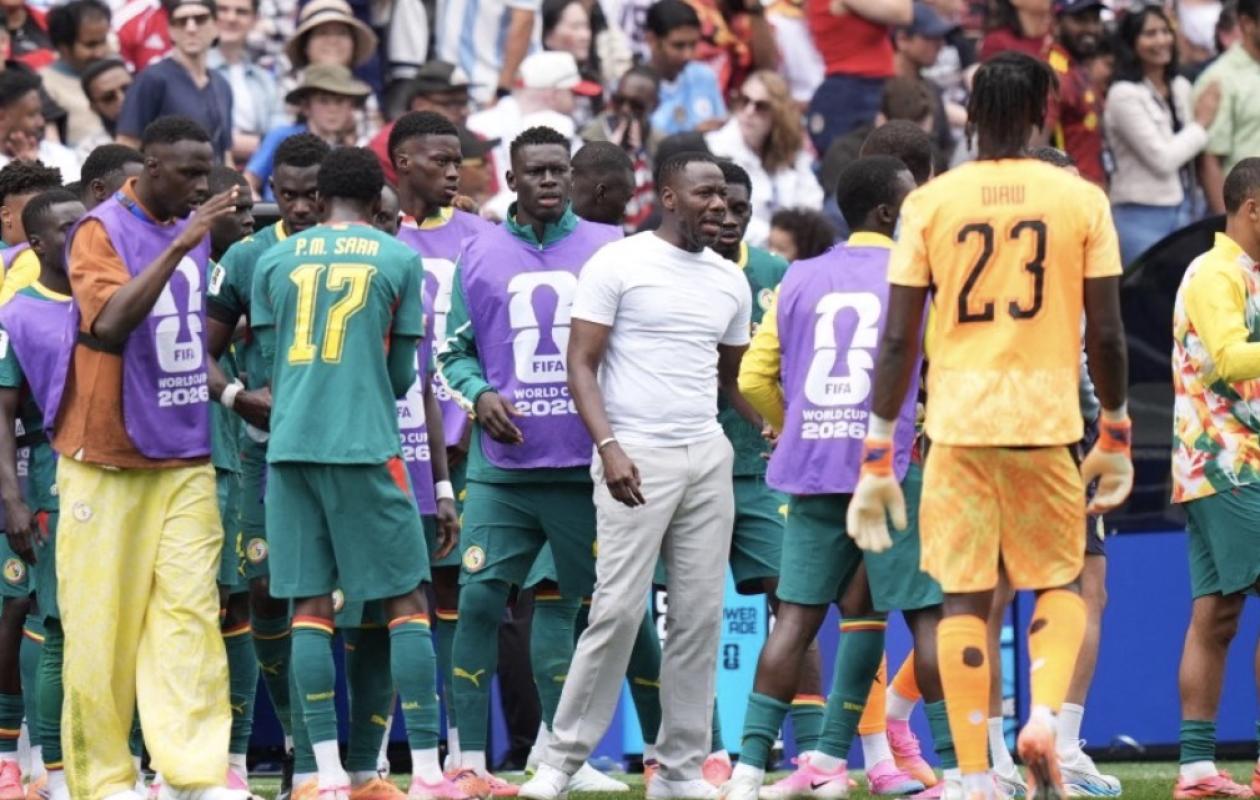
On Tuesday, the CAF decided to withdraw the Africa Cup of Nations from Senegal and declare Morocco the winner. What is your reaction?
We trust the Minister of Sports and the Senegalese Football Federation to appeal to the Court of Arbitration for Sport to overturn this farcical situation. What is happening is extremely regrettable. African football deserves better than this haphazard management, which only serves to discredit it. It is striking to see, from the reactions on social media, that this decision has sparked incomprehension and outrage far beyond our borders.
The Confederation of African Football must take responsibility. By making questionable decisions, it is itself contributing to undermining the credibility of African football. And while we're at it, they should at least have the decency to tell us: who scored the goals in this infamous 3-0 victory? Because at this point, it's more like fiction than sport.







Commentaires (18)
Participer à la Discussion
Règles de la communauté
💡 Astuce : Utilisez des emojis depuis votre téléphone ou le module emoji ci-dessous. Cliquez sur GIF pour ajouter un GIF animé. Collez un lien X/Twitter, TikTok ou Instagram pour l'afficher automatiquement.
Se connecter
Commentez avec votre profil, votre photo, et soyez averti des réponses.