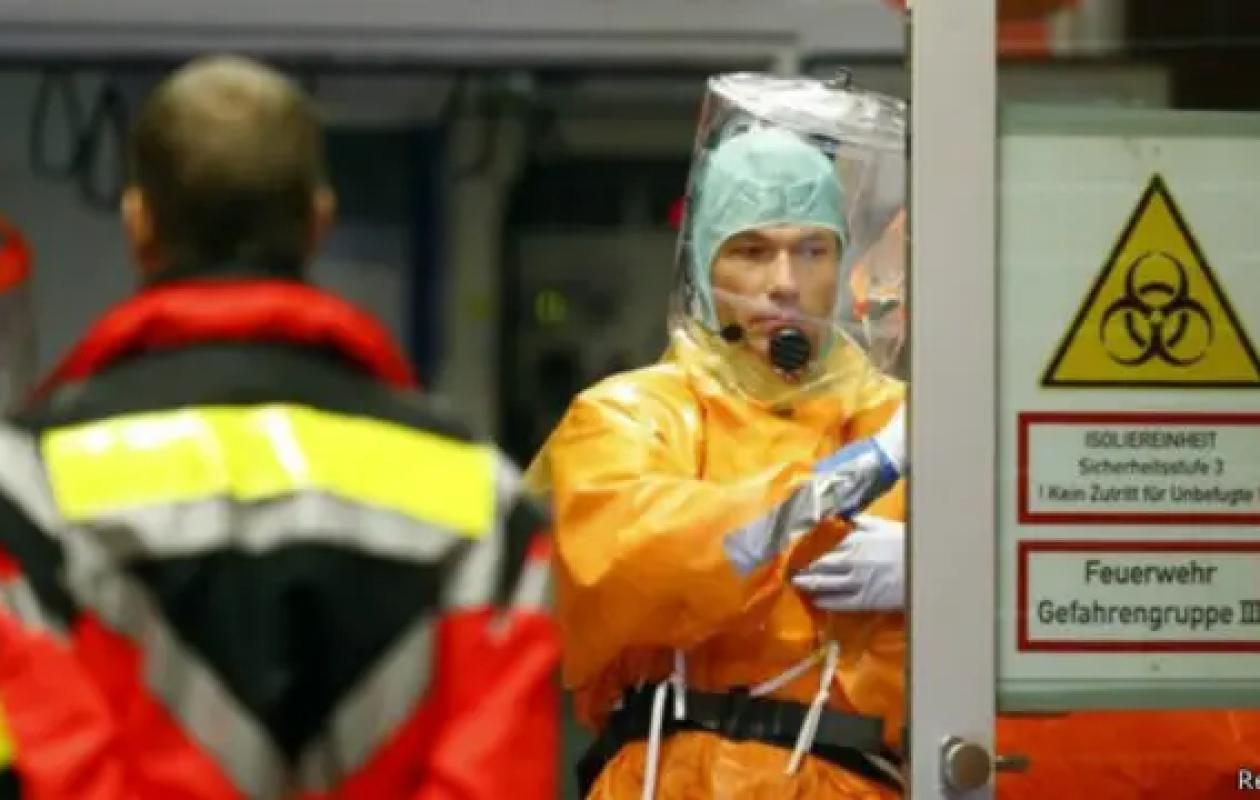
De la RDC à l'Allemagne : l'inquiétante trajectoire du virus Ebola qui s'exporte à l'international
The Director-General of the World Health Organization (WHO) said on Tuesday he was "deeply concerned by the scale and speed" of the ongoing Ebola epidemic, which has caused 131 recorded deaths in the Democratic Republic of Congo.
On Sunday morning, WHO chief Tedros Adhanom Ghebreyesus declared a Public Health Emergency of International Concern (PHEIC) — its second highest alert level — in response to the Ebola outbreak in the DRC and Uganda.
"This is the first time a director-general has declared a PHI before convening an emergency committee," but "I did not take this decision lightly," Mr. Tedros stressed in his general address on the second day of the annual assembly of WHO member states in Geneva.
He explained to the delegates that he had made this decision after consulting with the health ministers of the two countries concerned, and "because I am deeply concerned by the scale and speed of the epidemic".
"We will convene the emergency committee today to advise us on temporary recommendations," he announced. These ad hoc expert meetings are held behind closed doors online.
The DRC is currently being hit hard by the Bundibugyo variant of Ebola, against which there is no vaccine.
"Beyond the confirmed cases, there are more than 500 suspected cases and 130 suspected deaths," Mr. Tedros noted.
The epicenter of the epidemic is located in Ituri, a province in northeastern Congo, bordering Uganda and South Sudan. In this gold-mining region, intense population movements linked to mining activity take place daily.
The virus has already spread beyond the borders of Ituri and the DRC.
On the field
"So far, 30 cases have been confirmed in the DRC in the northern province of Ituri," said Mr. Tedros, explaining that Uganda had also reported two confirmed cases in the capital, Kampala, including one death among two people who had traveled from the DRC.
"And, according to information provided by the United States, an American citizen tested positive and was transferred to Germany," he explained.
The WHO chief indicated that the organization is "working" with the DRC, Uganda, and the United States. The latter decided last year to leave the WHO, but the United States remains a party to the International Health Regulations (IHR).
According to Mr. Tedros, there are several reasons for concern regarding this outbreak, including reported cases in the cities of Kampala and Goma. He also highlighted deaths among healthcare workers, which indicate "healthcare-associated transmission."
Furthermore, "significant population movements are being observed in the region. The Ituri province is extremely unstable in terms of security," he added, noting that the intensification of the conflict in recent months has caused the displacement of more than 100,000 people in the region.
Ebola, which causes an extremely contagious hemorrhagic fever, remains formidable despite recent vaccines and treatments, effective only against the Zaire strain responsible for the largest recorded epidemics.
This virus has caused more than 15,000 deaths in Africa over the past 50 years.
The DRC experienced an Ebola outbreak between August and December 2025, with at least 34 deaths. The deadliest outbreak there, between 2018 and 2020, claimed nearly 2,300 lives out of 3,500 cases.
The WHO has deployed a team on the ground to support national authorities in their interventions.














Commentaires (0)
Participer à la Discussion
Règles de la communauté :
💡 Astuce : Utilisez des emojis depuis votre téléphone ou le module emoji ci-dessous. Cliquez sur GIF pour ajouter un GIF animé. Collez un lien X/Twitter, TikTok ou Instagram pour l'afficher automatiquement.