
VIH en milieu carcéral : Le CNLS sort de sa réserve et recadre le débat
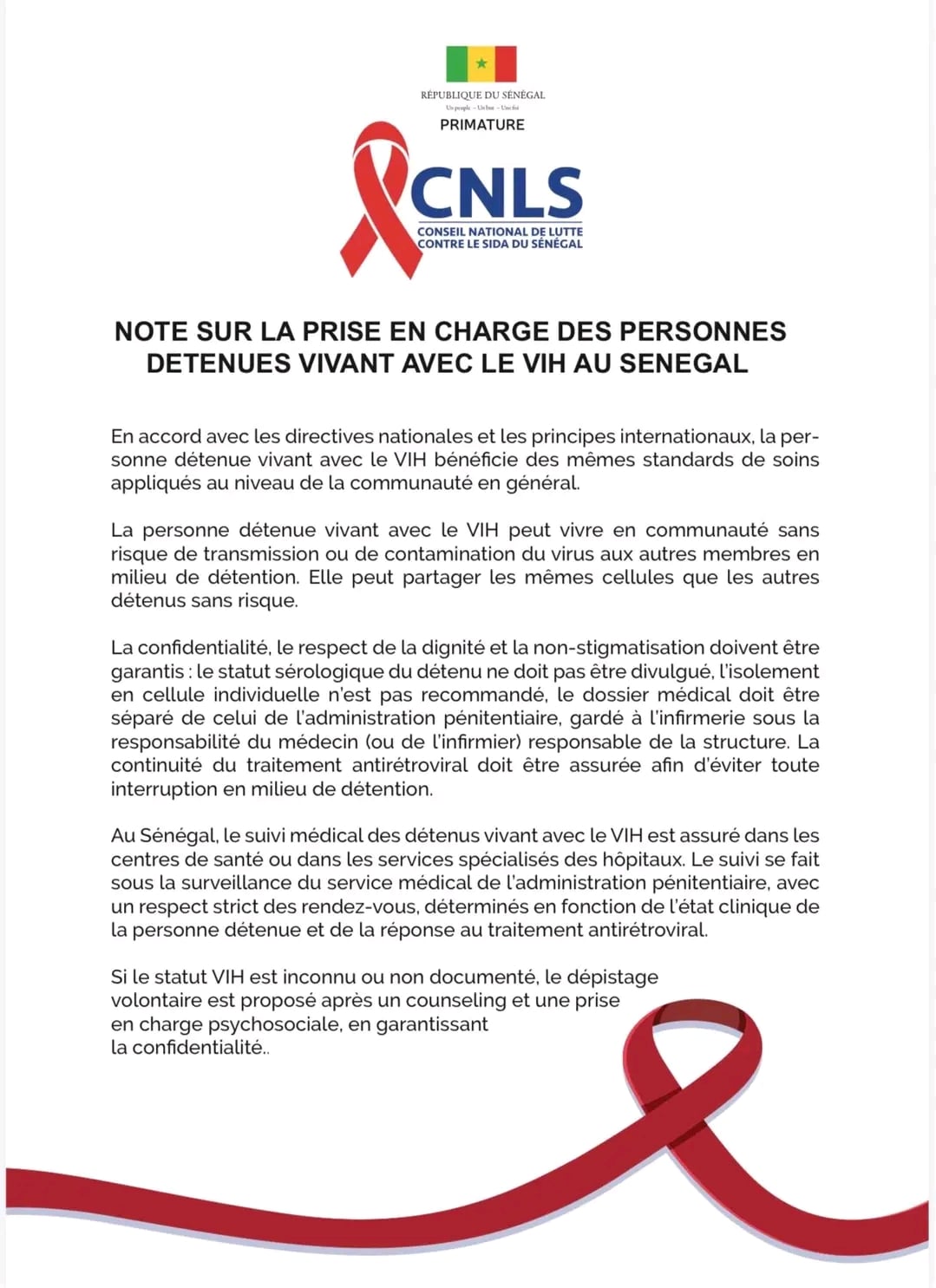
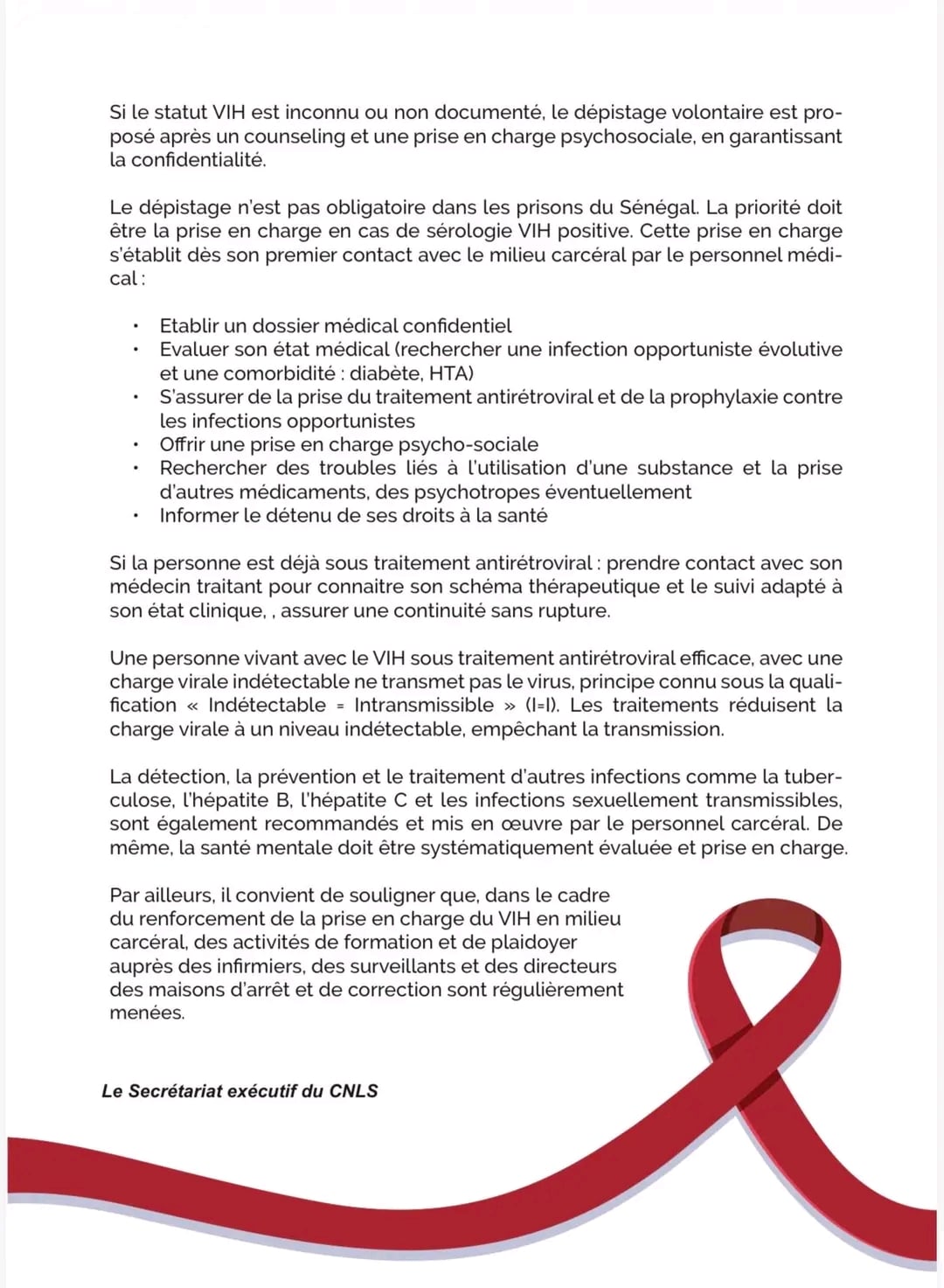
As the Pape Cheikh Diallo case and associates continues to cause waves of contamination, notably with the positive HIV tests of two suspects, Dabakh and Zo Baldé, the National Council for the Fight Against AIDS in Senegal (CNLS) deemed it necessary to publish an official note.
The institution attached to the Prime Minister's office reiterates the rules governing the care of detainees living with HIV in Senegal in a prison setting.
Voluntary screening, never forced
"First and foremost: in Senegal, HIV testing is not mandatory in prison. The CNLS is clear on this point. The test can only be offered after counseling and psychosocial support, in strict compliance with confidentiality. Any detainee whose serological status is unknown or undocumented benefits from this procedure, on a purely voluntary basis," according to the document read by Seneweb.
Being HIV positive does not mean being dangerous
The CNLS also wishes to remove any ambiguity: a person living with HIV poses no danger to their fellow inmates. They can share the same cells without risk of transmission.
He reiterates the scientific principle now universally recognized as "Undetectable = Untransmissible" (U=U): a person on effective antiretroviral therapy, whose viral load is undetectable, does not transmit the virus. Isolation in individual cells is therefore neither justified nor recommended.
The dignity of HIV-positive prisoners, a priority
Confidentiality, respect for dignity, and non-stigmatization are inviolable principles, the CNLS emphasizes. A prisoner's serological status must under no circumstances be disclosed. Their medical file must be kept strictly separate from that of the prison administration and stored in the infirmary under the sole responsibility of the healthcare staff. The continuity of antiretroviral treatment must be guaranteed, without any interruption due to detention.
From the first contact with the prison environment, medical staff are required to provide comprehensive care for HIV-positive inmates. This includes establishing a confidential medical file, assessing their health status, screening for potential opportunistic infections or comorbidities such as diabetes and hypertension, ensuring continuity of antiretroviral treatment, providing psychosocial support, and informing the inmate of their healthcare rights. If the individual is already receiving treatment, their primary care physician is contacted to ensure uninterrupted care.
Medical follow-up is provided in health centers or specialized hospital departments, under the supervision of the medical service of the Penitentiary Administration, with strict adherence to appointments determined according to the patient's clinical condition.
The CNLS also notes that training and advocacy activities are regularly organized for nurses, supervisors and directors of detention and correctional facilities, in order to strengthen HIV care in Senegalese prisons.
The Executive Secretariat of the CNLS





















Commentaires (7)
Participer à la Discussion
Règles de la communauté :
💡 Astuce : Utilisez des emojis depuis votre téléphone ou le module emoji ci-dessous. Cliquez sur GIF pour ajouter un GIF animé. Collez un lien X/Twitter, TikTok ou Instagram pour l'afficher automatiquement.