« Mascarade juridique » : Pourquoi le TAS va rendre son titre au Sénégal (juriste)
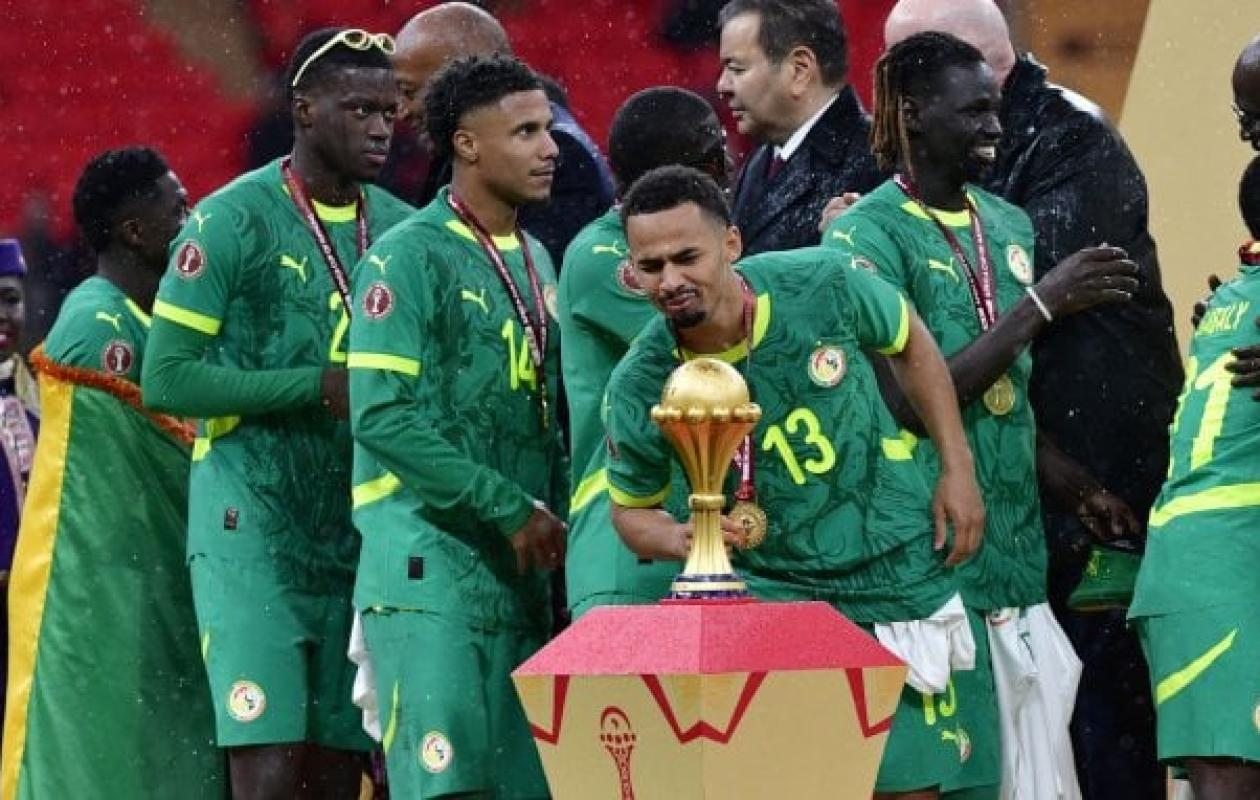
A veritable earthquake has struck the world of African football. It's a first, even, in the history of the sport, following the decision by the CAF appeals committee yesterday to award Morocco the victory in the last Africa Cup of Nations against Senegal by default (3-0), after the incidents in the final. The initial decision of the disciplinary committee, which upheld Senegal's victory (1-0 after extra time), has therefore been overturned. Morocco thus wins its second AFCON title, after its first in 1976. Such an outcome "opens the door to a dangerous drift for the credibility of African football," according to legal consultant Ousmane Kane. Seneweb brings you his full analysis.
"A legally indefensible decision: why the Court of Arbitration for Sport will overturn the forfeit imposed on Senegal"
"The CAF Appeals Board's decision to strip Senegal of the victory and award the Africa Cup of Nations to Morocco by default is illegal, unjustified, and destined to be unequivocally overturned by the Court of Arbitration for Sport (CAS). It is not merely an error of judgment; it stems from a clear mischaracterization of the law and violates the most basic principles of sports law, paving the way for a dangerous erosion of the credibility of African football."
To justify its decision, CAF relied on Chapter 35 of its regulations, entitled “Withdrawals,” and more specifically on Articles 82 and 84. These provisions govern situations in which a team withdraws from a match, with significant consequences, including a forfeit. However, their application is strictly regulated: the withdrawal must be definitive, occur before the end of the match, and, above all, be confirmed by the referee through a clear and unequivocal refusal to resume play.
However, in this case, none of these conditions are met. The heart of the problem lies in a major legal confusion: the CAF has equated a temporary interruption of play with a definitive withdrawal. This distinction is fundamental. A withdrawal implies a clear, collective, and irreversible intention to cease playing. Conversely, an interruption (even one marked by protest) does not carry the same legal consequences.
The facts are clear. Some Senegalese players temporarily left the field in protest, but not all of them did. Crucially, all the players returned, play resumed, and the match finished normally. Senegal won on the field. Legally, this constitutes a potentially wrongful interruption, subject to disciplinary action, but in no way an abandonment or withdrawal as defined by CAF regulations.
One element is crucial: the referee never observed a definitive refusal to resume the match, as required by the provisions of Chapter 35. On the contrary, he ordered the resumption of the game, thus confirming that the conditions for continuing play were met. Now, in football law, as governed by FIFA, the referee is the sole authority on the pitch, and his decisions have decisive legal consequences.
This analysis is fully confirmed by the consistent case law of the Court of Arbitration for Sport, which reiterates that the qualification of abandonment by forfeit is strictly defined and can only be upheld when three cumulative elements are present: a clear refusal to play, a failure to return to the field, and a definitive impossibility of continuing the match. If these conditions are not met, there can be no abandonment in the legal sense.
However, in this case, none of these conditions are met. There was no definitive refusal to play, no failure to return to the field, and no impossibility of continuing the match. On the contrary, the match resumed and finished normally. The CAS jurisprudence is consistent on one essential point: it protects the result achieved on the field, requires clear and irrefutable proof of a definitive abandonment, and rejects abusive retroactive reclassifications intended to rewrite the outcome of a match.
Moreover, subsequent events (the resumption and completion of the match) have a decisive legal effect: they legally resolve the initial incident. Once the match has been played to its conclusion and its result established on the field, it cannot be retroactively erased based on a questionable reclassification.
The CAF itself initially drew the necessary conclusions by imposing proportionate disciplinary sanctions: player suspensions, collective sanctions, and fines. It thus acknowledged that the conduct in question constituted a disciplinary offense within the context of a valid match. To then reverse this decision and transform a victory into an administrative defeat represents a clear contradiction and an abuse of power that is difficult to justify.
This decision is all the more problematic as it is virtually unprecedented in the history of world football. While forfeits do exist, they are only awarded when a match has not been played or could not be completed. Reclassifying a completed match, validated by the referee, as a forfeit constitutes a major legal anomaly, contrary to the fundamental principle of the stability of sporting results.
But beyond the legal aspects, this decision raises an even more serious question: that of the integrity of African football. By attempting to rewrite a match played and won on the pitch, the CAF undermines its own credibility and fuels persistent suspicions about its governance. Such a lapse can only reinforce the idea that extra-sporting considerations, or even questionable practices, influence certain decisions.
This decision constitutes a "legal anomaly" and a direct attack on the very integrity of football. The Court of Arbitration for Sport will have no choice but to reject this CAF decision, which resembles a farce more than a rigorous application of sports law.
Ousmane Kane, Legal Consultant
























Commentaires (25)
Participer à la Discussion
Règles de la communauté :
💡 Astuce : Utilisez des emojis depuis votre téléphone ou le module emoji ci-dessous. Cliquez sur GIF pour ajouter un GIF animé. Collez un lien X/Twitter, TikTok ou Instagram pour l'afficher automatiquement.