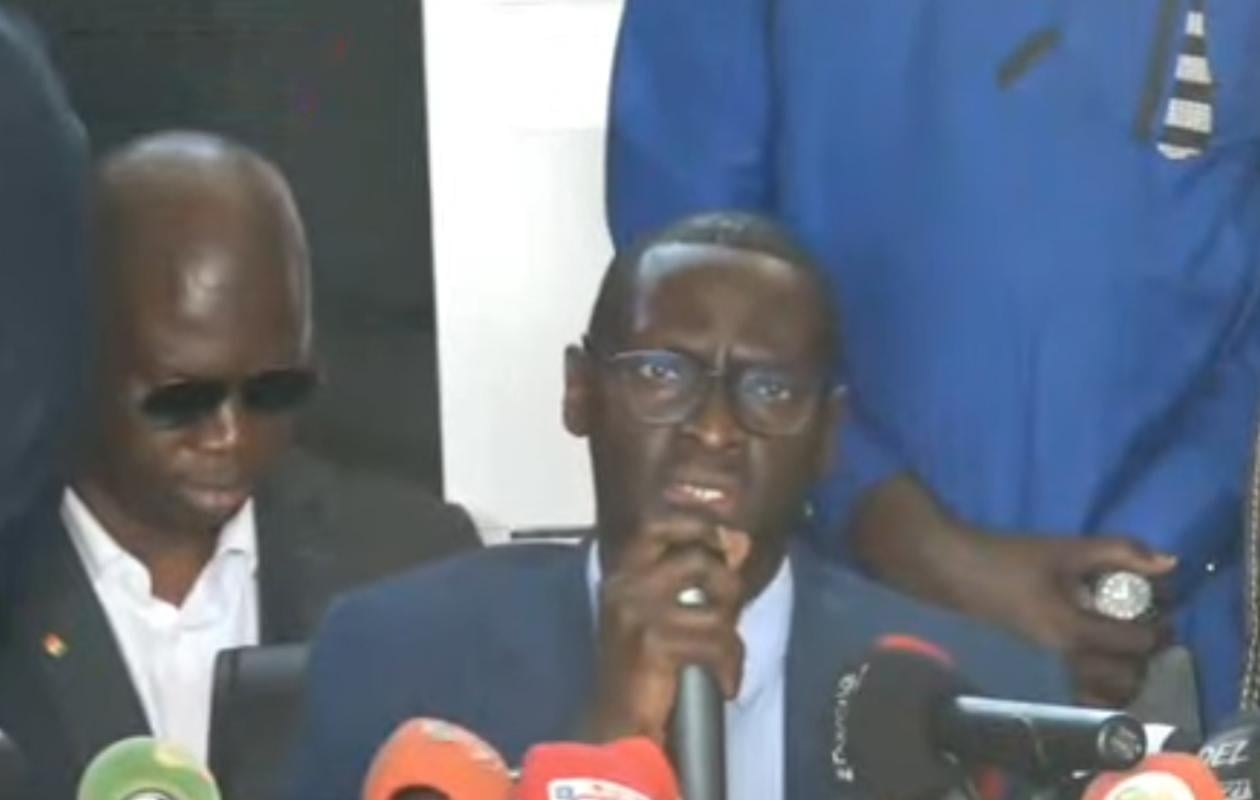
Articles 29 et 30 : Pourquoi Me Abdoulaye Tine craint un recul démocratique sans précédent
At the Diomaye-President movement's press conference held this Monday in Dakar, lawyer Abdoulaye Tine spoke out to denounce what he called "procedural overreach" in the electoral code reform process. He pointed to a worrying break with Senegalese democratic tradition.
From the outset, Mr. Tine recalled that President Bassirou Diomaye Faye's rise to power was based on a stated commitment to participatory governance. This ambition had been reflected in the organization of the National Conference on Justice and the Political System, which generated broad consensus. But for Mr. Tine, this momentum was abruptly halted: "We were very surprised by a unilateral initiative, especially since all the work of building consensus had been done," he declared.
A break with the historical consensus
At the heart of the controversy is a bill introduced by members of the majority party, aimed at amending Articles 29 and 30 of the Electoral Code. The text notably introduces the removal of certain rehabilitation conditions linked to the payment of fines, a retroactive effect for the new provisions, and a five-year limit on the period of ineligibility following the completion of a sentence.
Introduced under emergency procedures for a swift plenary vote, this reform has sparked fierce criticism. For Mr. Tine, "the urgency is not evident," especially since the next major elections are not scheduled until 2027. The lawyer emphasizes that Senegal has developed, since the 1990s, as a consensus-based democracy where any modification of electoral rules must include the opposition and civil society.
An appeal to the republican spirit
Lawyer Abdoulaye Tine warns against the consequences of such a move. By breaking with this tradition, the government would expose itself to post-election disputes and a lasting crisis of confidence. Drawing on the jurisprudence of the Constitutional Council, he points out that electoral rules directly affect fundamental rights, particularly the right to vote.
In conclusion, Mr. Tine calls on the majority to abandon this method: “The Electoral Code is not an instrument at the service of a group or an individual. It is a social contract that binds the entire nation.” According to him, persisting in this course would undermine the legitimacy of future elections and Senegal’s international credibility.








![[EXCLUSIF] Expulsion de la famille Srour : L'accusée Khady Diagne se prononce, documents à l'appui](https://image.seneweb.com/content/news/2026-20-14//thumb_1260x800_6a05cc2715573_a9nMMiStMC.jpg)










Commentaires (4)
Participer à la Discussion
Règles de la communauté :
💡 Astuce : Utilisez des emojis depuis votre téléphone ou le module emoji ci-dessous. Cliquez sur GIF pour ajouter un GIF animé. Collez un lien X/Twitter, TikTok ou Instagram pour l'afficher automatiquement.