Révision constitutionnelle : La Commission des lois verrouille la dissolution et la motion de censure
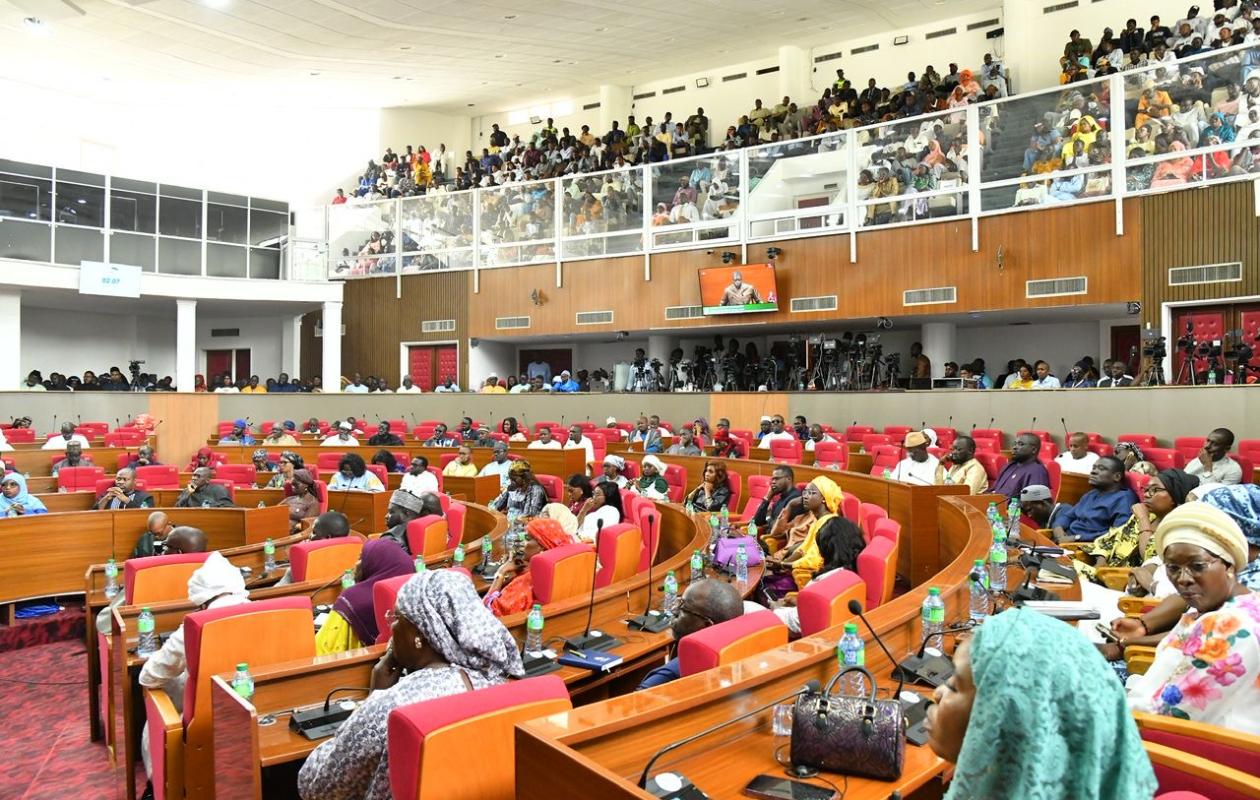
The constitutional review process is accelerating in the National Assembly. Meeting yesterday, the Assembly's Committee on Laws, Decentralization, Labor, and Human Rights officially voted on the proposed amendment to Articles 86 and 87 of the Constitution. Originally introduced by independent MP Adama Diallo, this major reform received decisive support from members of the Pastef parliamentary group, who joined forces to pass the text in committee.
The explanatory memorandum for this bill highlights the need for structural adjustments to ensure the continuity of public action in the face of the country's economic burdens, particularly debt servicing, student grant payments, and the financing of the agricultural campaign and local authorities. The bill's initiators emphasize that Senegal cannot afford to experience repeated crises and elections without jeopardizing its development priorities.
Article 86: Streamlining the motion of censure and introduction of the Senegalese "49.3"
The amendment passed yesterday to Article 86 fundamentally alters the relationship between the Executive and the Legislature in order to prevent repeated political gridlock. From now on, the National Assembly may not consider more than two motions of censure in the same year, strictly limited to one motion during the ordinary session and one outside of the ordinary session. Furthermore, if the Government is brought down by the passage of a motion or by the rejection of a vote of confidence, the new text stipulates that the President of the Republic must appoint a new Prime Minister as soon as possible.
The major innovation of this amendment lies in the introduction of a mechanism for engaging the government's responsibility, directly inspired by the French model. The Prime Minister can now, after deliberation by the Council of Ministers, commit the government's responsibility before the National Assembly on the vote of a finance bill. In this specific case, the bill is considered automatically adopted unless a motion of censure is tabled within twenty-four hours and passed by an absolute majority of the members of the chamber. The head of government can also use this expedited adoption procedure for one other bill or draft law per session.
Article 87: A single bullet for the dissolution of the Assembly
The amendment to Article 87, also adopted yesterday in committee, addresses the prerogatives of the Head of State regarding the dissolution of Parliament. While the original rule prohibiting any dissolution during the first two years of a legislative term remains unchanged, the commissioners have incorporated a major historical safeguard.
The new text now explicitly stipulates that dissolution can only occur once during the same presidential term. This unprecedented restriction transforms dissolution into an ultimate and exceptional arbitration tool in the event of an acute institutional crisis, thus protecting the stability of the legislature from political maneuvering and short-term political upheavals.











![[Exclusif] : Ass Dione confronté par le juge d’instruction à 3 de ses présumés amants](https://image.seneweb.com/content/news/2026-26-25//thumb_1260x800_6a3d4ac0555d3_9OCWAjqjOR.jpeg)










Commentaires (40)
Participer à la Discussion
Règles de la communauté :
💡 Astuce : Utilisez des emojis depuis votre téléphone ou le module emoji ci-dessous. Cliquez sur GIF pour ajouter un GIF animé. Collez un lien X/Twitter, TikTok ou Instagram pour l'afficher automatiquement.